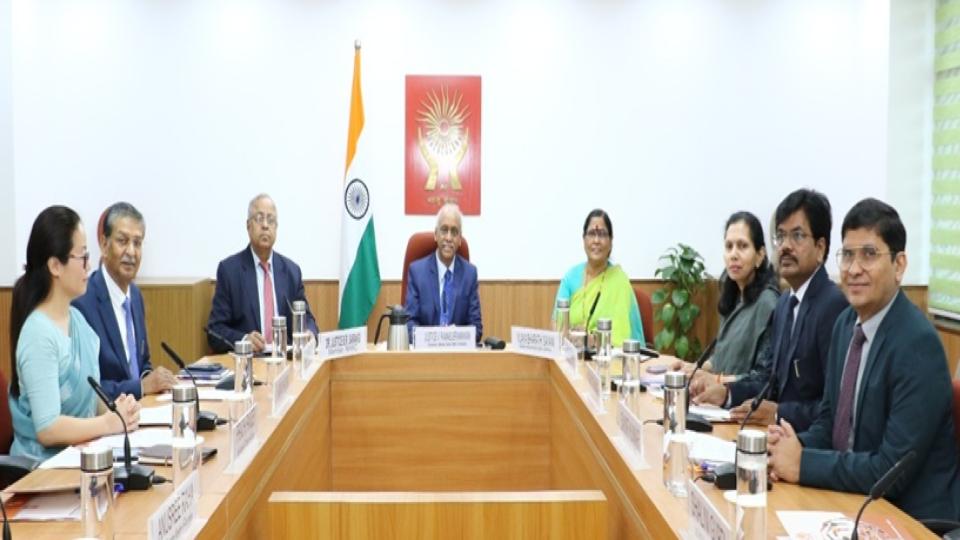
April 7, 2026 : The National Human Rights Commission (NHRC) recently convened a Core Group meeting on the Right to Food and Nutrition in New Delhi, focusing on the theme of tackling food adulteration in India. The meeting, held in hybrid mode, brought together senior officials, policymakers, consumer rights advocates, academics and domain experts to deliberate on the scale of the issue and explore practical reforms.
Chairing the session, NHRC Chairperson Justice V. Ramasubramanian highlighted the evolution of India’s legal framework on food safety, tracing it from early legislation like the Madras Prevention of Adulteration Act, 1918 to the Food Safety and Standards Act 2006. He emphasised that while legal safeguards have strengthened over time, enforcement gaps and systemic inefficiencies continue to undermine outcomes. He also noted that outdated prosecution processes weaken cases, with some relying on evidence that is over a decade old.
The Chairperson stressed that increasing life expectancy must be accompanied by better quality of life, including access to safe and nutritious food. He urged stakeholders to move beyond data analysis and focus on the real human impact of adulterated food.
NHRC Member Justice (Dr.) Bidyut Ranjan Sarangi raised concerns over excessive pesticide use and called for greater awareness at the grassroots level, especially among farmers. Another Member, Vijaya Bharathi Sayani, proposed the creation of a multi-level task force, regular mobile food testing, strict penalties for violators, and inclusion of food safety education in school curricula.
NHRC Secretary General Bharat Lal described food adulteration as a serious and widespread threat, particularly affecting vulnerable groups such as children, pregnant women and the elderly. He pointed out the difficulty in tracing contaminated food once it enters the supply chain and called for urgent, actionable interventions to ensure food safety.
Officials from the Food Safety and Standards Authority of India highlighted ongoing efforts to improve vendor registration and regulatory compliance. Experts also stressed the need for better infrastructure, filling regulatory vacancies, and enhancing coordination between laboratories and authorities.
Participants collectively recommended a comprehensive, system-wide approach, including lifecycle monitoring of food products, adoption of AI-based tracking tools, stronger testing mechanisms, and increased transparency in food safety data. Suggestions also included public awareness campaigns, citizen participation, school-based testing initiatives, and stricter enforcement of the National Food Security Act 2013.
The NHRC will further examine these recommendations before finalising its policy suggestions, signalling a coordinated push toward strengthening food safety systems across the country.