News Citation : 2026 LN (HC) 244 | 2026:JHHC:9944-DB
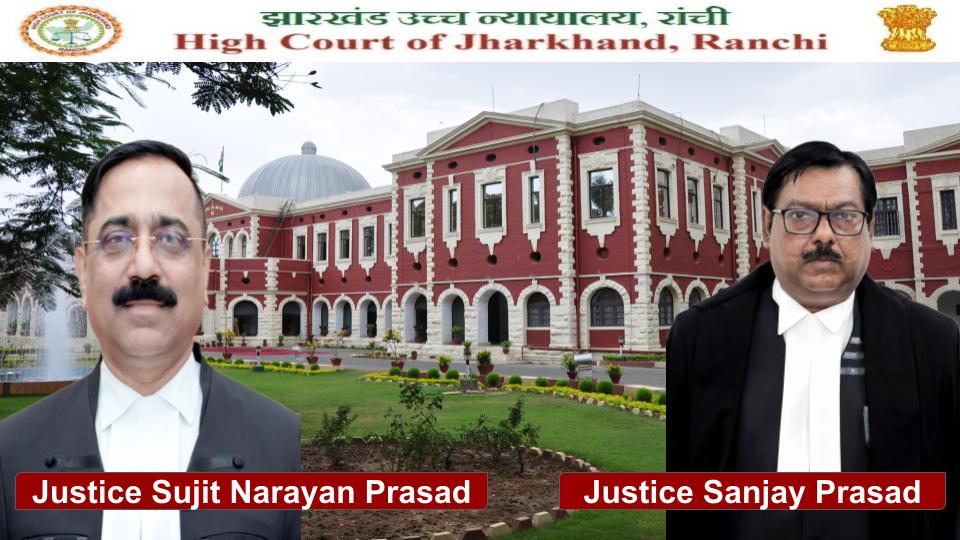
April 8, 2026 : The Jharkhand High Court has dismissed a fresh bail plea from Naresh Ganjhu, an alleged associate of the banned CPI (Maoist) organization, in connection with a 2019 ambush that claimed the lives of four police personnel. The Division Bench, comprising Justice Sujit Narayan Prasad and Justice Sanjay Prasad, ruled that the gravity of the accusations and the appellant’s documented role in providing logistics to terrorists outweighed his claims for relief based on his lengthy period of incarceration.
The case stems from a violent incident on November 22, 2019, at Lukuiya More, where Maoist cadres opened fire on a police patrolling party, killing four officers and looting their government-issued firearms and ammunition. Following an initial investigation by state police, the National Investigation Agency (NIA) took over the probe in 2020, eventually arraying Naresh Ganjhu as Accused No. 5.
Ganjhu’s legal counsel argued for bail on the grounds of parity, noting that other co-accused individuals, including Rajesh Ganjhu and Baijnath Ganjhu, had recently been granted bail by coordinate benches. The defense also highlighted that the appellant had been in custody since January 2020 and argued that the slow progress of the trial with only a fraction of the listed witnesses examined violated his constitutional right to a speedy trial under Article 21.
However, the High Court rejected the parity argument, emphasizing that bail is not a mechanical right and must be assessed based on the specific role of each individual. Investigating records presented by the NIA established that Ganjhu acted as an “overground worker” for top Maoist leader Ravindra Ganjhu (A-14). Evidence suggested that the appellant’s home was used as a staging point for motorcycles, that he personally provided food and supplies to the cadres, and that he served as a messenger to coordinate meetings between Maoist leaders and other conspirators just days before the fatal attack.
Referencing recent Supreme Court precedents, the Bench noted that in cases involving the Unlawful Activities (Prevention) Act (UAPA), the standard “bail is the rule, jail is the exception” does not apply. The court maintained that when accusations are “prima facie true” and involve threats to national sovereignty and public order, long incarceration alone cannot be the sole reason for release.
The court concluded that since the trial is currently in progress and 16 witnesses have already been examined, the fear of an indefinite delay was not justified. Finding no fresh grounds to overturn the lower court’s decision, the High Court dismissed the appeal, keeping Ganjhu in custody as the trial continues.
Case Reference : Criminal Appeal (DB) No. 82 of 2026, Naresh Ganjhu vs. Union of India through National Investigation Agency, New Delhi; Counsels: Mr. Birendra Kumar (Appellant), Mr. Amit Kumar Das and Mr. Saurav Kumar (Respondent).