News Citation : 2026 LN (HC) 322
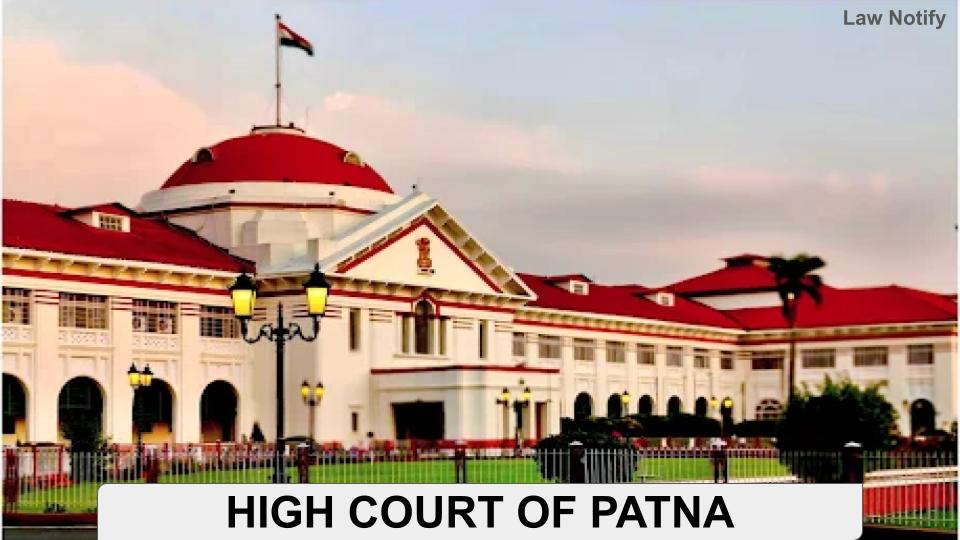
April 22, 2026 : The Patna High Court has dismissed an intra-court appeal challenging a ruling that upheld the caste determination of a village head (Mukhiya) from West Champaran, holding that a person cannot shift caste identity to gain benefits under reservation.
In its judgment dated April 22, 2026, a Division Bench of Justices Sudhir Singh and Shailendra Singh refused to interfere with an earlier order of a Single Judge, which had rejected the appellant’s writ petition. The case arose from a dispute over the appellant’s eligibility to contest a Panchayat election from a seat reserved for Extremely Backward Classes (EBC).
The appellant, elected as Mukhiya in 2021, faced a complaint alleging that he did not belong to the EBC category but instead to the Koeri (Kushwaha) caste, which falls under the Other Backward Classes (OBC). Acting on the complaint, the State Election Commission referred the matter to a Caste Scrutiny Committee, which concluded that the appellant belonged to the Koeri caste.
Challenging both the reference and the Committee’s findings, the appellant argued that the Commission lacked jurisdiction and that the Committee’s decision ignored valid caste certificates issued earlier. He also alleged procedural lapses and violation of natural justice.
The High Court, however, found no merit in these claims. It noted that the land revenue records (khatiyan), considered primary evidence, consistently recorded the appellant’s ancestor as belonging to the Koeri caste. The Court also pointed to the appellant’s own declaration in a 2018 land transaction, where he identified himself as Koeri, as a significant factor undermining his claim.
The Bench observed that such contradictory positions weaken the credibility of the appellant’s case. It emphasized that reservation benefits cannot be claimed based on shifting identities depending on convenience.
The Court further clarified that the State Election Commission had not itself determined the caste status but had merely referred the matter to a competent authority, namely the Caste Scrutiny Committee, which followed due process.
Relying on established legal principles, including Supreme Court precedents, the Court reiterated that benefits obtained through doubtful or false caste claims cannot be retained. It also invoked the doctrine that a litigant cannot “approbate and reprobate,” meaning one cannot take inconsistent positions to suit different purposes.
Concluding that the findings of the Single Judge were well-reasoned and supported by evidence, the Division Bench dismissed the appeal, effectively affirming the caste determination and the legal consequences flowing from it.
Case Reference : Letters Patent Appeal No.1001 of 2023 in Civil Writ Jurisdiction Case No.14258 of 2022, Manoj Prasad vs State Election Commission and others; Counsels: For the Appellant(s): Mr. S.B.K. Manglam, Advocate, Mr. Awnish Kumar, Advocate, Mr. Vikash Kumar Singh, Advocate; For the State: Mr. Saroj Kumar Sharma, AC to AAG-3; For the Commission: Mr. Ravi Ranjan, Advocate, Mr. Girish Kumar, Advocate; For Private Respondent No.4: Mr. Santosh Bharti, Advocate, Mr. Apurva Kumar, Advocate.