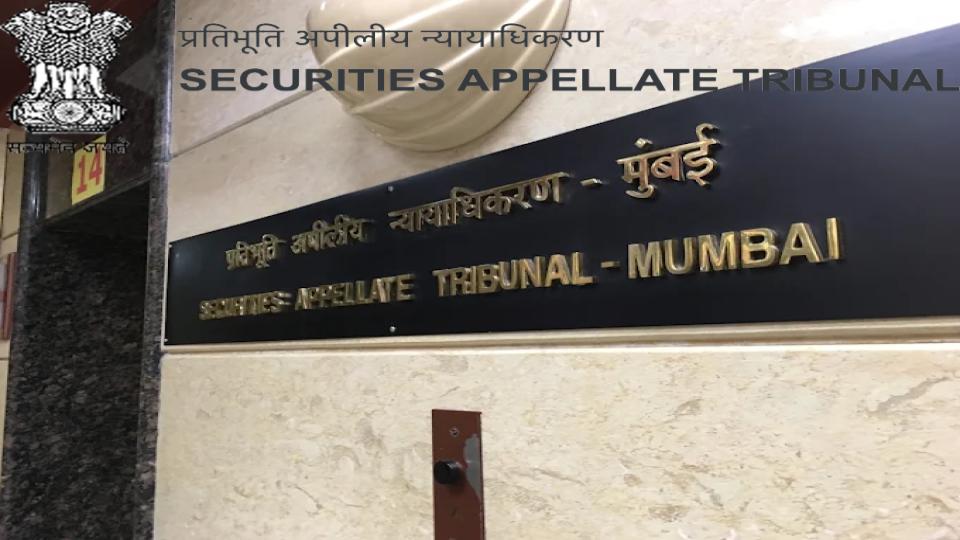
May 8, 2026 : The Securities Appellate Tribunal has partly allowed a review application filed by stock market traders accused of manipulating share prices through televised recommendations on CNBC Awaaz, while reaffirming that gains earned through fraudulent securities transactions can be fully disgorged under SEBI regulations. In a significant ruling delivered on May 8, 2026, the tribunal waived the ₹25 lakh costs imposed earlier on the appellants but refused to interfere with findings relating to fraudulent trading and disgorgement calculations.
The review application arose from an earlier order passed on January 29, 2026, in Appeal No. 426 of 2024 involving Alpesh Vasanji Furiya and associated entities against the Securities and Exchange Board of India. The applicants sought reconsideration of the tribunal’s earlier findings concerning disgorgement of alleged unlawful gains, deduction of income tax from the disgorgement amount, and the imposition of litigation costs.
The dispute stemmed from SEBI’s allegations that the applicants colluded with television market expert Pradeep Pandya to manipulate stock prices by purchasing shares before favorable recommendations were aired on the “Pandya Ka Funda” program on CNBC Awaaz. According to SEBI, the traders accumulated shares in selected scrips and sold them shortly after televised recommendations triggered price movements in the market.
Before the tribunal, the applicants argued that SEBI’s disgorgement methodology was “unscientific” because the increase in stock prices before the television recommendations was due to normal market forces and not their alleged misconduct. They contended that disgorgement should be restricted only to the difference between the stock price at the time of the recommendation and the eventual sale price. The applicants also claimed that the tribunal wrongly treated a “without prejudice” communication dated April 1, 2025 as a tacit admission regarding the disgorgement amount.
The tribunal, however, rejected these arguments after examining WhatsApp conversations and trading timelines involving multiple scrips including Fairchem, Jindal Poly, Godfrey Phillips, Sparc, NCL, and Indigo. The bench noted that Alpesh Furiya contacted Pandya before purchasing shares and coordinated recommendations before placing sell orders. The order recorded that “their nexus in transactions is established.”
The tribunal extensively referred to Regulation 2(1)(c) of the SEBI (Prohibition of Fraudulent and Unfair Trade Practices Relating to Securities Market) Regulations, 2003, which broadly defines “fraud” to include acts, omissions, concealment, or inducement in securities dealings, regardless of whether wrongful gain or loss actually occurred. Explaining the legal position, the tribunal observed that “once a fraud is established, any gain made out of such fraudulent act is a ‘wrongful gain’.”
Rejecting the plea to limit disgorgement, the tribunal held that the entire profit earned through the coordinated trades could validly be treated as unlawful gain. It observed that the applicants had “first contacted Pandya and also followed up with him for recommendation and thereafter placed ‘sell limit orders’,” making the entire gain susceptible to disgorgement under securities law.
On the issue of income tax adjustment, the applicants argued that taxes already paid on trading income should be deducted from the disgorgement liability. The tribunal declined to grant such relief, noting that the relevant trades occurred between financial years 2019-20 and 2021-22, while the Whole Time Member’s order was passed in FY 2024-25. Relying on the Income Tax Appellate Tribunal ruling in Monal Y Thakkar v. ACIT, the bench held that the applicants could separately seek remedies under the Income Tax Act, 1961 for any tax-related claims or refunds.
The tribunal nevertheless granted partial relief to the applicants on the issue of costs. The appellants argued that proceedings before SAT are akin to a first appeal under Section 15T of the SEBI Act, 1992 and that they had already deposited more than 90% of the disgorgement amount at an early stage of proceedings. Accepting this contention, the tribunal observed that the applicants had cooperated by depositing substantial sums “without a demur” even before adjudication proceedings formally commenced.
The bench consequently ruled that the ₹25 lakh costs imposed earlier deserved to be waived. It stated that “keeping appellants’ conduct in view and the fact that this appeal is akin to a first appeal, we deem it appropriate to waive the costs imposed by us in the order under review.”
During the hearing, the applicants also raised concerns regarding the freezing of their bank and demat accounts by SEBI in March 2026. They alleged that notices had not been properly served and that SEBI’s communication had landed in spam folders. The tribunal, however, declined to examine these issues because they arose after the original order under review and were not part of the review pleadings.
Importantly, the tribunal clarified that no “error apparent on the face of record” had been demonstrated by the applicants, which is the standard generally required for review jurisdiction. Despite this, the bench reconsidered the limited issues raised and modified the earlier order only to the extent of waiving costs.
The ruling reinforces SEBI’s wide powers to recover alleged unlawful gains in cases involving fraudulent market conduct and coordinated trading schemes. It also signals that communications between market participants and media influencers or stock commentators can be heavily scrutinized to establish manipulative intent. For investors and market intermediaries, the judgment underscores that coordinated pre-recommendation trading may attract strict regulatory consequences under PFUTP regulations, including disgorgement of the entire gains earned from such transactions.
Case Reference : Alpesh Vasanji Furiya & Ors. v. Securities and Exchange Board of India, Review Application No. 5 of 2026 in Appeal No. 426 of 2024, decided on May 8, 2026.