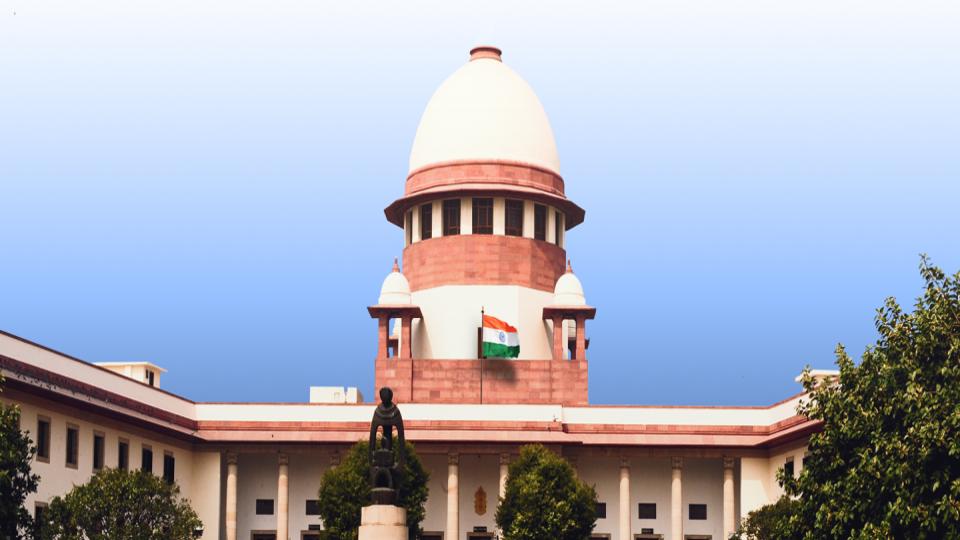
May 29, 2026 : The Supreme Court on Friday declined to stay a Delhi High Court order permitting celebrated Indian wrestler Vinesh Phogat to participate in the selection trials for the upcoming Asian Games, allowing her to compete in the trials scheduled for May 30 and 31.
A Bench comprising Justice PS Narasimha and Justice Alok Aradhe issued notice on a petition filed by the Wrestling Federation of India challenging the interim relief granted by the Delhi High Court. While agreeing to examine the legal issues raised by the federation at a later stage, the Court found it inappropriate to interfere with the High Court’s directions given the imminent commencement of the selection trials.
Although the Bench expressed reservations about certain observations made by the High Court, it allowed Phogat to participate in the trials, clarifying that her participation would remain subject to the final outcome of the pending proceedings.
During the hearing, the Supreme Court examined issues arising from Phogat’s temporary break from competitive wrestling, her maternity leave, and allegations regarding non-compliance with anti-doping requirements prescribed by the International Testing Agency. The Court noted that the wrestler had taken a sabbatical in December 2024 and had informed the federation that she would be eligible to return to competition from January 1, 2026.
The Bench also considered submissions that Phogat had allegedly missed a doping test and that her explanation before the International Testing Agency had not been accepted. Justice Narasimha observed that Indian sports administration operates within a framework closely linked to international sporting regulations and anti-doping standards, indicating that non-compliance with such norms could have broader implications for Indian athletes and sports governance.
At the same time, the Court acknowledged Phogat’s distinguished international achievements and observed that equitable considerations could not be ignored. However, the Bench questioned the High Court’s approach of treating the controversy primarily as an issue relating to motherhood and maternity leave, noting that the dispute also involved anti-doping compliance and eligibility requirements.
Appearing for Phogat, Senior Advocate Madhavi Divan argued that the controversy was intrinsically connected to the wrestler’s maternity leave and that she should not be excluded from the selection process merely because she had stepped away from competitive sports following childbirth. Phogat further contended that the revised selection policy adopted by the Wrestling Federation of India was exclusionary and unfairly disadvantaged athletes returning to competition after maternity-related absences.
It was also argued that denying her participation in the trials would cause irreparable harm to her sporting career. The federation, however, maintained that the eligibility criteria and anti-doping compliance requirements applied equally to all athletes and were consistent with international sporting standards. According to the federation, the regulations were not designed to target or exclude Phogat specifically.
Despite expressing concerns about aspects of the High Court’s reasoning, the Supreme Court concluded that preventing Phogat from participating in the trials at this stage would not be appropriate. The Court clarified that the legality of the selection policy, along with questions relating to anti-doping compliance, would be examined in greater detail during subsequent proceedings.
The controversy stems from a May 22, 2026 judgment delivered by a Division Bench of the Delhi High Court comprising Chief Justice Devendra Kumar Upadhyaya and Justice Tejas Karia. The High Court had directed that Phogat be allowed to participate in the selection trials and observed that the federation’s selection policy appeared exclusionary because it failed to adequately account for maternity-related absences and did not provide discretionary relaxation for athletes returning after childbirth.
The High Court further emphasized that motherhood cannot become a ground for excluding or marginalizing women athletes. To ensure fairness and transparency, it ordered that the selection trials be video-recorded and conducted under the supervision of independent observers appointed by the Sports Authority of India and the Indian Olympic Association.
The judgment was delivered in an appeal filed by Phogat against an earlier order of a single-judge bench that had refused interim relief in her writ petition challenging both the Wrestling Federation of India’s selection policy and a related show-cause notice issued against her.