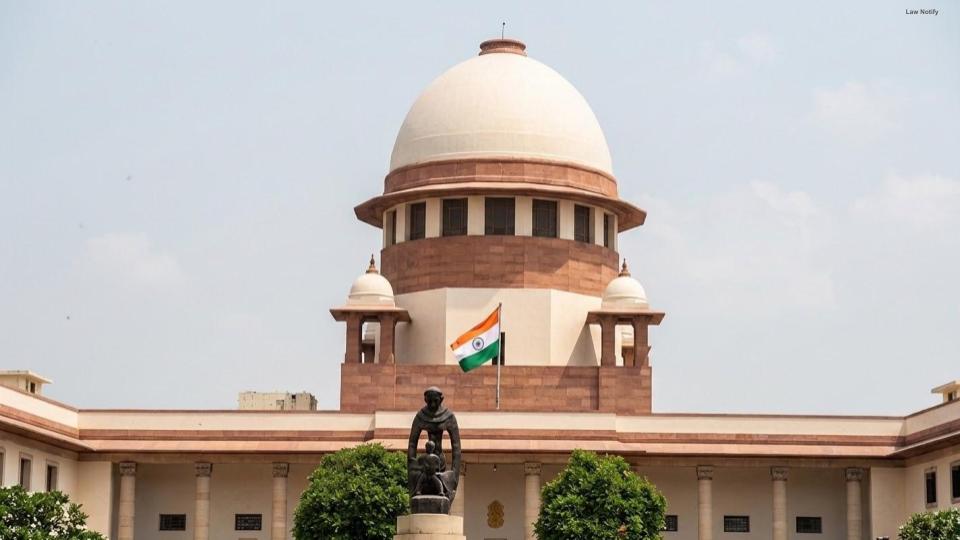
May 30, 2026 : The Supreme Court has declined to reopen investigations into international wildlife transfers linked to the Jamnagar-based Vantara animal rescue and rehabilitation facilities associated with the Reliance Group, holding that the matter had already been comprehensively examined by a court-appointed Special Investigation Team (SIT) and had attained judicial finality.
A Division Bench comprising Justice Prashant Kumar Mishra and Justice N. V. Anjaria dismissed an application filed by the Karanartham Viramah Foundation seeking recall of the Court’s March 9, 2026 order and requesting a fresh investigation by agencies including the CBI, Enforcement Directorate and other regulatory authorities into international wildlife transfers involving the Greens Zoological Rescue and Rehabilitation Centre, Radha Krishna Temple Trust and the Khodiyar Animal Welfare Trust.
The applicant relied on ongoing investigations and regulatory proceedings in several foreign jurisdictions, including Brazil, the United Arab Emirates, Uganda, Peru, Malaysia and Venezuela, as well as materials from the Secretariat of the Convention on International Trade in Endangered Species of Wild Fauna and Flora (CITES). It argued that these developments constituted fresh circumstances warranting a renewed investigation. The plea also sought seizure and repatriation of animals allegedly transferred in violation of international wildlife norms and transfer of management of the Jamnagar facilities to the Union government.
Rejecting these submissions, the Supreme Court observed that all wildlife transfers up to September 2025 had already been examined by the SIT, whose report was accepted by the Court on September 15, 2025 and reaffirmed through its March 9, 2026 order. The Bench held that once the SIT findings had been judicially accepted, the legality of the transfers scrutinised in the report could not be reopened through successive proceedings. It ruled that the matter was governed by the principle of finality and that no further investigation or prosecution could be directed in relation to transfers already examined by the SIT.
The Court emphasised that its jurisdiction under Article 32 of the Constitution could not be used as a vehicle for perpetual re-litigation after a high-powered investigation had concluded and attained judicial closure. It also noted that much of the fresh material relied upon by the applicant consisted of newspaper reports, online content and allegations based on inference, which lacked sufficient evidentiary value to justify reopening the inquiry.
The Bench further recorded that the SIT’s inquiry had an extensive scope and covered all relevant aspects of international acquisition, import and transfer of wildlife by the concerned entities. It found no material indicating violations of domestic law, international treaty obligations or wildlife import regulations.
While refusing to order a fresh probe, the Supreme Court issued prospective directions to strengthen India’s compliance framework under the CITES regime. The Court directed the CITES Management Authority of India (CMA India) to establish a direct communication channel with the CITES Secretariat in Geneva and to formulate a comprehensive Standard Operating Procedure (SOP) governing the grant of import permits for live specimens covered by CITES. The SOP is to be prepared in consultation with the CITES Secretariat and later placed before the Supreme Court for consideration.
The Court indicated that it may subsequently examine the adequacy of India’s regulatory framework and consider additional measures to strengthen enforcement mechanisms relating to international wildlife trade. Accordingly, while declining to reopen the Vantara investigation, the Bench kept the proceedings pending for the limited purpose of monitoring the formulation and implementation of a strengthened regulatory regime for future wildlife imports.