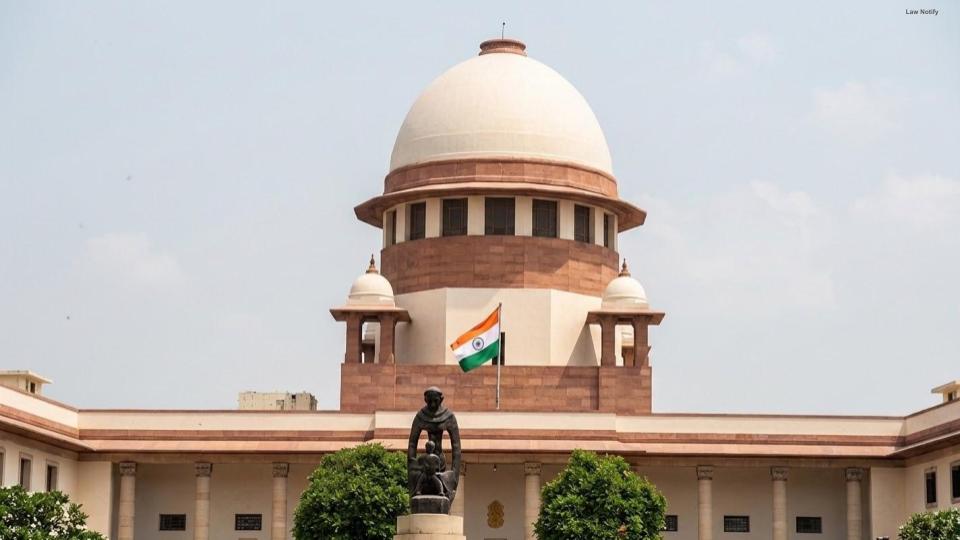
June 4, 2026 : The Supreme Court has sought a response from the Union Government on concerns regarding child trafficking through Assisted Reproductive Technology (ART) and surrogacy centres after serious regulatory gaps were highlighted by amicus curiae Senior Advocate Aparna Bhat.
A Bench comprising Justice JB Pardiwala and Justice K Viswanathan was hearing matters related to the implementation of its April 2025 judgment in Pinki v. State of Uttar Pradesh, which focused on combating child trafficking and strengthening institutional safeguards.
During the hearing, the amicus informed the Court that no Standard Operating Procedure (SOP) currently exists to specifically prevent child trafficking through ART clinics and surrogacy facilities. The issue surfaced during an ongoing trafficking investigation where certain accused persons allegedly claimed to be egg donors linked to an IVF centre. Concerns regarding possible violations of the Assisted Reproductive Technology (Regulation) Act, 2021, had previously been brought before the Court.
In August 2025, the Supreme Court had directed the Delhi Police to conduct an independent investigation into the functioning of the concerned fertility centre and its compliance with the legal framework governing ART services.
In a detailed note submitted to the Court, the amicus pointed out that although statutory bodies envisaged under the ART Act, including the National Board, National Registry, State Boards and Appropriate Authorities, have been established, there is no dedicated mechanism to identify, prevent or investigate trafficking-related offences linked to ART and surrogacy services.
The note observed that while the ART Act and the Surrogacy (Regulation) Act, 2021, provide extensive regulations regarding registration, infrastructure, medical standards and eligibility criteria, they do not specifically address the risks of child trafficking, illegal adoption or the misuse of fertility services by trafficking networks.
Highlighting the growing number of trafficking cases involving fertility clinics, the amicus argued that specialised safeguards and regulatory guidelines are urgently required. It was submitted that intending parents seeking ART and surrogacy services are often vulnerable, creating opportunities for organised trafficking networks to exploit existing loopholes.
The amicus also noted that the Union Government had acknowledged in previous status reports that no SOP currently exists for inter-state coordination in cases involving missing or trafficked children. According to the submissions, this gap becomes even more significant when trafficking operations involve multiple states and specialised medical establishments.
To address these concerns, the amicus proposed the constitution of a specialised committee headed by a retired Supreme Court judge, comprising an IVF expert, a senior police officer, a legal expert and a social worker experienced in anti-trafficking work. The proposed committee would formulate a comprehensive SOP for the prevention, detection, investigation and prosecution of trafficking offences connected with ART and surrogacy clinics.
The Court was also informed that all States and Union Territories have now constituted review committees and submitted compliance reports pursuant to the Supreme Court’s 2025 directions. However, most states have not clearly defined the powers, reporting structures or functions of these committees. Gujarat was cited as an exception for establishing detailed operational guidelines and terms of reference.
The amicus further referred to data from the National Crime Records Bureau (NCRB) Report 2024, which recorded over 6,000 trafficking cases during the year, a 7.8 per cent increase in missing children cases, and more than 1.47 lakh children remaining untraced nationwide.
The note warned that trafficking has expanded beyond traditional forms such as sexual exploitation and forced labour, and increasingly includes trafficking for marriage, organ removal, forced criminal activities and illegal adoption of infants and young children. A recent case involving the alleged purchase and subsequent abandonment of a child was cited to underscore the need for stronger oversight and safeguards.
It was also suggested that since a separate Supreme Court Bench is already examining related issues through another committee, the present concerns could be referred to that body to ensure a coordinated policy response and avoid duplication of efforts.
After considering the submissions, the Bench requested Additional Solicitor General Aparna Pathak Dave to examine the amicus curiae’s note and place the Union Government’s response on record. The matter has been listed for further hearing on August 19, 2026.