News Citation : 2026 LN (HC) 385
June 17, 2026 : In a significant ruling reaffirming judicial restraint in bank recovery proceedings, the Chhattisgarh High Court has dismissed a writ appeal filed by borrowers seeking to stop the auction of their mortgaged property under the Securitisation and Reconstruction of Financial Assets and Enforcement of Security Interest Act, 2002 (SARFAESI Act). The Division Bench held that once a statutory remedy has already been invoked before the Debt Recovery Tribunal (DRT), the High Court should not ordinarily interfere in recovery actions initiated by financial institutions.
The case arose from a dispute between Mahasamund residents Om Prakash Dongre, Pushpa Dongre and Kripa Ram Dongre and Awas Financers Limited. According to the court record, the borrowers had obtained a loan of ₹6.30 lakh in July 2022 for business purposes and mortgaged their property situated at Village Malidih in Mahasamund district as security for the loan. While they reportedly repaid around ₹1.75 lakh, financial losses allegedly prevented them from clearing the remaining outstanding amount.
Following the default, the lender initiated proceedings under the SARFAESI Act. An application under Section 14 of the Act was filed before the Chief Judicial Magistrate, Mahasamund, seeking assistance in taking possession of the secured asset. The application was allowed through an ex parte order dated November 6, 2024. The borrowers later sought to have that order set aside, but their application was rejected in April 2025. Subsequently, they challenged the action by filing a securitisation appeal before the Debt Recovery Tribunal at Jabalpur under Section 17 of the SARFAESI Act.
The appellants argued before the High Court that their appeal before the DRT remained pending because the Tribunal was not functioning effectively and the next hearing had been scheduled for July 24, 2026. They contended that if the auction of the mortgaged property proceeded before the DRT could hear their case, the appeal itself would become meaningless. The borrowers also pointed out that they had submitted a proposal to the lender expressing willingness to pay ₹20,000 per month toward repayment of the outstanding dues, but the proposal was not accepted. Meanwhile, the lender issued an auction notice dated May 7, 2026, scheduling the auction of the secured property.
The borrowers further relied on an earlier order passed by a Single Judge of the High Court in another matter where interim protection had reportedly been granted against possession proceedings. They sought similar relief, arguing that equity and fairness required protection until the DRT could decide their pending challenge.
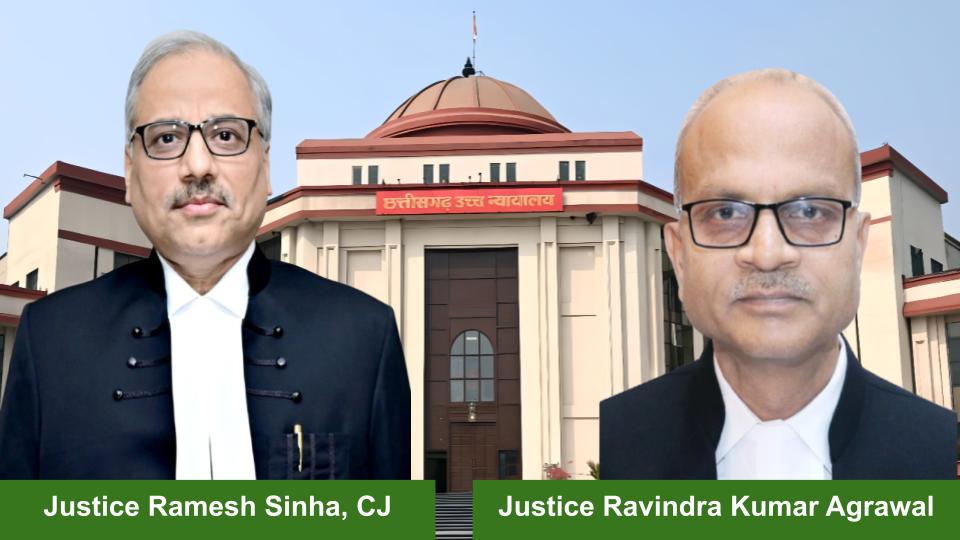
However, the Division Bench comprising Chief Justice Ramesh Sinha and Justice Ravindra Kumar Agrawal declined to interfere. The Court observed that the earlier Single Bench order cited by the appellants could not be treated as binding precedent in the present case. It noted that the borrowers had already availed the statutory remedy available under the SARFAESI Act and had approached the competent Tribunal. The Single Judge had therefore rightly declined to entertain the writ petition and had granted liberty to pursue remedies before the appropriate appellate forum.
Emphasizing settled legal principles governing bank recovery proceedings, the High Court referred to repeated observations of the Supreme Court discouraging interference in actions taken under special recovery statutes. The Bench observed, “Courts should exercise restraint in interfering with recovery proceedings initiated by banks and financial institutions under special statutes enacted for expeditious recovery of public money.” The Court further noted that entertaining challenges at every intermediate stage would frustrate the objective of such legislation.
The Bench found no exceptional circumstance warranting departure from this principle. It held that there was no demonstrated illegality in the auction notice and that the appellants had already exercised their statutory right of appeal under the SARFAESI framework. The Court stated, “In the absence of any demonstrated illegality in the auction notice dated 07.05.2026, and considering that the appellants have already availed the statutory remedy available under the Act of 2002, we find no justification to grant the relief sought by the appellants.”
Consequently, the Division Bench upheld the earlier order of the Single Judge and dismissed the writ appeal. The ruling reinforces the principle that borrowers challenging SARFAESI measures must ordinarily pursue remedies before the specialised tribunals established under the Act rather than seek intervention through writ jurisdiction. The judgment is likely to strengthen lenders’ ability to continue recovery proceedings and conduct auctions of secured assets without judicial interruption unless clear illegality, procedural violation, or exceptional circumstances are established.
Case Reference: Om Prakash Dongre & Others v. Awas Financers Limited & Another, WA No. 504 of 2026.