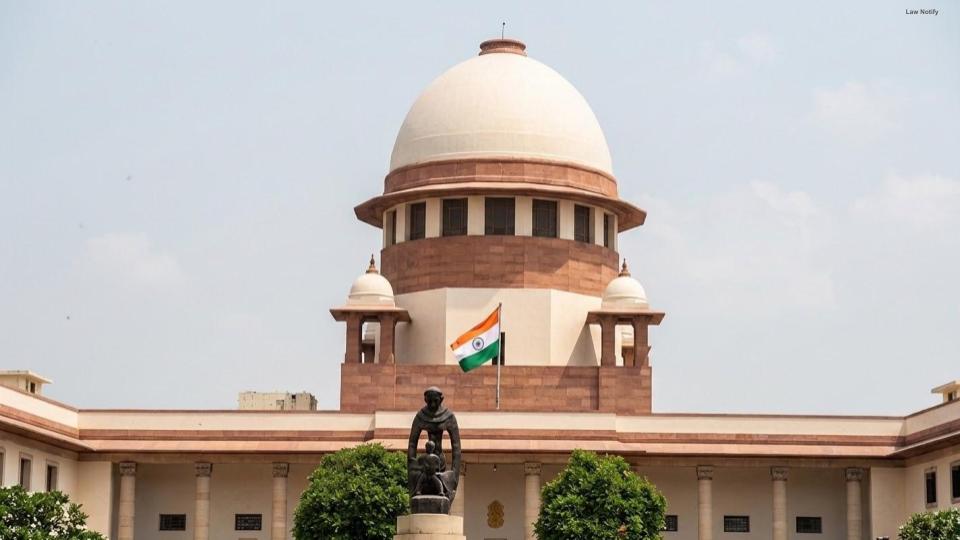
July 13, 2026 : The Supreme Court on Monday stayed the operation of the Madras High Court judgment that had quashed the appointments of 17 Personal Assistants (PAs) to High Court judges over alleged irregularities in the recruitment process. A Bench comprising Justice Vikram Nath and Justice Sandeep Mehta granted interim relief to nine of the affected appointees, allowing them to continue in service until further orders.
The dispute arose from a recruitment process initiated after revised guidelines were issued on May 25, 2023. A circular dated June 7, 2023 invited applications from eligible in-service employees of the Madras High Court for appointment as Personal Assistants. Following the selection process, 17 candidates were appointed through an office memorandum issued on August 4, 2023.
In February 2024, the Madras High Court took suo motu cognisance of allegations of irregularities in the recruitment. A Division Bench of Justices S.M. Subramaniam and N. Senthilkumar, in its July 1 judgment, set aside the entire selection process, holding that it violated Rule 14A of the Madras High Court Service Rules, 2015.
The High Court found that several candidates who lacked the prescribed qualifications or had crossed the upper age limit were permitted to participate in the recruitment. It also observed that some candidates who failed the mandatory skill test were appointed subject to clearing it later, while others were granted two years to obtain the required Senior Grade qualification in English shorthand. The judgment further referred to allegations that an Assistant Registrar at the Madurai Bench had allegedly assisted certain candidates during the transcription test and noted that some selected candidates had secured zero marks in the transcription component.
Describing the relaxation of eligibility conditions through a recruitment circular as arbitrary, the High Court held that it undermined the principles of equality and fairness. It also ruled that restricting the recruitment solely to in-service candidates, instead of filling the remaining vacancies through direct recruitment, denied eligible candidates from the open market an equal opportunity to compete. The Registry was accordingly directed to conduct a fresh recruitment process in accordance with the Service Rules.
Challenging the judgment before the Supreme Court, the appellants argued that the High Court had overlooked the Chief Justice’s power under Rule 28 of the Madras High Court Service Rules, 2015 to relax eligibility conditions in deserving cases. They submitted that the then Acting Chief Justice had exercised this power to address an acute shortage of Personal Assistants by granting conditional relaxation, requiring the selected candidates to obtain the prescribed qualifications within two years or face reversion to their parent posts.
The appellants also informed the Supreme Court that they have since acquired the required qualifications and continue to perform their duties. They further questioned the High Court’s decision to initiate suo motu proceedings in a service matter despite no unsuccessful candidate or aggrieved person challenging the appointments.
Taking note of these submissions, the Supreme Court granted interim protection and stayed the operation of the Madras High Court’s judgment, permitting the appellants to continue as Personal Assistants pending further consideration of the appeal.