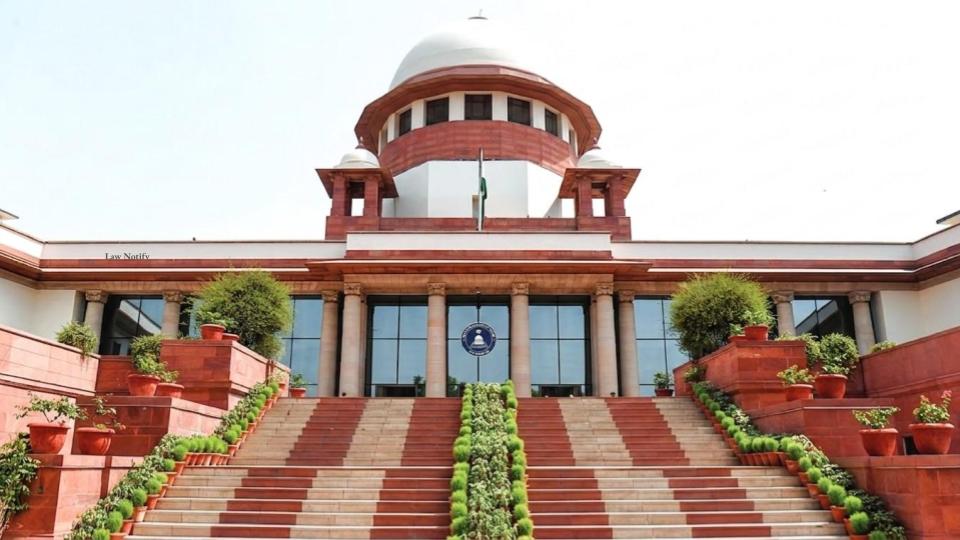
July 18, 2026 : The Supreme Court has directed a nationwide, time-bound assessment of washroom facilities in High Courts, district courts and taluka courts, emphasizing that access to adequate sanitation is a fundamental component of human dignity and cannot be denied on the ground of financial constraints.
A Bench comprising Chief Justice of India Surya Kant, Justice Joymalya Bagchi and Justice V. Mohana issued the directions while hearing Sarika Tyagi vs Union of India, a petition filed by women advocates highlighting the lack of ladies’ bar rooms, separate washrooms and other essential facilities in courts across the country.
Observing that the absence of basic sanitation infrastructure creates an undignified working environment, particularly for women lawyers, the Court held that States and Union Territories have a constitutional obligation to provide such facilities. The Bench categorically rejected the argument that a lack of funds could justify the failure to provide basic amenities.
The Supreme Court directed all Advocate Generals to conduct a factual assessment of the availability of washrooms for women members of the Bar in High Courts, district courts and taluka courts within two weeks. Based on the findings, they must submit proposals to their respective State Governments to ensure adequate sanitation and water facilities are created wherever deficiencies exist.
The Court further ordered the Public Works Departments (PWDs) of all States and Union Territories to begin construction work within four weeks of receiving the Advocate Generals’ reports. Every State and Union Territory has also been directed to file a compliance status report before the Supreme Court within six weeks, with the Bench making it clear that no delay or deviation from the prescribed timelines would be accepted.
During the hearing, Senior Advocate Monika Gusain informed the Court that several taluka courts in Karnataka and other parts of the country continue to function without separate washrooms for women. Expressing concern over the situation, Chief Justice Surya Kant questioned how women advocates could be expected to discharge their professional responsibilities in such inadequate conditions.
The Supreme Court specifically directed the Karnataka Advocate General to immediately assess the availability of washroom facilities in taluka courts and instructed the State PWD to commence construction through a special fund allocation. Encouraging Karnataka to take the lead, the Chief Justice remarked, “Become an example now.”
Addressing the issue of funding, the Bench observed that States cannot escape their constitutional responsibilities by citing financial difficulties. The Court remarked that if additional resources are required, governments may consider raising revenue through an additional excise duty on liquor or tobacco products to finance these essential public facilities.
Attorney General R. Venkataramani informed the Court that he proposed to convene a meeting of all Advocate Generals and standing counsel representing the States and Union Territories to assess existing infrastructure and explore funding mechanisms for the implementation of the Court’s directions. The Bench welcomed the proposal and requested that the meeting be held at the earliest.
The order marks a significant step towards improving basic infrastructure in courts across the country and reinforces that access to clean and separate washroom facilities is an essential requirement for ensuring dignity, equality and a safe working environment for members of the legal profession.