News Citation : 2026 LN (HC) 401
July 21, 2026 : In a significant judgment reinforcing statutory safeguards protecting tribal land, the Chhattisgarh High Court has ruled that land belonging to a member of an aboriginal tribe cannot be transferred to a non-tribal person through a Will without complying with the mandatory provisions of Section 165 of the Chhattisgarh Land Revenue Code, 1959. Holding that such a testamentary transfer cannot be used to defeat the legislative intent behind tribal land protection laws, the Court set aside the Board of Revenue’s order that had recognized mutation in favour of a non-tribal beneficiary and restored the Commissioner’s earlier decision declaring the transaction illegal.
The dispute arose from agricultural land situated in Village Rata of Surguja district, which had originally been settled in the name of Sahdev, a member of an aboriginal tribe. After his death, the land came into the name of his son Nanhu, who later transferred it through a registered sale deed to his sister Nanki, who also belonged to the same tribal community. Nanki subsequently married a non-tribal man, Mansai, and their son, Radhelal, claimed rights over the property on the strength of a registered Will executed by his mother on 9 July 2001. Based on the Will, the Naib Tehsildar mutated the land in his favour, a decision that was initially affirmed by the Sub-Divisional Officer. However, the Commissioner, Surguja Division, later reversed those orders, holding that the transfer violated the protective provisions of the Chhattisgarh Land Revenue Code. The Board of Revenue subsequently restored the mutation in favour of Radhelal, prompting the present writ petition before the High Court.
The petitioner argued that Radhelal, being the son of a non-tribal father, could not acquire rights over tribal land through a Will because Sections 165 and 170-B of the Chhattisgarh Land Revenue Code prohibit the transfer of tribal land to non-tribals without prior permission from the Collector. It was further contended that revenue authorities exceeded their jurisdiction by effectively recognizing title through mutation proceedings, even though questions concerning the legal effect of a Will ordinarily fall within the jurisdiction of a civil court. According to the petitioner, allowing such transfers through testamentary succession would undermine the very purpose of the legislation enacted to prevent alienation of tribal land.
On the other hand, the beneficiary of the Will argued that the property had been acquired through testamentary succession rather than through a sale or other conventional transfer. It was submitted that the registered Will had never been challenged before a competent civil court and had therefore attained finality. The respondent also contended that mutation proceedings are intended only for fiscal purposes and that Sections 165 and 170-B of the Code do not apply to inheritance through a Will.
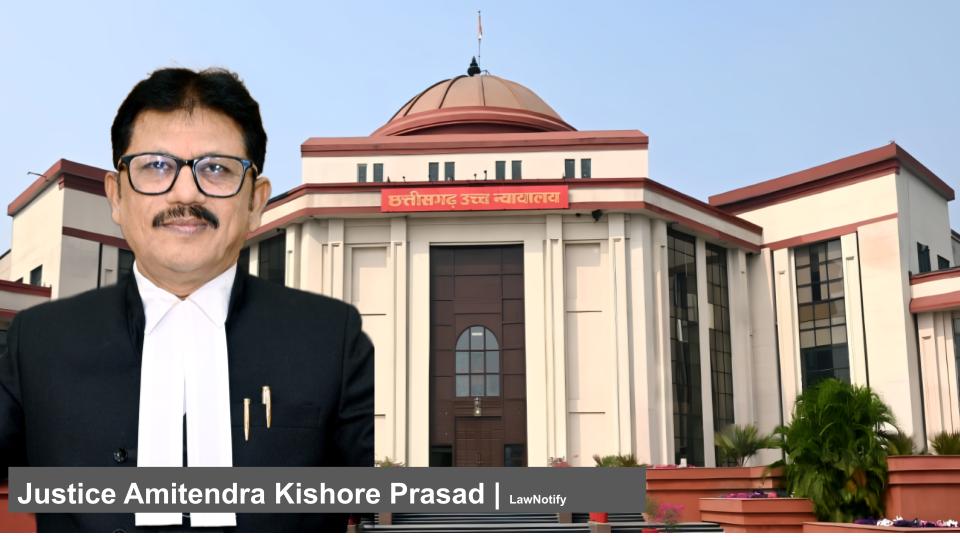
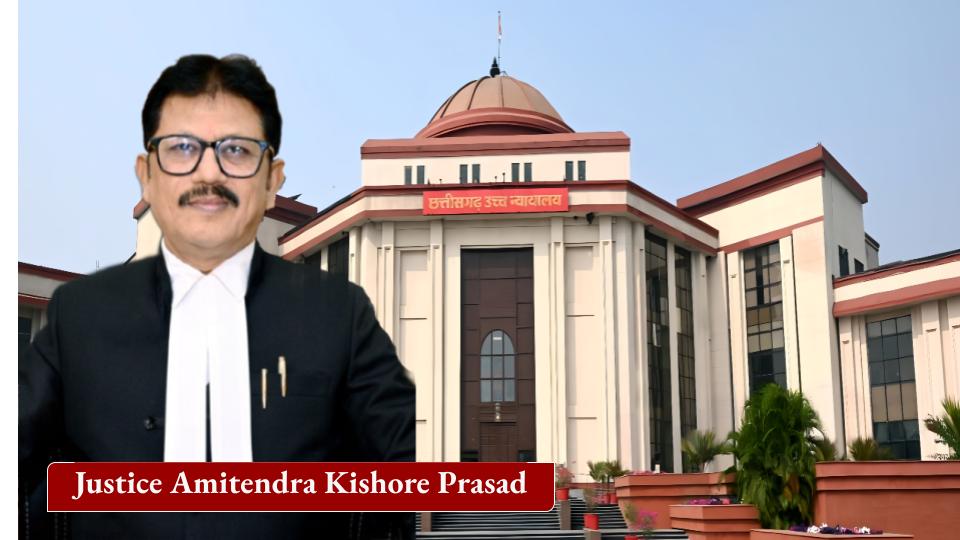
After examining the statutory framework, Justice Amitendra Kishore Prasad framed the central legal issue as whether tribal land could legally be transferred through a Will to a non-tribal person without obtaining the Collector’s prior approval under Section 165 of the Chhattisgarh Land Revenue Code. The Court undertook a detailed examination of the legislative scheme governing tribal land protection and emphasised that these provisions are welfare measures enacted to preserve the agricultural holdings of Scheduled Tribes from exploitation and indirect methods of alienation.
The Court analysed Section 165 of the Chhattisgarh Land Revenue Code, 1959, which places restrictions on the transfer of land belonging to members of aboriginal tribes. It observed that the statutory prohibition cannot be interpreted narrowly by excluding transfers through testamentary instruments. According to the Court, the real test is the legal effect of the transaction rather than the form in which it is executed. If a Will results in divesting a tribal landholder of ownership and vests the land in a non-tribal, it amounts to defeating the legislative objective of protecting tribal land.
Rejecting the reasoning adopted by the Board of Revenue, the High Court observed, “Merely because the mode of transfer is by way of testamentary disposition, the statutory prohibition imposed under Section 165 of the Chhattisgarh Land Revenue Code cannot be defeated. The substance and effect of the transaction has to be considered rather than the form in which it is executed.” The Court further held that accepting the Board’s interpretation would enable tribal landholders to bypass mandatory statutory safeguards simply by executing Wills in favour of non-tribals.
The Court also clarified that the dispute was not about the genuineness or execution of the Will but about its legal consequences in light of the statutory prohibition. It observed that “A person cannot acquire a right which is prohibited by law,” adding that the absence of a civil challenge to the Will did not override the mandatory restrictions imposed by the Land Revenue Code.
While interpreting the law, the High Court relied extensively on constitutional principles contained in Articles 39(b), 46 and 244 of the Constitution and referred to several landmark Supreme Court decisions, including Keshabo v. State of M.P., Samatha v. State of Andhra Pradesh, Chebrolu Leela Prasad Rao v. State of Andhra Pradesh, Lincai Gamango v. Dayanishi Jena, Rajasthan Housing Board v. New Pink City Nirman Sahkari Samiti Ltd., and Pandey Orson v. Ram Chander Sahu. These precedents consistently hold that laws protecting tribal land must receive a purposive interpretation to prevent alienation and exploitation of vulnerable communities.
Allowing the writ petition, the High Court quashed the Board of Revenue’s order dated 17 May 2023 and restored the Commissioner’s order dated 18 September 2008. It directed the revenue authorities to take consequential steps in accordance with law and categorically held that the respondent would not be entitled to claim any right, title or interest over the disputed land solely on the basis of the Will executed by his mother. The Court further directed that possession and future action concerning the land shall be governed strictly by the provisions of the Chhattisgarh Land Revenue Code.
The ruling is expected to have far-reaching implications for disputes involving inheritance and alienation of tribal land across Chhattisgarh. It makes clear that statutory restrictions protecting Scheduled Tribe land cannot be circumvented through testamentary instruments and reinforces the constitutional commitment to safeguarding the land rights of tribal communities. The judgment is also likely to guide revenue authorities while deciding mutation cases involving tribal properties and strengthen the enforcement of Sections 165 and 170-B of the Chhattisgarh Land Revenue Code.
Case Reference: Amar Sai v. State of Chhattisgarh & Others, WPC No. 3230 of 2023