News Citation : 2026 LN (HC) 412
August 3, 2026 : The Chhattisgarh High Court has held that transactions involving tribal land cannot escape judicial scrutiny merely because the original sale was between two members of Scheduled Tribes. The Court ruled that if allegations of fraud, benami arrangements, or indirect transfer of possession to a non-tribal are raised, authorities are duty-bound to conduct a comprehensive inquiry under Section 170-B of the Chhattisgarh Land Revenue Code, 1959.
While setting aside the orders of the Sub-Divisional Officer (SDO), Additional Collector and the Commissioner, Surguja Division, the High Court directed the competent revenue authority to conduct a fresh inquiry after recording oral and documentary evidence from all parties. The Court also ordered that the proceedings be completed within three months.
The dispute arose over agricultural land originally owned by tribal landholder Mansai Gond in Surajpur district. According to the case record, Mansai Gond executed a registered sale deed in 1968 in favour of Sonjharia Bai, who also belonged to the Scheduled Tribe community. After Sonjharia Bai’s death, the land was mutated in the name of her husband Sarju Ahir, a non-tribal, who subsequently sold the property in 2003 to Harishankar, the present petitioner.
Ranglal, son and legal heir of the original tribal owner, later initiated proceedings under Section 170-B of the Chhattisgarh Land Revenue Code alleging that the land had effectively passed into the possession of a non-tribal through fraudulent means. He also claimed that the transaction was designed to defeat statutory protections granted to tribal landholders and sought restoration of the property in favour of the tribal family.
The SDO dismissed the application in 2000 after concluding that the original transfer had taken place between two tribal persons and, therefore, Section 170-B was not attracted. The Additional Collector affirmed this view in appeal. However, in revision, the Commissioner, Surguja Division reversed both orders and directed restoration of the land to the tribal legal heir, holding that the actual possession with a non-tribal and failure to comply with statutory requirements justified invoking Section 170-B.
Challenging the Commissioner’s order before the High Court, the petitioner argued that the original sale between two tribal persons was valid and outside the scope of Section 170-B. It was also contended that Sonjharia Bai retained her Scheduled Tribe status despite marrying a non-tribal and, after her death, her husband lawfully inherited the property. According to the petitioner, the subsequent sale executed by Sarju Ahir in favour of the petitioner was therefore legally valid. The petitioner further argued that the Commissioner wrongly interfered with concurrent findings recorded by the subordinate revenue authorities without there being any proof of fraud.
Opposing the petition, the tribal respondent maintained that the entire transaction required detailed examination because actual possession had remained with a non-tribal and allegations of fraud had never been properly investigated. The State Government also supported the Commissioner’s reasoning, submitting that protective provisions governing tribal land cannot be defeated merely by showing the initial transaction as an inter-tribal transfer when the land ultimately reaches a non-tribal without statutory permission.
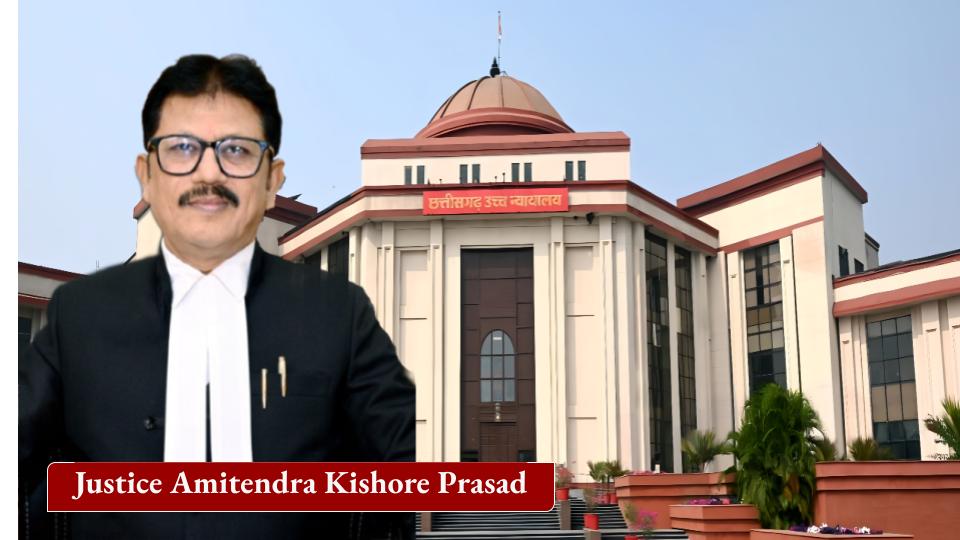
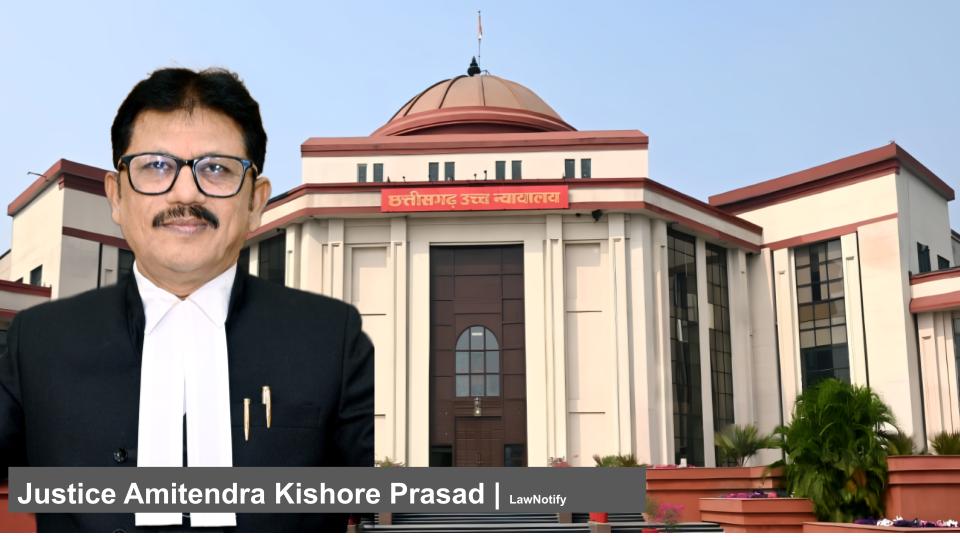
Examining the legislative purpose behind Section 170-B, Justice Amitendra Kishore Prasad observed that the provision is intended to reverse fraudulent transfers of tribal land and protect members of Scheduled Tribes from exploitation. The Court relied extensively on the Supreme Court judgment in Bhaiji v. Sub-Divisional Officer, Thandla [(2003) 1 SCC 692], which held that Section 170-B is not confined only to transfers between tribal and non-tribal persons. Even transactions apparently executed between two tribal persons can be scrutinized where fraud is suspected or where the actual possession has passed to a non-tribal.
The Court observed that “Section 170-B of the Code would also attract in a transaction between members of the tribe.” It further noted that dismissing proceedings solely because the sale deed was executed between two tribal persons amounts to a serious legal error when allegations of fraud have been specifically pleaded.
The judgment also addressed an important legal issue concerning inheritance by a non-tribal spouse. Interpreting Section 165(6) of the Chhattisgarh Land Revenue Code, the Court held that protective restrictions attached to tribal land cannot automatically disappear merely because ownership devolves upon a non-tribal husband after the death of his tribal wife. Adopting a purposive interpretation, the Court ruled that permitting unrestricted sale by such a non-tribal heir would defeat the very object of the legislation enacted to preserve tribal land ownership.
Referring to the Supreme Court’s decision in Amrendra Pratap Singh v. Tej Bahadur Prajapati [(2004) 10 SCC 65], the High Court reiterated that beneficial legislation protecting Scheduled Tribes must receive a liberal interpretation. The Court emphasized that any transaction resulting in extinguishment of a tribal’s title or possession in favour of a non-tribal should receive strict scrutiny under the protective provisions of law. It held that safeguards prescribed under Section 165(6) must be strictly complied with before such land can be alienated to a non-tribal purchaser.
However, while agreeing with the Commissioner’s legal interpretation regarding the applicability of Section 170-B, the High Court found that the Commissioner exceeded his jurisdiction by directly ordering restoration of the land without ensuring that the mandatory inquiry contemplated under Section 170-B(3) had first been conducted by the prescribed authority.
The Court held that “whether the transaction was fraudulent and whether the statutory presumption stood rebutted could have been determined only after a full-fledged enquiry by the competent authority.” It further observed that the SDO had failed to record evidence on the allegations of fraud and had dismissed the case solely because the original transaction appeared to be between tribal persons. Such an approach, according to the Court, was contrary to the statutory scheme.
Consequently, the High Court set aside the SDO’s order dated 16 March 2000, the Additional Collector’s appellate order dated 31 March 2003, and that portion of the Commissioner’s order dated 7 December 2021 directing immediate restoration of the land. The matter has been remanded to the concerned SDO for a fresh inquiry after giving all parties an opportunity to lead oral and documentary evidence. The SDO has been directed to conclude the proceedings within three months from receipt of the High Court’s order, and the parties have been directed to appear before the authority on 10 August 2026.
The ruling is likely to have wide implications for disputes involving tribal land across Chhattisgarh. It reinforces that authorities cannot reject proceedings under Section 170-B merely because the original transfer appears to be between members of Scheduled Tribes. Instead, revenue authorities must investigate whether the transaction was genuine or whether it served as a device to transfer possession to non-tribals in violation of the statutory protections contained in Sections 165(6) and 170-B of the Chhattisgarh Land Revenue Code. The judgment also underscores that beneficial legislation protecting tribal communities must be interpreted purposively to prevent indirect erosion of tribal land rights while ensuring that findings of fraud are based on proper evidence recorded through a fair inquiry.
Case Reference: Harishankar v. Ranglal & Others, WPC No. 429 of 2022, 2026:CGHC:33371