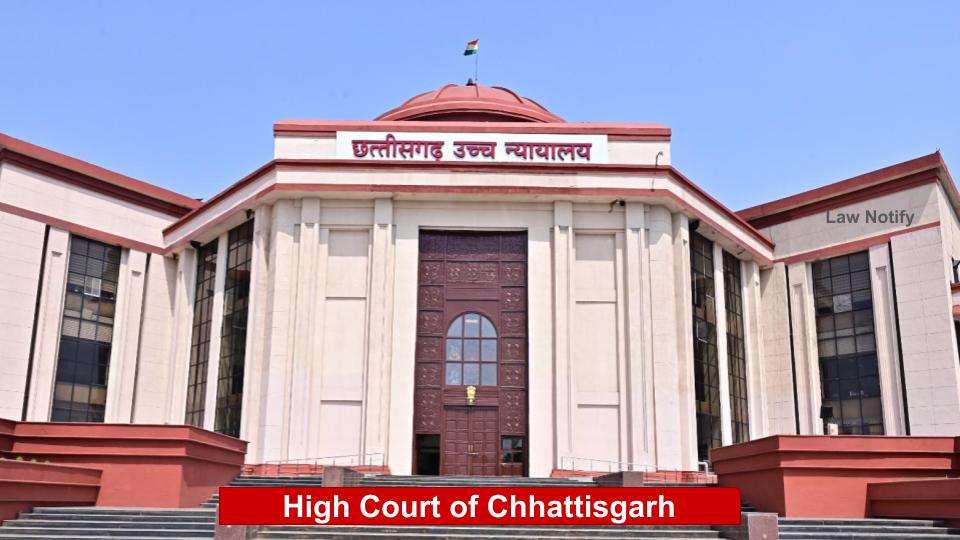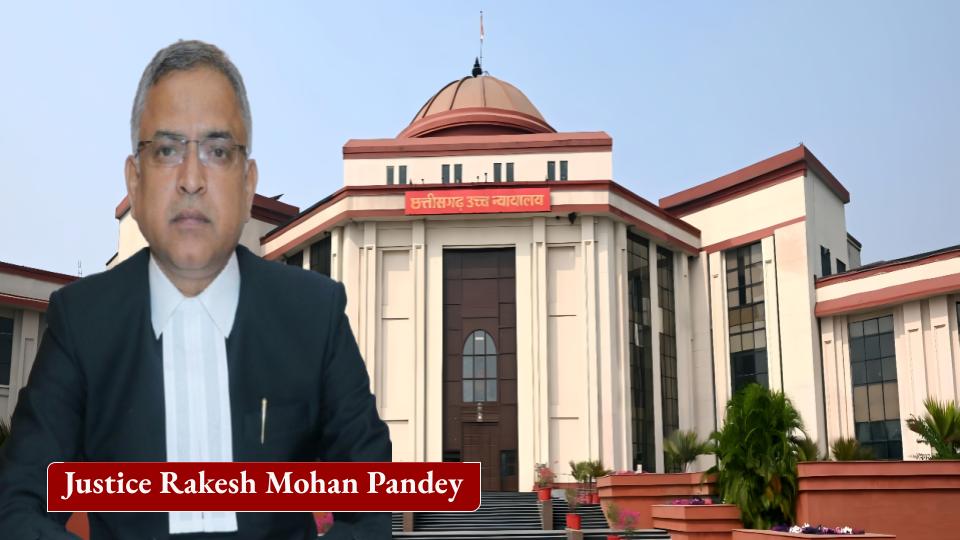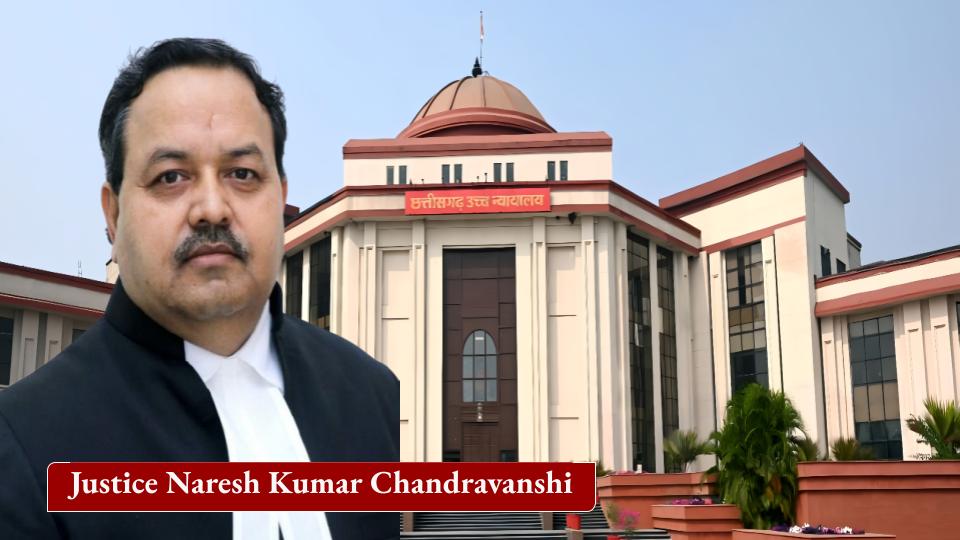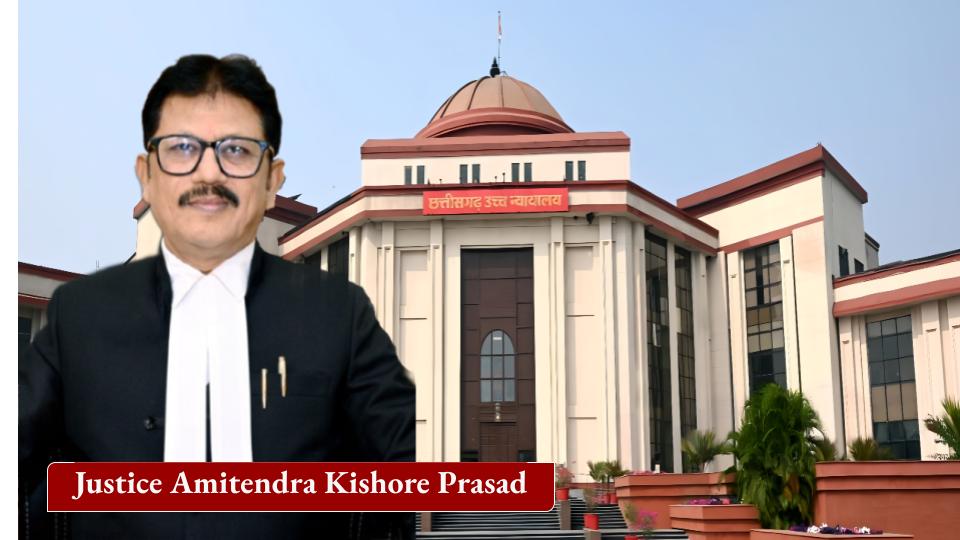
Bilaspur : The Chhattisgarh High Court at Bilaspur has allowed a batch of writ petitions challenging the reservation roster adopted for teacher recruitment under an advertisement dated May 4, 2023. The Court held that the advertisement could not be sustained to the extent that it relied on the reservation framework and model rosters previously declared unconstitutional by the High Court. However, it declined to order the wholesale cancellation of the recruitment process or the automatic termination of candidates already appointed, directing that the process continue subject to the final outcome of pending proceedings before the Supreme Court.
In its order delivered on October 14, 2026, Justice Amitendra Kishore Prasad clarified that the State Government must reconsider and regulate the vacancies and reservation roster in accordance with law. The Court also directed that future appointment and promotion orders connected with the disputed reservation framework must expressly state that they are subject to the Supreme Court’s final decision.
Chhattisgarh High Court Says Reservation Roster Cannot Rely on Quashed Policy
The dispute arose from the Chhattisgarh Government’s recruitment drive initiated through the Chhattisgarh Professional Examination Board (CGVYAPAM) for Assistant Teachers, Teachers and Lecturers under the Chhattisgarh School Education (Teaching Cadre) Service Rules, 2019. The advertisement dated May 4, 2023, covered several teaching posts, including Teachers under the E-Cadre and T-Cadre in the Surguja and Bastar divisions.
The petitioners questioned the category-wise distribution of vacancies, alleging that the reservation provided to Scheduled Tribe candidates was excessive and inconsistent with the applicable legal framework. According to their pleadings, 698 of the 1,113 advertised E-Cadre teacher posts were reserved for Scheduled Tribe candidates, representing approximately 62.71 per cent of the vacancies. Similarly, 3,105 of the 4,659 T-Cadre teacher posts were allocated to the Scheduled Tribe category, accounting for approximately 66.64 per cent.
The petitioners argued that this allocation substantially reduced the vacancies available to unreserved and other reserved categories, raising concerns under Articles 14 and 16 of the Constitution of India, which protect equality before the law and equality of opportunity in public employment.
The written examination was conducted on June 10, 2023, and its results were declared on July 2, 2023. The petitioners approached the High Court challenging the legality of the reservation arrangement and the continuation of the recruitment process on that basis.
Earlier Judgment Against 58% Reservation
A central issue before the High Court was the effect of its earlier judgment dated September 19, 2022, in WPC No. 591 of 2012 and connected matters. In that decision, a Division Bench had quashed the notification dated November 29, 2012, which had increased the overall reservation in Chhattisgarh from 50 per cent to 58 per cent. The revised arrangement provided 12 per cent reservation for Scheduled Castes, 32 per cent for Scheduled Tribes and 14 per cent for Other Backward Classes.
The earlier judgment was challenged before the Supreme Court in SLP (C) Nos. 18816-18817 of 2022. On May 1, 2023, the Supreme Court permitted the State to continue existing recruitment and promotion processes and make appointments, subject to the final outcome of the pending proceedings.
The petitioners contended that this interim order did not restore the reservation notification that had been quashed by the High Court. They argued that the State could not use the earlier reservation framework as an unrestricted basis for the fresh recruitment advertisement issued on May 4, 2023.
Court Explains the Effect of the Supreme Court’s Interim Order
Justice Amitendra Kishore Prasad examined whether the Supreme Court’s order of May 1, 2023, validated the disputed reservation framework. The High Court held that permission to continue recruitment was not equivalent to a final judicial approval of the reservation policy.
The Court explained that the words “subject to the outcome” were crucial because they preserved the Supreme Court’s authority to determine the validity of the reservation framework in the pending proceedings. The interim order allowed the recruitment process to continue for administrative reasons, but did not give selected candidates an absolute or irreversible right to their appointments.
The Court observed that the interim protection granted by the Supreme Court could not be interpreted as reviving the reservation notification dated November 29, 2012, or the consequential model rosters that had been declared unconstitutional by the High Court. The State was required to respect the earlier judgment while also complying with the Supreme Court’s subsequent directions.
The Court further held that the mere existence of backlog vacancies could not, by itself, justify the use of a reservation roster derived from a framework that had been judicially invalidated. The State was required to distinguish between vacancies lawfully carried forward under a valid roster and those claimed as backlog vacancies under the disputed arrangement.
Constitutional Principles Governing Reservation
The judgment discussed the constitutional principles governing reservation in public employment, particularly Articles 14 and 16 of the Constitution. It referred to the Supreme Court’s decision in Indra Sawhney v. Union of India, which established the general principle that reservation under Article 16(4) should ordinarily not exceed 50 per cent, subject to exceptional circumstances recognised by law.
The Court also considered the principles laid down in decisions including R.K. Sabharwal v. State of Punjab and M. Nagaraj v. Union of India. These decisions were relevant to the relationship between reservation policy, the operation of reservation rosters and constitutional equality.
The judgment emphasised that a reservation roster is a mechanism for implementing a legally valid reservation policy. It cannot independently sustain a reservation arrangement when its underlying legal foundation has been invalidated. At the same time, the Court clarified that it was not delivering a final ruling on the ultimate constitutional validity of the reservation framework currently under consideration before the Supreme Court.
Existing Appointments Protected, but Subject to Supreme Court Decision
While allowing the petitions, the High Court declined to cancel the entire recruitment process or direct the automatic termination of candidates who had already been appointed. It recognised that such a step could disrupt public administration and would not be consistent with the Supreme Court’s interim order.
Instead, the Court directed the State authorities to reconsider and regulate the vacancies and reservation roster in accordance with law, subject to the final decision in the pending Supreme Court proceedings.
The Court also issued specific directions concerning future appointments and promotions. Every appointment order issued under the disputed recruitment process must expressly state that the appointment is subject to the final outcome of SLP (C) Nos. 18816-18817 of 2022 and connected proceedings, as well as any further order passed by the Supreme Court. The same condition must be incorporated into relevant promotion orders and, where applicable, orders concerning seniority, confirmation, regularisation and consequential service benefits.
The Court further clarified that candidates already appointed would not be automatically removed merely because the advertisement had been set aside to the extent indicated in the judgment. However, no appointee could claim an indefeasible right to continued service or other consequential benefits contrary to the Supreme Court’s final decision.
If the Supreme Court’s eventual ruling requires changes to the reservation roster, selection lists, appointments, promotions or seniority, the State authorities must carry out the necessary exercise in accordance with that ruling.
Final Decision
The Chhattisgarh High Court allowed the batch of writ petitions and quashed the advertisement dated May 4, 2023, to the extent that it gave effect to the reservation arrangement based on the notification dated November 29, 2012, and the consequential model rosters previously declared unconstitutional by the High Court.
The recruitment and promotion processes were permitted to continue, but all consequential actions and appointments remain subject to the final outcome of the proceedings pending before the Supreme Court. The High Court did not express a final opinion on the ultimate validity of the reservation framework and made no order as to costs.
The ruling underscores that recruitment authorities must comply with binding judicial decisions when preparing reservation rosters. It also clarifies that interim permission to continue recruitment does not amount to final approval of a disputed reservation policy, and that appointments made during pending litigation may remain conditional on the ultimate judicial outcome.
Case Reference: Kameshwar Kumar Yadav & Others v. State of Chhattisgarh & Others, connected with WPS No. 125 of 2024, WPS No. 300 of 2024 and WPS No. 5884 of 2023; WPS No. 4254 of 2023 and connected matters, order. Counsel for the petitioners: Ms. Naushina Afrin Ali, Senior Advocate, assisted by Ms. Ankita Gouraha, Mr. Shailendra Kumar Bajpai, Mr. Ajay Shrivastava and Mr. Tapan Kumar Chandra, Advocates. For the State: Mr. Anand Dadariya, Deputy Advocate General.