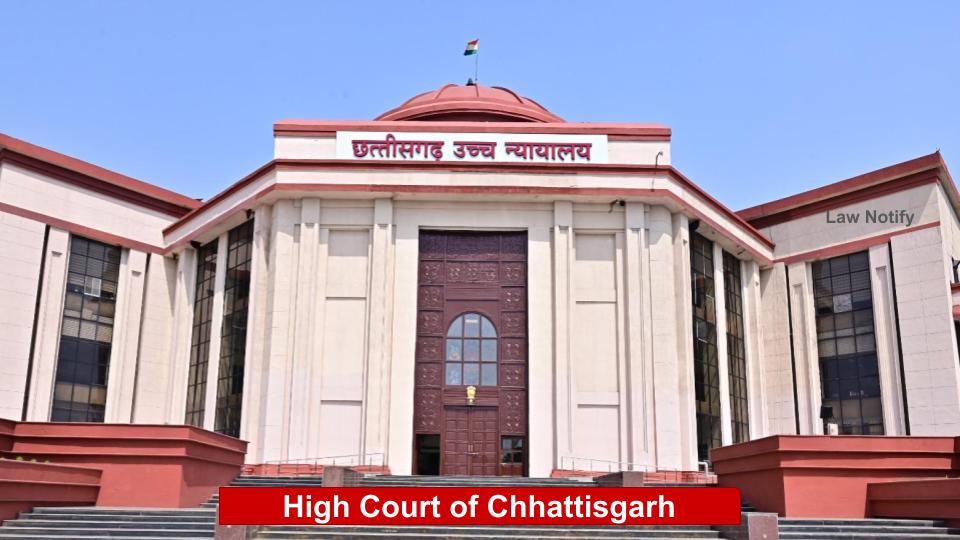
Bilaspur : The Chhattisgarh High Court at Bilaspur has refused to interfere with an arbitral award rejecting a contractor’s claim for recovery of approximately ₹41.63 lakh from the South East Central Railway (SECR), holding that the contractor failed to establish through the prescribed documentary evidence that the galvanized steel masts supplied for railway electrification work had been procured from RDSO/CORE-approved sources.
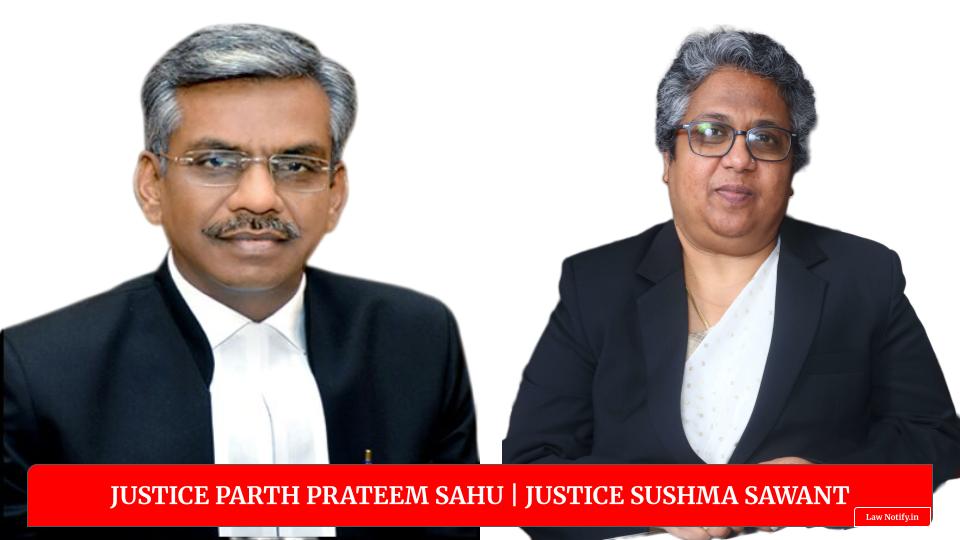
A Division Bench of Justice Parth Prateem Sahu and Justice Sushma Sawant held that compliance with contractual conditions governing the procurement and inspection of materials is an essential obligation. Merely submitting galvanizing test certificates or obtaining an inspection certificate cannot replace the specific documentary proof required under the contract to establish the actual manufacturer and approved source of the materials.
The Court also clarified that the release of 85% of the contract payment as an interim or on-account payment does not automatically establish complete contractual compliance or prevent the Railway authorities from withholding the remaining amount when mandatory conditions for final payment have not been fulfilled.
Background of the Dispute
The dispute arose from a railway electrification contract awarded to M/s Teja Electricals, a proprietary concern of Rajesh Tejwani. The South East Central Railway had invited tenders on June 3, 2005, for electrification work at the private railway siding of M/s Ind Agro Synergy Limited at Kotarlia.
After accepting the contractor’s bid, the Railway issued a Letter of Acceptance on August 4, 2005, and entered into a formal agreement on October 5, 2005. The work was required to be completed within six months. The contractor completed the work on May 14, 2006, and the Railway subsequently issued a completion certificate acknowledging satisfactory execution of the contractual work.
The contractor submitted a final bill amounting to ₹1,49,33,340. After adjusting the payments already released, approximately ₹41.63 lakh remained payable. However, the Railway authorities withheld the balance amount, raising objections regarding the manufacturer’s test certificates and the source from which the galvanized steel structures had been procured.
The Railway maintained that the test certificates submitted by the contractor had been issued by a company that had carried out galvanization of the masts but had not actually manufactured them. It also alleged that the contractor had failed to submit the original manufacturer’s challan establishing procurement from an approved source.
Contractor’s Arguments and Railway’s Stand
The contractor argued that the materials had been procured from approved sources and that the galvanizing test reports submitted during the payment process had been verified by M/s Unique Structure & Tower Limited, Raipur. It also relied upon a CORE communication dated December 3, 2014, concerning the approved status of the relevant suppliers, along with an inspection certificate issued by RITES.
It was further argued that the Railway had already released 85% of the payment after accepting the relevant certificates and documents. Therefore, withholding the remaining 15% of the final bill was unjustified, particularly when the work had been completed satisfactorily and a completion certificate had been issued.
The Railway opposed the appeal, contending that the contractor was bound by the special conditions of the agreement, which required materials to be procured from RDSO/CORE-approved sources and supported by the prescribed inspection certificate and original supplier’s challan. According to the Railway, a certificate issued by a galvanizing agency could not independently establish the identity of the actual manufacturer or prove that the materials had been procured from an approved source.
High Court’s Findings on Contractual Obligations
After examining the agreement, the arbitral award and the documents placed on record, the High Court focused on Item No. 3 of the Special Conditions of Contract. The provision specifically required the contractor to procure materials from RDSO/CORE-approved sources. It further stipulated that the materials must be inspected by RITES or a competent railway supervisor and that the inspection certificate must be submitted along with the original supplier’s challan before payment could be released.
The Bench observed that the contractor claimed to have procured the materials from M/s Shree Bajrang Alloys Limited, Raipur, but had submitted galvanizing test reports issued by M/s Unique Structure & Tower Limited, Raipur, which had only undertaken the galvanization process and was not the manufacturer of the masts.
The Court found that the certificates issued by the galvanizing agency, without supporting documents identifying the actual manufacturer and establishing the procurement source, were insufficient to demonstrate compliance with the contractual requirements.
In an important observation, the Bench explained that the real issue was not merely whether the materials had undergone galvanization or whether test reports had been submitted. The contractor was required to establish that the materials had actually been procured from the sources approved under the agreement.
The Court also rejected the argument that the release of 85% of the payment amounted to acceptance of the materials or waiver of the Railway’s contractual rights. It clarified that interim payments and final settlement operate under distinct contractual conditions. Therefore, an earlier payment cannot automatically be treated as proof that all requirements for final payment have been fulfilled.
Why the Court Refused to Interfere With the Arbitral Award
The High Court examined the scope of judicial interference under Sections 34 and 37 of the Arbitration and Conciliation Act, 1996. It reiterated that an appellate court cannot reassess the entire evidence or substitute its own interpretation of a contract merely because another possible view exists.
The Bench relied upon several Supreme Court decisions, including MMTC Ltd. v. Vedanta Ltd., (2019) 4 SCC 163; Dyna Technologies Private Limited v. Crompton Greaves Limited, (2019) 20 SCC 1; Delhi Airport Metro Express Private Limited v. Delhi Metro Rail Corporation Ltd., (2022) 1 SCC 131; and Reliance Infrastructure Ltd. v. State of Goa, (2024) 1 SCC 479.
The Court emphasized that interference with an arbitral award is permissible only on legally recognized grounds, including patent illegality going to the root of the matter, violation of public policy or breach of natural justice, as applicable under the Act.
It further noted that the arbitrator had considered the relevant contractual conditions and the available evidence before rejecting the contractor’s claim. The interpretation adopted by the arbitrator was a plausible one and could not be displaced merely because the contractor proposed a different interpretation.
The Bench also considered the additional documents brought on record during the appeal, including the CORE communication dated December 3, 2014, and the RITES inspection certificate. However, it found that these documents did not conclusively establish compliance with the requirement of producing the actual manufacturer’s test report and documentary proof of procurement from an approved source.
Legal Significance of the Judgment
The ruling reiterates an important principle in government and railway contracts: satisfactory completion of work does not, by itself, establish entitlement to the entire contractual payment when specific documentary and technical conditions remain unfulfilled.
It also clarifies the limited jurisdiction of courts in arbitration matters. Under Section 34 of the Arbitration and Conciliation Act, 1996, an arbitral award can be challenged only on the statutory grounds prescribed by law. Section 37 does not provide a wider appellate jurisdiction to reconsider the merits of the dispute.
The judgment is particularly significant for government contractors, infrastructure companies and suppliers dealing with public authorities. It highlights the importance of maintaining original purchase documents, manufacturer’s test certificates, supplier challans and inspection records throughout the execution of a contract.
The decision also reinforces that contractual conditions concerning approved procurement sources are substantive obligations and cannot be treated as mere procedural formalities.
Final Decision
Dismissing the appeal, the Chhattisgarh High Court held that the contractor had failed to establish any ground warranting interference with the arbitral award or the Commercial Court’s order. The findings of the arbitrator were neither perverse nor arbitrary and did not suffer from patent illegality or any violation of the fundamental policy of Indian law.
Accordingly, the Court dismissed Arbitration Appeal No. 91 of 2017, leaving undisturbed the order of the Commercial Court, which had upheld the arbitral award rejecting the contractor’s monetary claim.
Case Details
Case Title: M/s Teja Electricals Through Proprietor Rajesh Tejwani v. The Chief Administrative Officer (Const), South East Central Railway & Another.
Case Number: ARBA No. 91 of 2017.
Bench: Justice Parth Prateem Sahu and Justice Sushma Sawant.
Relevant Law: Sections 11(6), 34 and 37 of the Arbitration and Conciliation Act, 1996.
Appellant’s Counsel: Mr. Prafulla N. Bharat, Senior Advocate, assisted by Mr. Harshal Chouhan, Advocate.
Respondents’ Counsel: Mr. R.K. Mishra, Deputy Solicitor General.