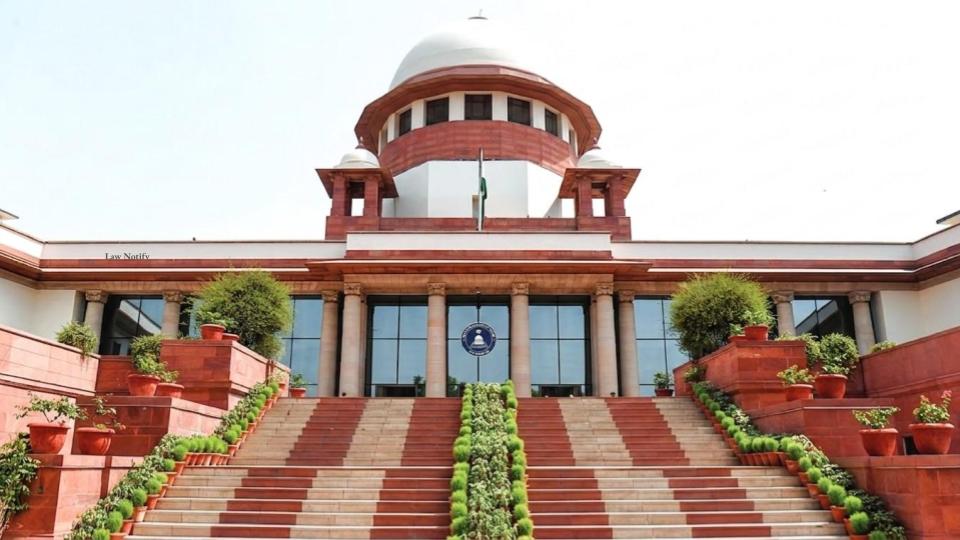
August 4, 2026 : The Supreme Court has directed the Union Government and the National Board for Wildlife (NBWL) to determine whether any Wetland Conservation Reserve exists in the relevant areas of Himachal Pradesh before deciding whether the 10-kilometre restriction on mining activities is applicable. The direction is significant as it concerns mining operations in Himachal Pradesh located near the Asan Wetland Conservation Reserve, which is situated across the State border in Uttarakhand.
The case raises an important question on the extent to which environmental safeguards protecting ecologically sensitive areas can extend beyond the territorial limits of a notified conservation reserve. The Court has made it clear that the applicability of the 10-kilometre restriction cannot be presumed solely on the basis of geographical proximity and must instead be supported by the statutory and ecological status of the area concerned.
The dispute stems from earlier Supreme Court directions imposing restrictions on mining activities within a specified distance from protected ecological zones. Those directions had raised the issue of whether mining undertaken within 10 kilometres of a Wetland Conservation Reserve requires prior approval from the competent wildlife authorities. Seeking clarity on this aspect, the Himachal Pradesh Government approached the Supreme Court regarding mining operations located within its territory but falling within a 10-kilometre radius of the Asan Wetland Conservation Reserve in Uttarakhand.
According to the State, applying the restriction mechanically could significantly affect mining operations that have already been established after obtaining statutory permissions and environmental clearances from the competent authorities. Several mining leaseholders and stone-crushing units are operating in the concerned region, and the issue has substantial implications for existing industrial activity.
The controversy also involves the question of territorial jurisdiction. Himachal Pradesh has argued that since the Asan Wetland Conservation Reserve is located in Uttarakhand, mining activities undertaken beyond the notified reserve, though within the prescribed radial distance, should not automatically attract the regulatory framework applicable to the protected area.
Earlier proceedings before the Himachal Pradesh High Court had also highlighted concerns regarding mining leases and stone crushers operating near the inter-State boundary within the buffer zone associated with the Asan Conservation Reserve.
To resolve the issue, the Supreme Court has directed the Centre and the NBWL to conduct a factual and statutory assessment and inform the Court whether any Wetland Conservation Reserve exists in the relevant portions of Himachal Pradesh. The Court observed that such a determination is necessary before deciding whether the 10-kilometre mining restriction can be enforced against the mining activities in question.
The matter also raises broader issues relating to environmental governance, statutory clearances and the regulation of ecologically sensitive zones. Indian environmental jurisprudence has consistently recognised the need for enhanced protection of protected areas and their surrounding ecosystems from activities that may lead to ecological degradation. However, the Court has emphasised that regulatory restrictions must operate within the framework of the applicable law and established facts.
The Supreme Court noted that the legal status of the area, its ecological relationship with the notified conservation reserve and the governing statutory provisions must all be examined before imposing environmental restrictions. This approach reflects the principle that environmental safeguards must be based on objective statutory criteria rather than geographical distance alone.
The issue assumes particular importance in the mining sector, where extraction activities may affect surrounding ecosystems through habitat disturbance, changes in landforms, depletion of water resources and cumulative environmental impacts extending beyond individual lease boundaries.
The proceedings also underscore the need for effective inter-State coordination in environmental governance, especially where protected ecosystems are situated close to State borders and commercial activities in a neighbouring State have the potential to affect those ecosystems.
The Supreme Court has now placed the responsibility on the Union Government and the National Board for Wildlife to furnish a detailed factual and statutory report. Based on that assessment, the Court will determine whether the 10-kilometre mining restriction is legally applicable to mining operations located in Himachal Pradesh near the Asan Wetland Conservation Reserve.