News Citation : 2026 LN (HC) 125 | 2026:CGHC:364
January 02, 2026 : The High Court of Chhattisgarh has upheld the acquittal of a man accused of abetting his wife’s suicide, ruling that the prosecution failed to prove the essential ingredients required under law to sustain a conviction under Section 306 of the Indian Penal Code.
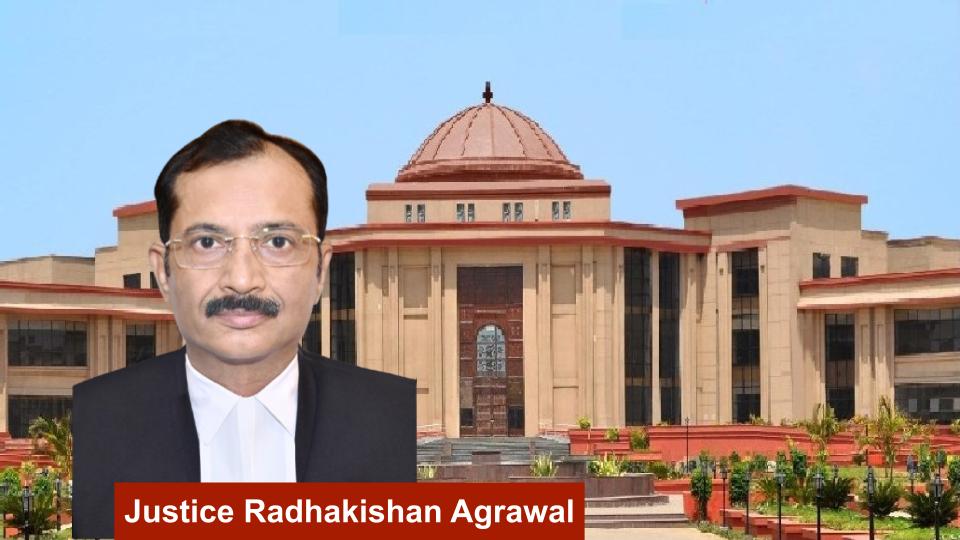
In a judgment delivered on January 2, 2026, Justice Radhakishan Agrawal dismissed the State’s appeal against the acquittal of Umendra Rana in a case arising from Sessions Trial No. 109/2014. The trial court had earlier acquitted him of the charge of abetment of suicide in connection with the death of his wife, Saraswati Rana.
According to the prosecution, Saraswati married the accused in May 2013 and began living at her matrimonial home in North Bastar Kanker district. It was alleged that her husband was addicted to alcohol and frequently subjected her to physical and mental cruelty. On the intervening night of July 8 and 9, 2014, she was found hanging at her home. A merg intimation was recorded, followed by registration of an FIR. The postmortem examination confirmed that the cause of death was asphyxia due to hanging, and the nature of death was suicidal.
The trial court had accepted that the death was a suicide but concluded that there was no evidence of abetment as defined under Section 107 of the IPC. Challenging that finding, the State argued before the High Court that the testimony of the deceased’s father, mother and uncle clearly showed that the accused harassed her under the influence of alcohol, which ultimately drove her to take her life.
However, the High Court found significant inconsistencies in the prosecution’s case. The deceased’s father admitted during cross-examination that neither he nor any family member had made allegations of cruelty or assault against the accused at the time of the inquest proceedings. He also conceded that no complaint had been lodged with the police or any authority prior to the incident. The mother similarly stated that her daughter had not complained of physical assault and that she did not know the reason for her suicide. The uncle’s testimony was on similar lines.
The court also noted that no external injuries were found on the deceased’s body during the inquest and that there was a delay of more than a month between the date of the incident and the registration of the FIR, for which no satisfactory explanation was offered by the prosecution.
Relying on precedents of the Supreme Court of India, the High Court reiterated that conviction under Section 306 IPC requires proof of a clear act of instigation or intentional aid that directly led the deceased to commit suicide. Mere allegations of harassment, without evidence of a proximate act or clear mens rea, are not sufficient.
The court emphasized that in an appeal against acquittal, the presumption of innocence is reinforced and can be disturbed only if the trial court’s findings are perverse or wholly unreasonable. In this case, it found that the trial court had properly appreciated the evidence and that its view was a possible and reasonable one.
Holding that the prosecution failed to establish abetment beyond reasonable doubt, the High Court dismissed the State’s appeal and confirmed the acquittal of the accused.
Case Reference : ACQA No. 109 of 2015, State of Chhattisgarh v. Umendra Rana; Counsel for the Appellant: Mr. Ram Narayan Sahu, Deputy Government Advocate; Counsel for the Respondent: Mr. Amit Kumar Sahu, Advocate.