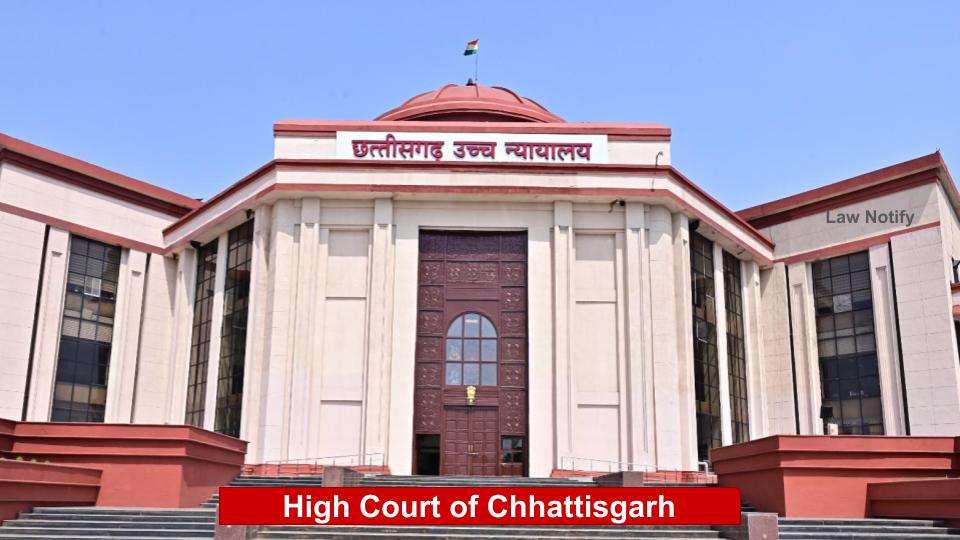
Bilaspur : The High Court of Chhattisgarh at Bilaspur has notified a comprehensive Standard Operating Procedure (SOP) aimed at streamlining the translation and transmission of records in legal aid cases, particularly for appeals and Special Leave Petitions (SLPs) before higher courts. The notification, dated April 28, 2026, follows directions issued by the Supreme Court in Shankar Mahto v. State of Bihar and seeks to address systemic delays in the legal aid process.
The SOP establishes a structured framework covering the entire lifecycle of record handling from the pronouncement of judgment in trial courts to the filing of appeals before High Courts and the Supreme Court. It mandates strict timelines, accountability mechanisms, and the use of digital tools to ensure efficiency and transparency.
A key feature of the SOP is the categorisation of cases based on urgency. High-priority criminal matters, including death penalty and life imprisonment cases, will require immediate action and daily monitoring, while civil and less severe cases will follow standard timelines with periodic reviews.
The Court has laid down detailed timelines for each stage of the appeal process. For instance, trial courts must provide copies of judgments on the same day or within 24 hours, while translation and certification of key documents must be completed within 15 to 20 days depending on the case category. Non-compliance may trigger alerts and potential disciplinary action.
The SOP also standardises translation practices by requiring certified translations, declarations of non-association by translators, and adherence to uniform legal terminology. Sensitive information, particularly in cases involving protected witnesses, must be redacted in compliance with data protection norms.
To strengthen institutional capacity, the High Court has directed the creation of dedicated posts for translation supervisors and the empanelment of qualified translators with defined eligibility criteria, including language proficiency and legal translation experience. Regular training, performance evaluation, and incentives for timely completion have also been prescribed.
Digital integration forms a central pillar of the SOP. Legal Services Authorities and jail authorities are required to adopt a unified digital platform enabling real-time tracking of cases, automated reminders, encrypted document sharing, and audit logs to ensure traceability.
Monitoring committees at the High Court level will oversee implementation, review compliance monthly, and recommend corrective measures. The SOP further mandates coordination with jail authorities through periodic video conferencing and maintenance of a Legal Proceedings Register to track case progress.
Importantly, the SOP introduces a delay explanation framework requiring detailed documentation of each stage in case of delays, reinforcing accountability across stakeholders.
The High Court stated that the SOP is designed to uphold constitutional guarantees under Articles 21, 39A, and 142 by ensuring timely access to justice for legal aid beneficiaries. The framework comes into effect immediately from the date of notification.