News Citation : 2026 LN (HC) 306 | 2026:JHHC:12133-DB
April 24, 2026 : The Jharkhand High Court has upheld the preventive detention of Prakash Mishra alias Himanshu Kumar, ruling that the action taken by authorities under the Jharkhand Control of Crimes Act, 2002 was legally justified and necessary to maintain public order.
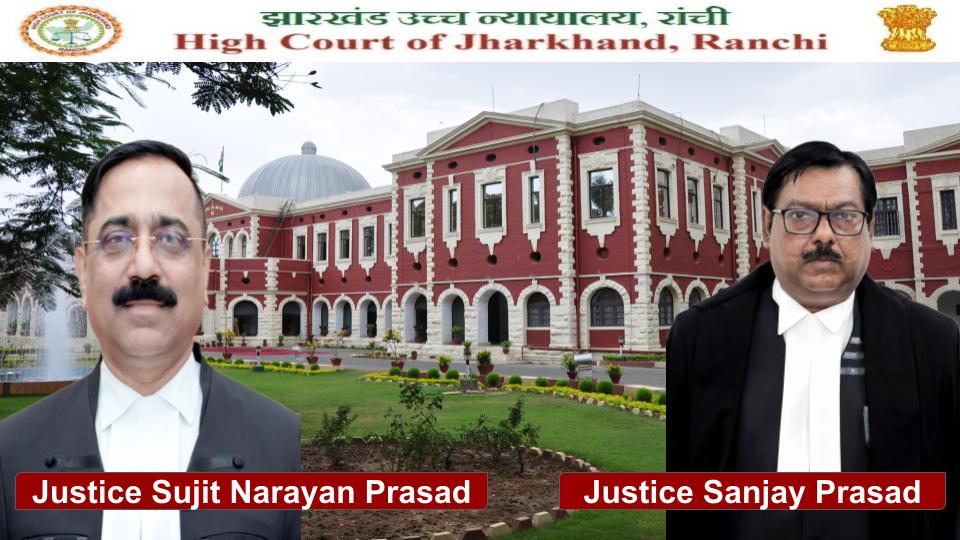
A division bench of Justice Sujit Narayan Prasad and Justice Sanjay Prasad dismissed the writ petition filed by the detainee, who had challenged a series of orders including the initial detention order issued on November 17, 2025, its confirmation by the state government, and subsequent extensions of his detention period.
The case arose from a detention order passed by the District Magistrate of East Singhbhum based on police recommendations. Authorities claimed that the petitioner was involved in multiple criminal activities ranging from murder and attempt to murder to extortion and offences under the Arms Act. According to the state, the petitioner continued to operate a criminal network even while in custody, allegedly directing associates to extort money from businessmen and contractors, thereby creating an atmosphere of fear in Jamshedpur.
Challenging the detention, the petitioner argued that the order was arbitrary and based on incomplete facts. His counsel pointed out that several of the cases cited by the authorities had either resulted in acquittal or bail, and that many entries relied upon were merely station diary records rather than formal FIRs. It was also argued that the petitioner had been in custody for a long time and could not be reasonably considered a threat to public order. The plea further alleged that authorities failed to properly apply their mind and did not follow due procedure, including the requirement of communicating grounds of detention.
The state government, however, maintained that the petitioner was a habitual offender deeply involved in organized crime. It argued that preventive detention was necessary as ordinary legal mechanisms had failed to curb his activities. The state also emphasized that the detention was based on credible inputs and a pattern of repeated offences that posed a continuing threat to public order.
After examining the record, the High Court held that the petitioner’s conduct fell within the definition of an “anti-social element” under the 2002 Act. The bench observed that the materials on record indicated a pattern of repeated criminal activity, which justified invoking preventive detention provisions. The court also found that the detaining authority had reached its decision after considering relevant facts and that there was a clear and proximate link between the petitioner’s past conduct and the need to prevent future harm.
Addressing the argument regarding acquittals and bail, the court clarified that preventive detention is not dependent solely on past convictions. Instead, it is based on the likelihood of future conduct that may threaten public order. The bench held that acquittal in some cases or grant of bail does not automatically invalidate a detention order if the overall conduct indicates habitual criminal activity.
The court also rejected the claim that the petitioner was not informed of the grounds of detention, noting that no substantive evidence had been presented to support this allegation.
Concluding that the detention order and its extensions were passed in accordance with law and did not suffer from procedural or legal defects, the High Court dismissed the petition and upheld the continued detention of the petitioner.
Case Reference : W.P. (Cr.) (DB) No. 39 of 2026, Prakash Mishra @ Himanshu Kumar v. State of Jharkhand & Ors.; For the Petitioner: Mr. Rishav Kumar, Advocate; For the Respondent-State: Mr. Gaurav Raj, AC to AAG-II.