News Citation : 2026 LN (HC) 305 | 2026:JHHC:12097
April 24, 2026 : The Jharkhand High Court has rejected the anticipatory bail plea of Arun Pati Tripathi, a former Managing Director of the Chhattisgarh State Marketing Corporation Limited (CSMCL), in connection with an alleged liquor policy scam involving bribery and financial irregularities.
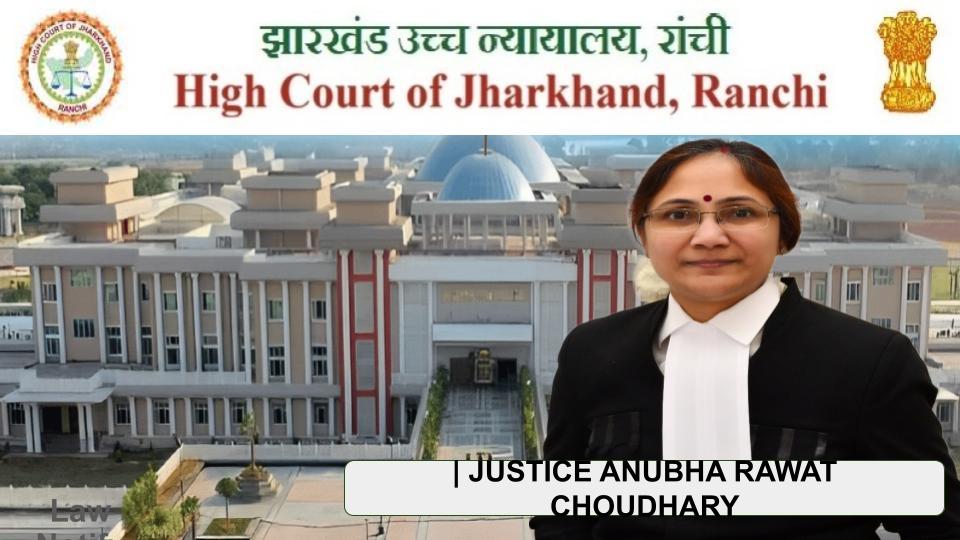
In its order dated April 24, 2026, Justice Anubha Rawat Choudhary held that there were serious and direct allegations against Tripathi, including his alleged role in paying a ₹5 crore bribe to a senior Jharkhand government official. The court found sufficient material on record indicating his involvement in a larger conspiracy that allegedly caused significant financial loss to the state exchequer.
The case stems from an FIR registered by the Anti-Corruption Bureau (ACB), Ranchi, relating to irregularities in Jharkhand’s liquor retail policy. Investigators alleged that two placement agencies submitted fake bank guarantees while securing contracts for manpower supply to state-run liquor outlets. During the probe, Tripathi’s alleged links to key accused, including former Excise Secretary Vinay Kumar Choubey, came under scrutiny.
According to the prosecution, Tripathi, along with co-accused, delivered ₹5 crore in cash to Choubey at his official residence in Ranchi in January 2022. Statements recorded under Section 183 of the Bharatiya Nagarik Suraksha Sanhita (BNSS), which carry evidentiary value similar to judicial confessions, were cited by the court as significant material connecting him to the alleged offence.
The High Court emphasized that these statements, along with other evidence collected during investigation, justified the need for custodial interrogation. It observed that such interrogation was necessary to confront the accused with co-conspirators and uncover the full extent of the alleged scam.
Tripathi had argued that he was only acting in an advisory capacity when CSMCL was engaged to assist Jharkhand State Beverages Corporation Limited (JSBCL) and that he had no role in policy decisions. He also contended that prior sanction under Section 17A of the Prevention of Corruption Act was mandatory before initiating investigation against a public servant.
Rejecting this argument, the court clarified that sanction under Section 17A is not required in cases involving allegations of bribery, as such acts do not fall within the scope of official duties. It further noted that the allegations against Tripathi were not related to any policy recommendation or official decision-making function.
The court also took note of Tripathi’s alleged non-cooperation with the investigation. Despite being issued notices by the ACB, he failed to appear for questioning. His explanation that he was required to report daily to investigators in Chhattisgarh under Supreme Court bail conditions was found unconvincing, particularly since this ground was not properly raised in his bail application.
Additionally, the court observed that while some co-accused had been granted bail, others had faced rejection, and the relief granted to one accused could not be automatically extended to another, especially when specific allegations and evidence differed.
Concluding that the case involved a “deep-rooted conspiracy” with substantial evidence pointing toward Tripathi’s involvement, the High Court dismissed his anticipatory bail plea.
Case Reference : A.B.A. No. 7285 of 2025, Arun Pati Tripathi vs. State of Jharkhand through Anti-Corruption Bureau; For the Petitioner: Mr. Shishir Prakash, Advocate; M/s Karuna Krishan Tharya (through V.C.); Mr. Bibhash Sinha, Advocate; Mr. Manish Kumar, Advocate; For the Opposite Party (ACB): Mr. Sumeet Gadodia, Advocate; Mr. Ritesh Kumar Gupta, Advocate; Mr. Nillohit Choubey, Advocate; Ms. Shruti Shekhar, Advocate; Ms. Sanya Kumari, Advocate.