News Citation : 2026 LN (HC) 343 | 2026:CGHC:23236-DB
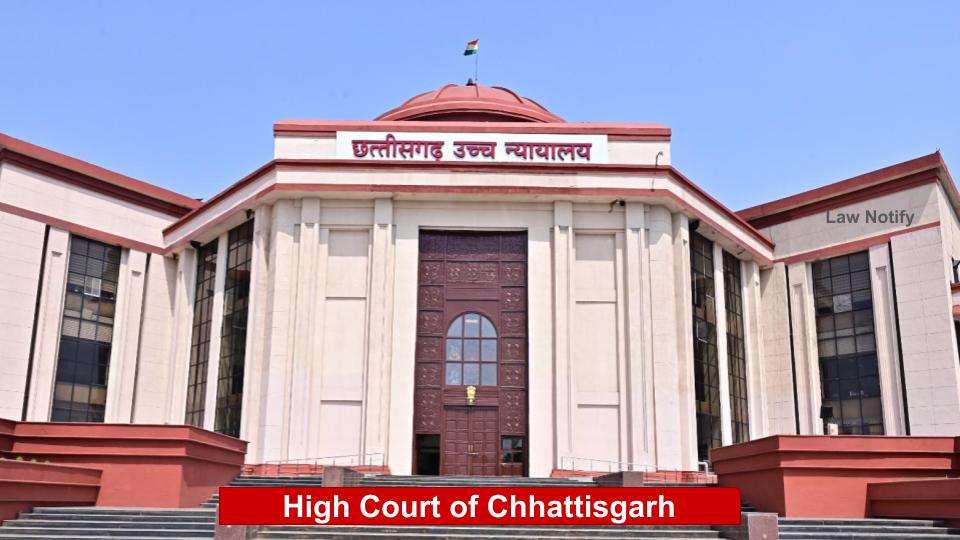
May 15, 2026 : The High Court of Chhattisgarh has ruled that police authorities cannot freeze or place a hold on bank accounts during a criminal investigation without following the procedure prescribed under the Bharatiya Nagarik Suraksha Sanhita, 2023 (BNSS). In a significant judgment protecting financial and business rights, the Division Bench held that attachment or holding of funds under Section 107 of the BNSS can only be carried out after obtaining orders from the jurisdictional Magistrate.
The ruling came in a writ petition filed by Oxyzo Financial Services Ltd., a Non-Banking Financial Company (NBFC), challenging the freezing and subsequent holding of more than Rs. 53 crore in its bank account by the police investigating an alleged cheating case relating to short supply of TMT iron bars. The case arose out of FIR No. 148 of 2026 registered at Mandir Hasaud Police Station in Raipur under Sections 318(4) and 3(5) of the Bharatiya Nyaya Sanhita, 2023 (BNS).
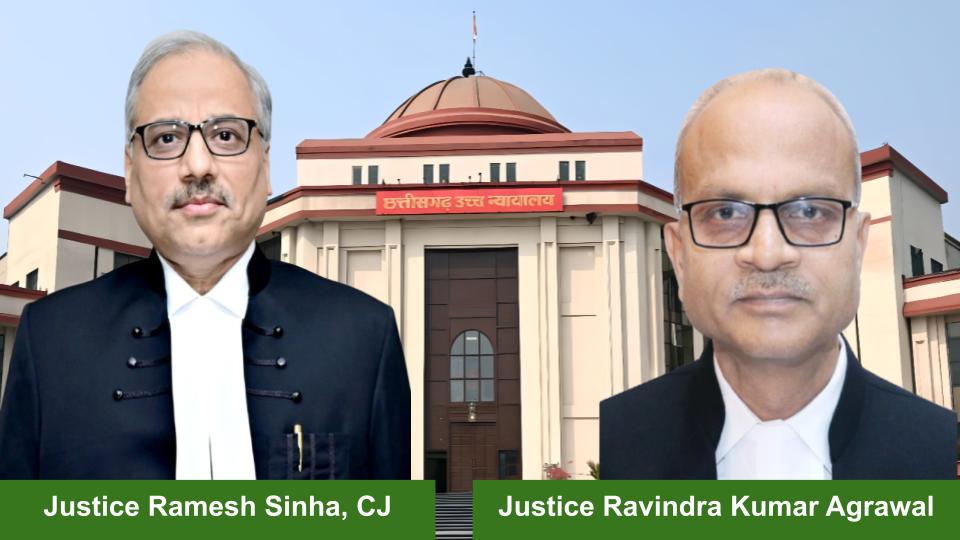
The Bench comprising Chief Justice Ramesh Sinha and Justice Ravindra Kumar Agrawal passed the order on May 15, 2026, while allowing the petition filed under Article 226 of the Constitution of India.
According to the petition, Oxyzo Financial Services had entered into a financing arrangement with Shreejikrupa Project Ltd. in January and February 2026 for extending a purchase financing facility of Rs. 10 crore. The company claimed it merely acted as a lender and had no connection with the alleged supply irregularities involving suppliers of TMT iron bars.
The dispute began after Shreejikrupa Project Ltd. lodged a complaint alleging that several consignments of TMT iron bars delivered in March 2026 were underweight and that truck operators had concealed pig iron inside secret compartments to manipulate transportation weight records. Following the complaint, police registered an FIR alleging cheating and criminal conspiracy.
During investigation, the police directed Kotak Mahindra Bank Limited to freeze Oxyzo’s bank account. The petitioner argued before the court that the sudden freeze completely paralysed its operations as the account handled daily EMI inflows of Rs. 12 to 15 crore from borrowers. The company further contended that although the alleged loss mentioned in the FIR was only around Rs. 6.9 lakh, the police initially froze more than Rs. 53 crore, which was grossly disproportionate and arbitrary.
The petitioner also alleged that the investigating agency acted without jurisdiction and in violation of Sections 106 and 107 of the BNSS. It argued that attachment of property or freezing of funds believed to be “proceeds of crime” requires prior approval from the Superintendent of Police and an order from the jurisdictional Magistrate after giving the affected party an opportunity of hearing. The company claimed no such process was followed before the hold was imposed on its account.
The matter had earlier reached the Delhi High Court, where an interim order dated April 13, 2026 stayed the freezing communication issued by the bank on the basis of the police instructions. The Delhi High Court observed that the account had been frozen “without giving any semblance of a chance to the petitioner.”
Despite the interim protection, the Chhattisgarh Police later modified the action and directed the bank to place a hold of Rs. 53.47 crore, which was subsequently reduced to Rs. 43.38 lakh after the police reassessed the alleged loss. The State argued before the High Court that the action was justified under Section 106 of the BNSS and that the amount represented the estimated loss arising from alleged shortages in iron bar consignments.
The court, however, undertook a detailed examination of Sections 106 and 107 of the BNSS and drew a distinction between “seizure” and “attachment.” The Bench relied heavily on the Bombay High Court judgment in Kartik Yogeshwar Chatur v. Union of India and referred to the Kerala High Court’s interpretation of the new BNSS provisions.
Explaining the legal framework, the court noted that Section 106 permits police officers to seize property suspected to be linked to an offence and subsequently report the seizure to the Magistrate. However, Section 107 specifically governs attachment, forfeiture and restoration of property derived from criminal activity. The Bench clarified that attachment of property can only be done after approaching the jurisdictional Magistrate and obtaining judicial approval.
The court reproduced and endorsed the Bombay High Court’s reasoning that “Seizure under Section 106 can be carried out by a police officer and an ex post facto report submitted to the Magistrate. On the other hand, attachment under Section 107 can be effected only upon order of the Magistrate.”
In one of the key findings of the judgment, the Bench held that “freezing of bank account and put on hold the amount of Rs.43,38,375/- cannot be made by the police authority particularly when the loss, if any, is not quantified.”
The High Court ultimately quashed the communication dated April 13, 2026 directing the hold on funds and also set aside the subsequent communication dated April 27, 2026 through which Rs. 43.38 lakh had been retained in the account. At the same time, the court granted liberty to the investigating agency to proceed in accordance with Section 107 of the BNSS by approaching the competent Magistrate through due process of law.
The Bench further directed that the investigation should be conducted “fairly and impartially” by an officer not below the rank of Deputy Superintendent of Police.
The judgment is expected to have wide implications for criminal investigations involving bank accounts, fintech companies, NBFCs and financial intermediaries across India. Legal experts believe the ruling reinforces procedural safeguards under the BNSS and limits arbitrary freezing of accounts by police authorities without judicial scrutiny. The decision also strengthens protections under Article 300A of the Constitution, which safeguards the right to property, and under Article 19(1)(g), which protects the freedom to carry on business and trade.
The ruling is likely to become an important precedent in cases involving debit freezes, attachment of suspected proceeds of crime, and misuse of investigative powers affecting businesses and financial institutions. The court’s interpretation draws a clear legal line between temporary seizure for investigation and attachment of property as alleged proceeds of crime, requiring judicial oversight in the latter category.
Google Preference | Google News
Case Reference : WPCR No. 231 of 2026, Oxyzo Financial Services Ltd. vs State of Chhattisgarh & Others; For Petitioner: Shri Abhishek Sinha, Senior Advocate with Shri Vivek Chopda, Advocate; For State: Shri Praveen Das, Additional Advocate General; For Respondent No. 9/Shreejikrupa Project Ltd.: Shri Pragalbh Sharma and Shri Rishabh Garg, Advocates.