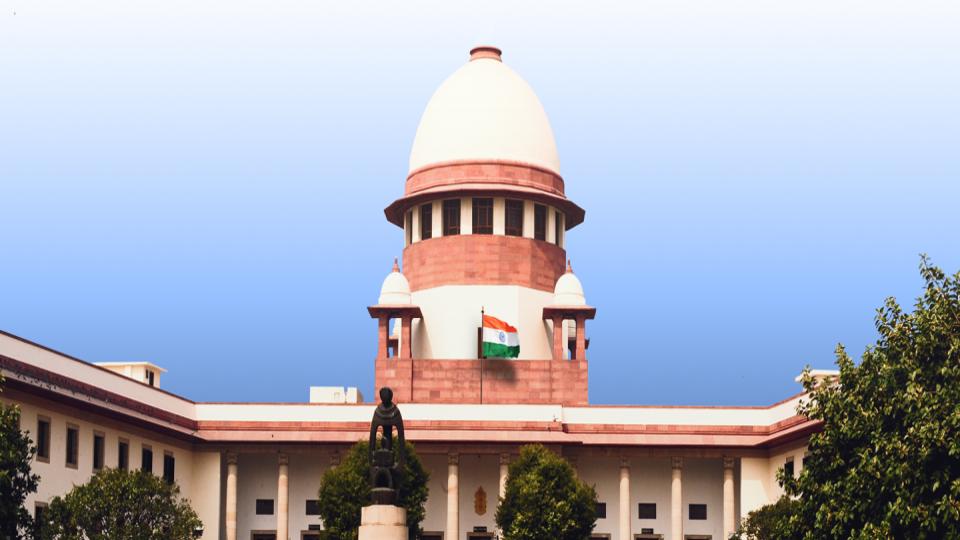
May 29, 2026 : In a significant move aimed at strengthening judicial accountability and protecting the right to speedy justice, the Supreme Court has issued a comprehensive set of binding directions to all High Courts across the country for the timely pronouncement of reserved judgments. The Court has mandated that reserved verdicts should ordinarily be delivered within three months from the date on which judgment is reserved, while emphasizing that matters involving personal liberty must receive the highest priority.
The directions were issued by a Bench comprising Chief Justice of India Surya Kant and Justice Joymalya Bagchi while hearing a writ petition arising from prolonged delays in the pronouncement of judgments reserved by the Jharkhand High Court in certain criminal appeals. The petitioners, belonging to Scheduled Tribes and Other Backward Classes communities, argued that their appeals had remained undecided for years after the conclusion of hearings, resulting in a violation of their fundamental rights under Article 21 of the Constitution.
Recognizing the serious impact of delayed judgments on litigants and the justice delivery system, the Supreme Court directed that High Courts should ensure greater urgency in cases involving personal liberty, including regular bail applications, anticipatory bail pleas, suspension of sentence matters, habeas corpus petitions, and criminal appeals involving incarcerated accused or convicts.
The Court laid down specific timelines for bail-related matters, directing that orders should preferably be pronounced and uploaded on the same day. If an order is reserved, it must be delivered and uploaded on the following day. The Bench further ordered that decisions granting bail or suspension of sentence should be communicated to jail authorities immediately so that the release process can be completed on the same day or, at the latest, by the next day, unless detention is required in another case or compliance with bail conditions remains pending.
To prevent delays in uploading detailed judgments, the Court held that where only the operative portion of an order is pronounced, the reasoned judgment should ordinarily be uploaded within seven days and, in exceptional circumstances, no later than fifteen days.
The judgment also establishes an institutional monitoring framework for tracking reserved matters. All High Courts have been directed to modify their digital case management systems to automatically monitor cases in which judgments have been reserved. At the end of every month, automated reports containing details of pending reserved judgments must be sent to the Chief Justice of the concerned High Court as well as to the Bench that reserved the matter.
The Supreme Court further directed that if a judgment remains undelivered beyond three months, the Registrar General of the High Court must place the matter before the Chief Justice for appropriate administrative action. If the delay continues, the Chief Justice may draw the attention of the concerned Bench to the pending matter and, where necessary, reassign the case to another Bench for fresh hearing and disposal.
Providing relief mechanisms for litigants affected by prolonged delays, the Court held that parties may file applications seeking pronouncement of reserved judgments when the prescribed timelines are exceeded. If a judgment remains pending for more than four months after being reserved, litigants may approach the Chief Justice seeking withdrawal of the case from the concerned Bench and reassignment to another Bench.
To enhance transparency, the Court directed that certified copies of judgments must clearly mention the date on which judgment was reserved, the date of pronouncement of the operative order, and the date on which the detailed judgment was uploaded. High Courts have also been instructed to display the status of reserved judgments on their official websites, including whether only the operative portion has been delivered and whether the detailed judgment has been uploaded. Electronic notifications must also be sent to parties and advocates once judgments become available online.
While issuing the directions, the Supreme Court referred to earlier precedents, including the landmark decision in Anil Rai v. State of Bihar, which had addressed the problem of delayed judgments. The Court observed that prolonged delays in delivering decisions undermine public confidence in the judiciary, affect the rights of litigants, and hinder the effective administration of justice. It concluded that robust institutional safeguards and accountability mechanisms are essential to ensure timely judicial decision-making across all High Courts in the country.