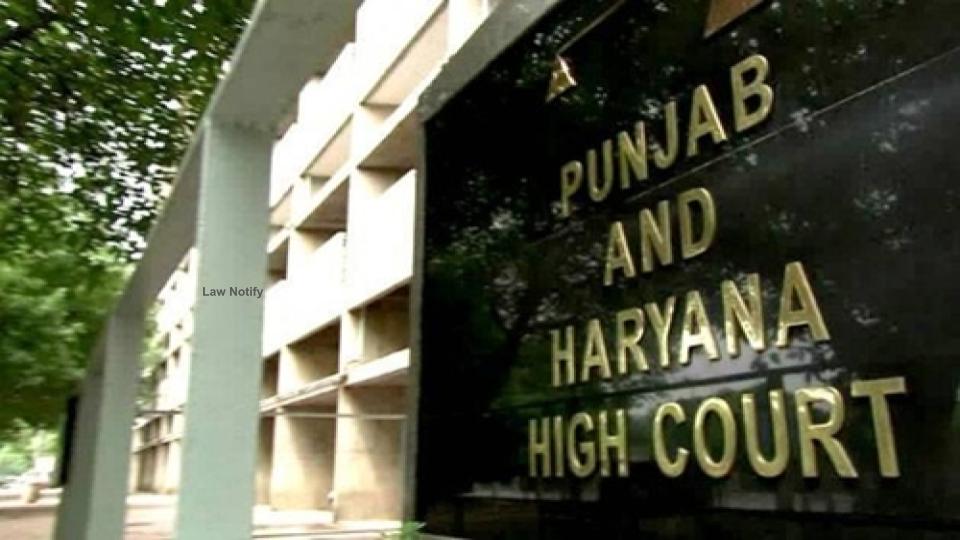
Junen 4, 2026 : The Punjab and Haryana High Court has ruled that fair and accurate reporting of a judicial order pronounced in open court cannot amount to criminal contempt merely because the order has not yet been formally signed by the judge.
A Division Bench comprising Justice Jasgurpreet Singh and Justice Amarjot Bhatti dismissed criminal contempt proceedings initiated against editors and journalists of The Tribune, The Hindustan Times, and The Times of India. The case arose from news reports published after a judgment was pronounced in open court but before the written order was signed.
The controversy stemmed from an April 9 order passed by Justice Tribhuvan Dahiya directing the transfer of a criminal trial involving former Punjab Police officers from Faridkot to Chandigarh. The judgment was dictated and pronounced in open court, following which newspapers reported the decision on April 10.
Subsequently, concerns were raised that publication of the reports before the order was formally signed could amount to interference with the judicial process. Acting on these observations, suo motu criminal contempt proceedings were initiated against several editors and reporters.
While examining the matter, the Division Bench found that the reports accurately reflected the contents of the judgment pronounced in court and contained no false, misleading, or distorted information. The Court noted that the newspapers had faithfully reported the transfer order and had not misrepresented the proceedings in any manner.
Relying on Supreme Court precedents, the Bench observed that a judgment becomes effective immediately upon its formal pronouncement in open court. The subsequent signing of the order is a procedural requirement and does not determine the judgment’s legal force.
The Court emphasized that fair and accurate reporting of judicial proceedings is protected by law and forms an essential component of the principles of open justice and transparency. It held that truthful reporting of a judicial order already pronounced in court cannot, by itself, constitute criminal contempt.
Finding no attempt to obstruct justice, interfere with judicial proceedings, or undermine the authority of the Court, the Division Bench concluded that the essential ingredients of criminal contempt were absent. The contempt proceedings were accordingly dismissed.