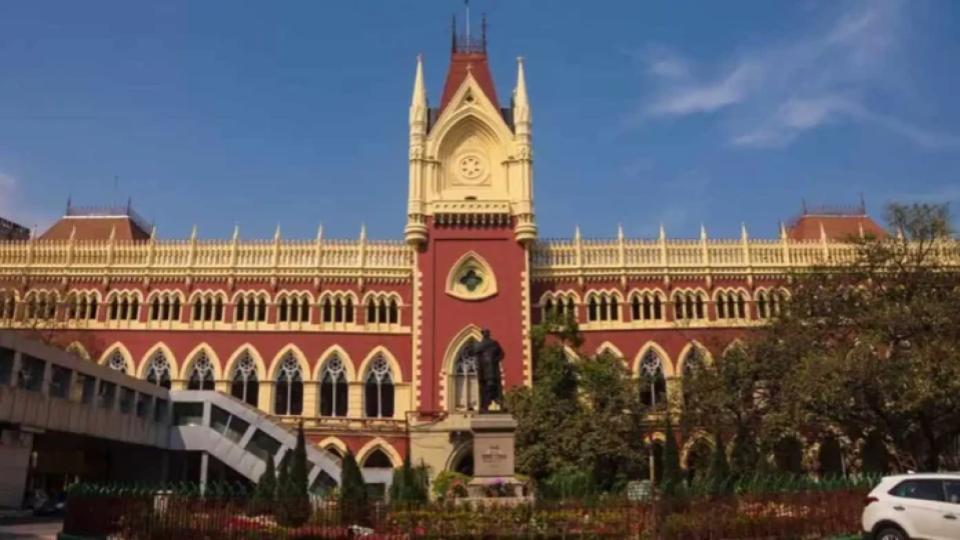
June 2, 2026 : The Calcutta High Court has questioned the speed with which multiple bank accounts of the All India Trinamool Congress (AITC) were frozen immediately after the registration of a First Information Report (FIR), observing that the complaint appeared omnibus in nature and lacked specific allegations capable of justifying such coercive action at the initial stage.
Hearing the party’s challenge to the debit freeze, Justice Saugata Bhattacharya expressed concern over whether the investigating agency possessed sufficient material to justify freezing the accounts within a day of the FIR. The Court remarked that the apparent haste in freezing the accounts required closer scrutiny and sought an explanation regarding the material available to the police before taking such action.
The Court, however, declined to grant interim relief and instead directed the concerned bank to disclose the corpus lying in the frozen accounts. It also instructed the investigating agency to place the materials collected during the investigation on record before the next hearing.
The petition challenges the freezing of several bank accounts belonging to the recognised political party in connection with allegations of financial irregularities and diversion of party funds. The investigation was initiated following a complaint lodged by rebel AITC MLA Biswanath Das.
Appearing for the party, Senior Advocates Kishore Datta and Abhishek Manu Singhvi, assisted by Advocate Nizam Pasha, argued that the accounts had been frozen solely on the basis of vague and unsubstantiated allegations. They submitted that the police initially froze three accounts before extending the action to five more, effectively paralysing the financial functioning of the political party.
The petitioners contended that the FIR was founded only on suspicion and contained no specific incidents, transactions, dates or individuals allegedly responsible for diversion of funds. They also challenged the invocation of organised crime provisions, arguing that the statutory requirements for such offences, including proof of continuing criminal activity for unlawful financial gain, were absent.
The party further argued that Section 106 of the Bharatiya Nagarik Suraksha Sanhita empowers the police only to seize property found under suspicious circumstances and does not authorise freezing of bank accounts through prohibitory orders. According to the petitioners, freezing a bank account is legally distinct from seizure of property and falls outside the scope of the provision.
The Bench clarified that it was not inclined to examine the truthfulness of the allegations at the interim stage. Instead, the immediate issue was whether continuation of the debit freeze during the investigation was legally justified.
The Court also questioned the practical implications of the petitioners’ interpretation, observing that if alleged proceeds of crime were deposited in the accounts, allowing unrestricted operations could hamper the investigation. During the hearing, the Bench suggested the possibility of permitting limited operation of the accounts under the supervision of court-appointed Special Officers, preferably retired High Court judges, so that only routine day-to-day expenses could be met while major financial transactions remained restricted.
Appearing for the State Police, Tushar Mehta opposed any interim arrangement and sought time to produce the investigation records. He submitted that the investigation had already uncovered material indicating that party funds had allegedly been siphoned off and asserted that the evidence would be significant enough to “shock the conscience” of the Court.
Seeking interim protection, Dr. Singhvi argued that freezing the accounts had virtually brought the functioning of a recognised political party to a standstill. He maintained that the complaint was hopelessly vague and lacked the material particulars necessary to justify either the FIR or the blanket freezing of all party accounts.
Highlighting the constitutional dimension, the petitioners submitted that political parties are an essential pillar of democracy and that freezing their financial resources affected the level playing field guaranteed under Articles 14 and 19 of the Constitution. They also pointed out that the complainant himself had contested and won the Assembly election on an AITC ticket and had received ₹25 lakh from the same accounts now alleged to contain diverted funds, which they claimed reflected the mala fide nature of the complaint.
Senior Advocate Neeraj Kishan Kaul, appearing for the de facto complainant, raised a preliminary objection to the maintainability of the petition, contending that rival factions were claiming to represent the party and that such disputes fell within the jurisdiction of the Election Commission of India. The Court, however, observed that the complaint itself contained no allegations regarding rival leadership claims and noted that it lacked specific dates, names and particularised allegations, indicating that the foundation of the criminal proceedings did not appear particularly strong.
Without granting interim relief, the High Court directed the investigating agency to place on record the corpus of all frozen accounts along with the materials collected during the investigation. Accepting the State’s request for additional time, the Bench listed the matter for further hearing on July 8, when it will consider the investigation records before deciding the party’s plea for interim relief.