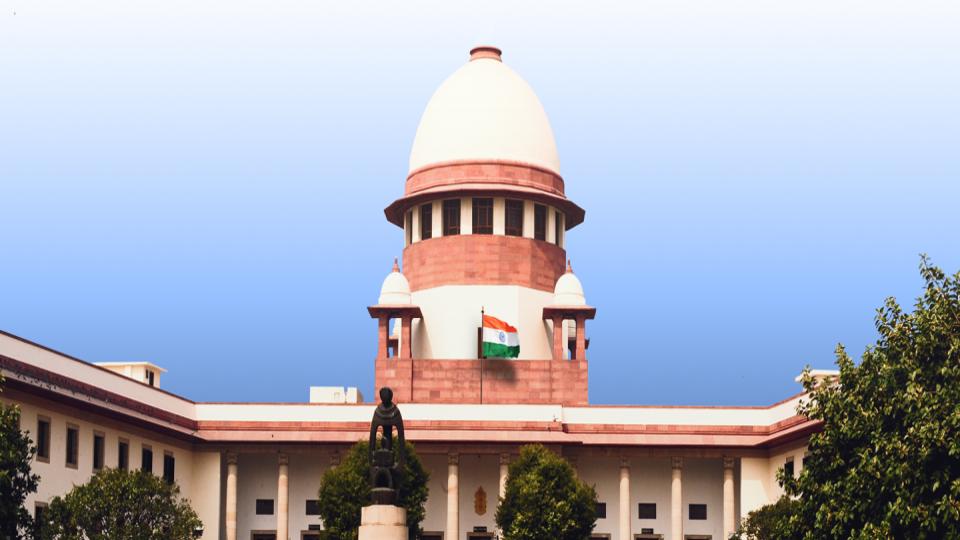
July 15, 2026 : The Supreme Court on Wednesday expressed serious concern over a recent Patna High Court judgment that held allegations of confining a woman, pressing her chest, and attempting to remove her salwar did not constitute the offence of attempt to rape, but only amounted to outraging the modesty of a woman under Section 354 of the Indian Penal Code (IPC).
The issue was raised before a Bench comprising Chief Justice of India Surya Kant and Justices Joymalya Bagchi and V. Mohana during the hearing of the Supreme Court’s suo motu proceedings on judicial sensitivity in sexual offence cases. Senior Advocates Shobha Gupta and H.S. Phoolka informed the Court that despite the Supreme Court having already set aside a similar Allahabad High Court judgment, another High Court had delivered a comparable ruling on almost identical facts.
Senior Advocate Shobha Gupta submitted that such judgments continued to be delivered even after the Supreme Court had clarified the legal principles governing cases involving allegations of sexual assault. Taking serious note of the submission, the Bench questioned the reasoning adopted by the Patna High Court. The Chief Justice orally observed that judges must conduct proper legal research before delivering judgments and indicated that the Supreme Court would pass an appropriate order in relation to the Patna High Court decision.
The observations came during the hearing of the Supreme Court’s suo motu case initiated after the Allahabad High Court’s March 2025 judgment, which had held that pulling the drawstring of a minor girl’s pyjama, grabbing her breasts, and dragging her beneath a culvert did not amount to an attempt to rape. The Supreme Court had subsequently set aside that judgment and directed the National Judicial Academy (NJA) to prepare comprehensive guidelines aimed at improving judicial sensitivity in cases involving sexual offences.
During Wednesday’s hearing, the Supreme Court approved the Expert Committee report prepared by the National Judicial Academy and accepted the handbook on judicial sensitivity in sexual offence cases. The Court directed that the handbook be uploaded on the websites of the Supreme Court and all High Courts across the country.
The Bench further directed all courts to strictly follow the terminology and principles contained in the handbook while dealing with sexual offence cases. It also instructed all States to issue appropriate directions to police authorities to adhere to the handbook while registering First Information Reports (FIRs) and filing charge sheets. The Court stated that a detailed reasoned judgment would be uploaded separately.
The Patna High Court judgment under scrutiny arose from an appeal filed by Himanshu Kumar Pathak alias Mithiya Pathak, who had been convicted by a trial court for attempt to commit rape under Sections 376 read with 511 IPC and wrongful confinement under Section 342 IPC in connection with a 2008 incident at a photography studio in Amarpur, Banka district, Bihar.
According to the prosecution, the victim had accompanied her father to the studio for photographs. The accused allegedly asked the father to wait outside, locked the studio from inside, removed his own clothes, attempted to remove the victim’s salwar, and pressed her chest with the intention of committing rape. On hearing the victim’s cries, her father forced open the door, after which the accused allegedly pushed him aside and fled.
In 2013, the trial court convicted the accused for attempt to rape and wrongful confinement and sentenced him to three years’ rigorous imprisonment.
However, while deciding the criminal appeal, Justice Purnendu Singh of the Patna High Court reassessed the evidence and found several deficiencies in the prosecution case. The Court noted that the investigating officer who conducted the investigation and filed the charge sheet was not examined during trial, no medical officer was produced as a witness, and there was no medical evidence supporting the allegation of attempted rape. It also observed that the only independent witness had turned hostile, while the victim’s parents were interested witnesses whose testimony required careful evaluation.
The High Court concluded that although the allegations, if accepted, established wrongful confinement, use of criminal force, pressing the victim’s chest, and attempting to remove her salwar, these acts did not constitute an unequivocal overt act amounting to an attempt to commit rape. Holding that the essential ingredients of Sections 375 and 376 read with Section 511 IPC were not established, it set aside the conviction for attempt to rape while maintaining that the conduct constituted the offence of outraging the modesty of a woman under Section 354 IPC.
The Supreme Court has now indicated that it will examine the correctness of the Patna High Court’s reasoning while reinforcing the need for judicial sensitivity and consistency in the adjudication of sexual offence cases.