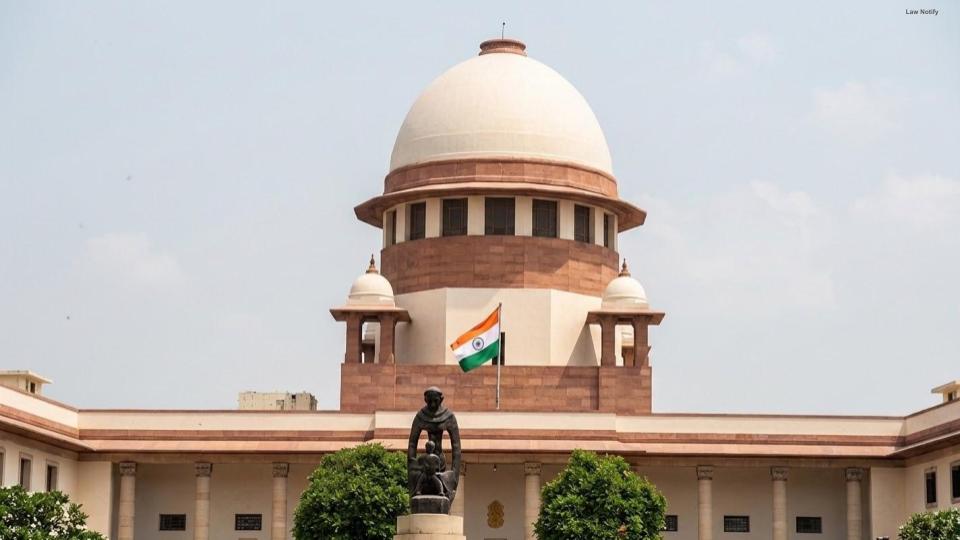
July 15, 2026 : The Supreme Court on Wednesday declined to entertain a Public Interest Litigation (PIL) seeking directions to regulate and remove allegedly derogatory content targeting revered religious figures on social media platforms. The petition also sought the formulation of a comprehensive regulatory framework to prevent the circulation of such material online.
A Bench of Justice P.S. Narasimha and Justice Alok Aradhe dismissed the writ petition filed by MD Anas Chaudhary under Article 32 of the Constitution, observing that the case did not warrant the exercise of the Supreme Court’s extraordinary writ jurisdiction. Following the Bench’s observations, the petitioner’s counsel withdrew the plea.
During the hearing, the Court orally remarked that petitions of this nature often appear to be filed to sensationalise or politicise issues rather than to enforce fundamental rights under Article 32. The Bench emphasized that constitutional writ jurisdiction cannot be invoked in every grievance relating to social media content.
Representing the petitioner, Advocate Pulkit Agarwal argued that allegedly offensive remarks made by social media influencer Nazia Elahi Khan against Prophet Muhammad during a podcast had deeply hurt the sentiments of a section of the public. He submitted that the rapid growth of podcasts, reels and other user-generated content highlighted the need for an effective regulatory framework to curb abusive and inflammatory material online.
Justice Narasimha observed that the petitioner should avail remedies available under the existing legal framework instead of directly approaching the Supreme Court. He reiterated that Article 32 cannot be used to bypass statutory procedures established by law.
Justice Aradhe also questioned the maintainability of the petition, referring to the Information Technology (Procedure and Safeguards for Interception, Monitoring and Decryption of Information) Rules, 2009. The Bench asked whether the petitioner had approached the competent authorities under the Information Technology regime, noting that the existing legal framework already provides mechanisms to address such grievances.
When informed that several FIRs had already been registered against the influencer, the Court observed that any further action should proceed strictly in accordance with the law. It added that aggrieved persons should ordinarily approach the appropriate authorities and pursue available statutory remedies wherever criminal offences are alleged.
The PIL arose from alleged remarks made by influencer Nazia Elahi Khan against Prophet Muhammad and his family during a podcast in June. Clips of the podcast subsequently went viral on social media, leading to the registration of multiple FIRs.
The petitioner had made the Union Ministry of Home Affairs, the Ministry of Electronics and Information Technology (MeitY), YouTube, Facebook, X and Nazia Elahi Khan respondents in the case.
Apart from seeking the removal of the allegedly offensive videos, the petition sought directions to the Union Government to frame guidelines regulating content considered derogatory or insulting towards revered religious figures, including Prophet Muhammad and Bhagwan Shri Ram. It also sought safeguards against the misuse of digital platforms to outrage religious sentiments and promote communal disharmony, along with the immediate removal of the impugned content from major social media platforms.