News Citation : 2026 LN (HC) 395
July 14, 2026 : In a significant ruling on electricity theft prosecutions, the Chhattisgarh High Court has acquitted a man who was convicted nearly 18 years ago for allegedly drawing illegal electricity to operate a rice huller and flour mill. The Court held that the prosecution failed to establish the charge beyond reasonable doubt, emphasizing that mandatory assessment proceedings under the Electricity Act, 2003 were not conducted and crucial evidence linking the accused to the alleged theft was missing. The judgment reinforces that criminal convictions for electricity theft must rest on legally admissible evidence and compliance with statutory safeguards.
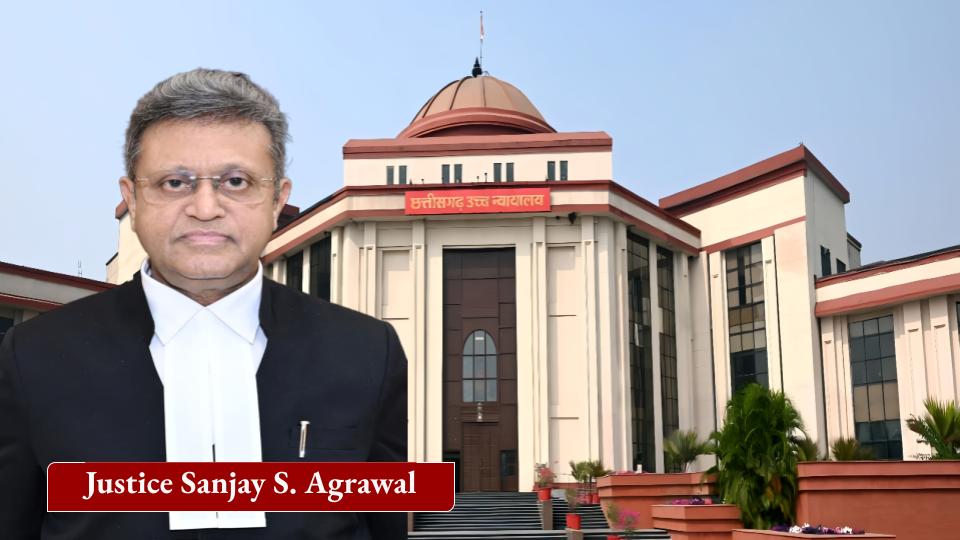
The judgment was delivered on July 14, 2026, by Justice Sanjay S. Agrawal in CRA No. 294 of 2008, Sahas Ram v. State of Chhattisgarh, allowing the appeal against the conviction recorded by the Special Judge, Janjgir, on March 5, 2008. The trial court had convicted the appellant under Section 135-A of the Electricity Act, 2003 and sentenced him to two years’ rigorous imprisonment along with a fine of ₹5,000.
According to the prosecution, officials of the Chhattisgarh Electricity Board inspected the appellant’s premises on November 23, 2005, and allegedly found him operating a 10 HP rice huller and flour mill through an unauthorized connection drawn directly from an electric pole. The authorities claimed that electricity worth approximately ₹25,000 had been illegally consumed. Based on the complaint of the Junior Engineer, an FIR was registered under Section 379 of the Indian Penal Code along with Section 135-A of the Electricity Act, and after investigation, a charge sheet was filed before the Special Court.
Before the High Court, the appellant argued that the conviction was unsupported by reliable evidence. It was contended that the alleged 25-foot electric wire used for the unauthorized connection was never recovered from him during the inspection. The defence also pointed out that no assessment of unauthorized electricity consumption was carried out under Section 126 of the Electricity Act, despite such assessment being a statutory requirement. The appellant relied on the Supreme Court’s decision in West Bengal State Electricity Distribution Company Ltd. v. Orion Metal Private Limited (2020) 18 SCC 588 to contend that assessment proceedings under Section 126 are an essential part of the statutory framework even in cases involving allegations of theft.
After examining the evidence, the High Court found substantial deficiencies in the prosecution’s case. The Court noted that two independent witnesses, in whose presence the inspection and seizure were claimed to have been conducted, did not support the prosecution. They stated that their signatures had been obtained on blank papers and that no seizure had actually taken place in their presence. This seriously weakened the evidentiary value of the inspection and seizure documents relied upon by the prosecution.
The Court further observed that the alleged 25-foot electric wire, said to have been used for illegally drawing electricity, was never recovered from the appellant. Equally significant was the absence of any assessment by the Assessing Officer under Section 126 of the Electricity Act regarding the alleged unauthorized consumption of electricity valued at ₹25,000. The High Court held that this omission assumed importance in light of the legal principles laid down by the Supreme Court.
Referring extensively to the Supreme Court’s ruling in West Bengal State Electricity Distribution Company Ltd. v. Orion Metal Private Limited, the High Court explained that unauthorized use of electricity must ordinarily be assessed under Section 126 of the Electricity Act. The Supreme Court had clarified that proceedings for assessment under Section 126 and criminal prosecution for theft under Section 135 can operate simultaneously. It also held that while theft cases may proceed before the Special Court, authorities are still empowered and expected to conduct provisional and final assessments for unauthorized consumption of electricity.
Applying these principles, Justice Sanjay S. Agrawal concluded that the prosecution had failed to establish the offence beyond reasonable doubt. The Court observed, “In absence of recovery of alleged 25 ft. wire from the appellant… coupled with non-assessment of consumption of electricity… as required under Section 126 of the Act… it cannot be said that the alleged offence was committed by the appellant.”
Setting aside the conviction, the High Court acquitted the appellant of the charge under Section 135-A of the Electricity Act, 2003 and discharged his bail bonds and sureties.
The ruling highlights the distinction between allegations and proof in criminal prosecutions involving electricity theft. It reiterates that while electricity theft is a serious offence under Section 135 of the Electricity Act, prosecution agencies must strictly follow the statutory procedure prescribed under the Act. Independent evidence, proper seizure of incriminating material, and assessment proceedings under Section 126 play a vital role in establishing unauthorized consumption. The judgment also serves as a reminder that criminal liability cannot be sustained merely on inspection reports unless the prosecution proves its case beyond reasonable doubt through credible evidence.
Case Reference: Sahas Ram v. State of Chhattisgarh, CRA No. 294 of 2008, decided on July 14, 2026