News Citation : 2026 LN (HC) 262 | 2026:CGHC:17639
April 17, 2026 : The Chhattisgarh High Court has directed the state government to regularize the services of contractual Demonstrators working in government nursing colleges, holding that long and uninterrupted service cannot be ignored merely because appointments were described as contractual. The ruling came in a batch of writ petitions involving Demonstrators who have served for over 16 to 17 years across various institutions in the state.
The petitioners were initially appointed between 2008 and 2009 through a formal selection process conducted pursuant to public advertisements. They were selected against sanctioned posts after interviews and scrutiny by duly constituted committees. Although their appointments were contractual for a limited period, their services were extended repeatedly over the years, allowing them to continue in service without interruption. Despite this prolonged tenure and satisfactory performance, the state government did not frame any policy for their regularization, and their representations seeking absorption into regular posts were rejected by an order dated December 29, 2022.
Challenging this decision, the petitioners approached the High Court, arguing that denying regularization after nearly two decades of continuous service was arbitrary and violative of their constitutional rights. They contended that their appointments were made through a lawful process and that they had been performing the same duties as regular employees throughout their service.
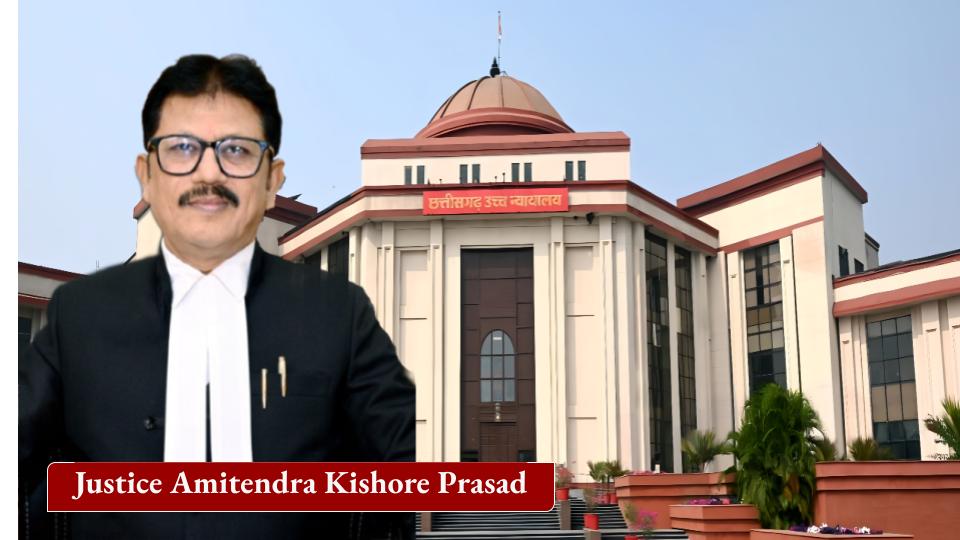
Justice Amitendra Kishore Prasad, after examining the record, observed that the appointments were made through a transparent and merit-based selection process and against sanctioned posts. The Court noted that there was no material to suggest any illegality or backdoor entry in their appointments. At most, any deviation could be treated as a procedural irregularity, which would not disentitle them from being considered for regularization.
The Court also emphasized that the petitioners had discharged duties identical to those performed by regular employees and that their continued extensions reflected both the necessity of their roles and satisfaction with their performance. It rejected the state’s argument that the absence of a policy justified denial of regularization, holding that such a ground cannot defeat legitimate claims arising from long and continuous service.
Relying on settled principles laid down by the Supreme Court, including the distinction between “illegal” and “irregular” appointments, the Court reiterated that employees who have worked for more than a decade against sanctioned posts through a fair selection process are entitled to be considered for regularization. It further observed that the State cannot perpetuate a system of prolonged contractual engagement and later deny stability of service by invoking technicalities or contractual labels.
The Court found the rejection order dated December 29, 2022 to be mechanical and lacking proper application of mind, as it failed to consider the relevant legal principles and factual circumstances. Such an approach, the Court held, was arbitrary and unsustainable.
In its final order, the High Court quashed the impugned rejection and directed the state authorities to take immediate steps to regularize the services of the petitioners against the posts to which they were originally appointed. It also directed that all consequential benefits, including continuity of service and appropriate pay scale fixation, be granted without delay. Both writ petitions were allowed, and no costs were imposed.
Case Reference : WPS No. 1465 of 2023 (Sumitra Mallick & Ors. v. State of Chhattisgarh & Anr.); WPS No. 3647 of 2023 (Vidya P. Tandy & Ors. v. State of Chhattisgarh & Ors.); Counsels: For Petitioners: Mr. Apoorva Tripathi, Advocate; For State: Mr. Sangharsh Pandey, Government Advocate with Mr. Arpit Agrawal, Panel Lawyer; For CGPSC: Mr. Gary Mukhopadhyay, Advocate.