News Citation : 2026 LN (HC) 363 | 2026:CGHC:23478
May 26, 2026 : The High Court of Chhattisgarh has granted regular bail to a 36-year-old man accused under the provisions of the Chhattisgarh Excise Act in a case involving alleged possession of Mahua liquor and Lahan. The court observed that since the investigation had already been completed and the charge-sheet filed, continued custodial detention was not necessary at this stage of the proceedings.
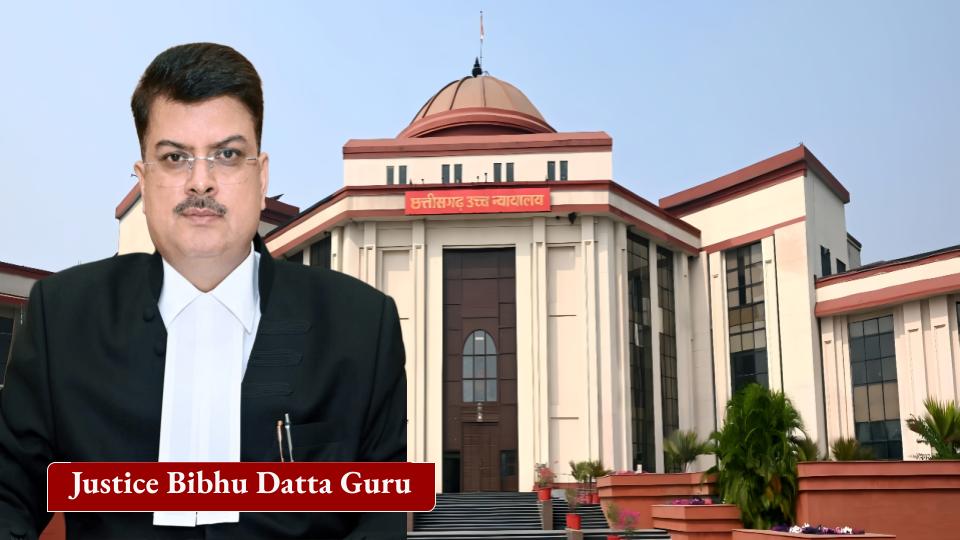
Justice Bibhu Datta Guru passed the order, while hearing the first bail application filed by Dev Kumar Ram under Section 483 of the Bharatiya Nagarik Suraksha Sanhita, 2023. The applicant had been arrested in connection with Crime No. 149/2026 registered at Excise Circle, Kansabel, District Jashpur, for offences punishable under Sections 34(1)(E) and 34(2) of the Chhattisgarh Excise Act.
According to the prosecution case, Excise officials allegedly recovered 14 litres of Mahua liquor and 35 kilograms of Lahan from the possession of the accused after receiving secret information from an informant. Based on the alleged recovery, the authorities registered the offence and subsequently arrested the applicant.
Appearing for the applicant, Advocate Harish Khuntiya argued that Dev Kumar Ram had been falsely implicated and that the alleged contraband was not recovered from his exclusive or conscious possession. The defence further submitted that the applicant belongs to a Scheduled Tribe community and resides in a remote village, claiming that he had been unnecessarily targeted by Excise officials. It was also argued that the alleged offences are not punishable with death or life imprisonment and that the accused had no prior criminal antecedents.
The defence emphasized that the applicant had remained in judicial custody since March 18, 2026, while the investigation was already complete and the charge-sheet had been filed before the competent court. Counsel submitted that the trial was likely to take considerable time and argued that further incarceration would serve no useful purpose. The applicant also assured the court that he would comply with all bail conditions and would not attempt to abscond, tamper with evidence, or influence witnesses.
Opposing the plea, Deputy Government Advocate Rishiraj Pithawa appeared for the State and resisted the grant of bail, though it was acknowledged before the court that the charge-sheet had already been filed in the matter.
After hearing both sides and examining the case diary, the High Court observed that the applicant had remained in custody for more than two months and that the trial was unlikely to conclude in the near future. Taking into account the nature of allegations, the filing of the charge-sheet, and the overall facts and circumstances of the case, the court held that it was inclined to grant regular bail without commenting on the merits of the prosecution case.
The court directed that the applicant be released on bail upon furnishing a personal bond along with two local sureties of the like amount to the satisfaction of the trial court. The order imposed several conditions, including mandatory appearance before the trial court, restrictions on seeking unnecessary adjournments, and compliance with proceedings under the Bharatiya Nyaya Sanhita and the Bharatiya Nagarik Suraksha Sanhita in case of misuse of liberty.
The High Court specifically observed that “the conclusion of the trial is likely to take some time” and therefore continued detention was not justified once the investigation had been completed.
The ruling reflects the settled legal principle that bail should ordinarily be considered where investigation is complete, the accused has no criminal antecedents, and prolonged pre-trial detention is likely to occur. The order also highlights the judiciary’s approach toward balancing the seriousness of allegations under excise laws with the constitutional right to personal liberty guaranteed under Article 21 of the Constitution of India.
Case Reference: Dev Kumar Ram v State of Chhattisgarh, MCRC No. 4901 of 2026, Advocates: Harish Khuntiya for the applicant and Rishiraj Pithawa, Dy. Govt. Advocate, for the State.