April 17, 2026 : The Lok Sabha is set to resume discussions on three significant legislations aimed at enhancing women’s representation in Parliament and State Assemblies. These include the Constitution (One Hundred and Thirty-First Amendment) Bill, 2026, the Delimitation Bill, 2026, and the Union Territories Laws (Amendment) Bill, 2026.
These bills are designed to operationalise the provisions of the Nari Shakti Vandan Adhiniyam, which mandates nearly one-third reservation for women in the Lok Sabha and State Legislative Assemblies. The earlier law linked implementation to a delimitation exercise based on the first census conducted after its enactment. However, the government has now moved to accelerate this process.
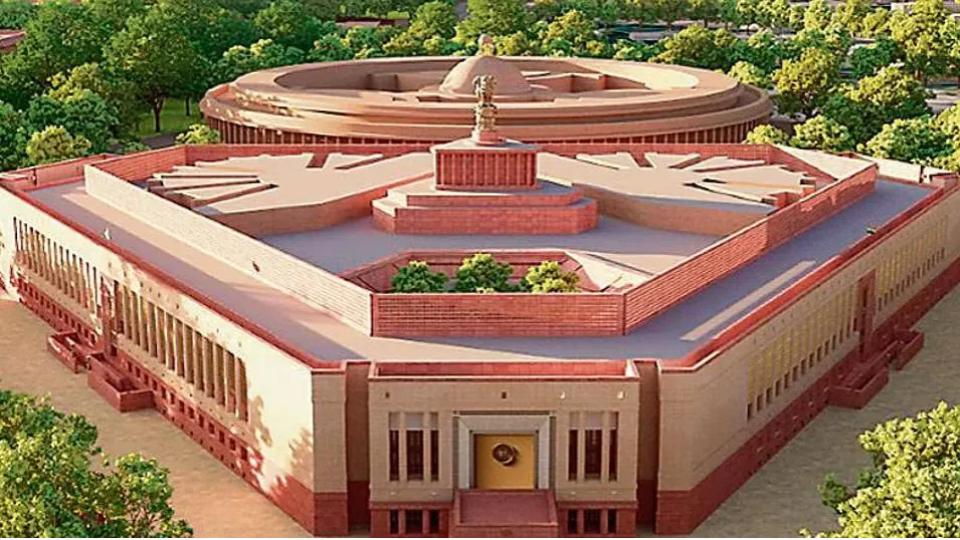
The Constitution (One Hundred and Thirty-First Amendment) Bill, introduced by Law Minister Arjun Ram Meghwal, proposes a substantial increase in Lok Sabha seats from 543 to 850. Of these, 815 seats will be allocated to States and 35 to Union Territories. The expansion is intended to facilitate the implementation of women’s reservation without waiting for a future census cycle.
The Delimitation Bill, 2026, also introduced by Meghwal, seeks to establish a Delimitation Commission. This body will redraw parliamentary and assembly constituencies and allocate seats reserved for women, including those from Scheduled Castes and Scheduled Tribes.
Meanwhile, Union Home Minister Amit Shah has introduced the Union Territories Laws (Amendment) Bill, 2026. The legislation proposes amendments to key laws governing Union Territories, including Delhi and Jammu and Kashmir, to enable constituency readjustment in line with the new framework.
During the debate, Prime Minister Narendra Modi strongly backed the reforms, stressing that women, who constitute nearly half of India’s population, must have an equal role in decision-making. He described the legislation as a corrective step for decades of underrepresentation and urged political parties to support it without partisan considerations.
Modi highlighted the growing role of women in grassroots governance, noting that a significant number of Panchayats are already led by women. He argued that greater participation at the national level would strengthen democratic functioning and improve policy outcomes.
Addressing concerns about the impact of delimitation, Amit Shah assured that no state would lose representation. He stated that southern states, in particular, would see an increase in their share of seats under the expanded Lok Sabha framework.
On the other hand, Congress MP Priyanka Gandhi Vadra questioned the government’s approach, arguing that women’s reservation could be implemented immediately without increasing the number of seats. She also raised concerns about the absence of a caste census and its implications for representation.
The proposed reforms mark a significant shift in India’s parliamentary structure and could reshape political representation by combining seat expansion with gender-based reservation.