News Citation : 2026 LN (HC) 350 | 2026:CGHC:23289
May 15, 2026 : The High Court of Chhattisgarh has upheld the application of the “pay and recover” principle in motor accident compensation cases involving gratuitous passengers travelling in goods vehicles, while dismissing an appeal filed by The New India Assurance Company Limited challenging liability imposed by the Motor Accident Claims Tribunal (MACT), Janjgir-Champa.
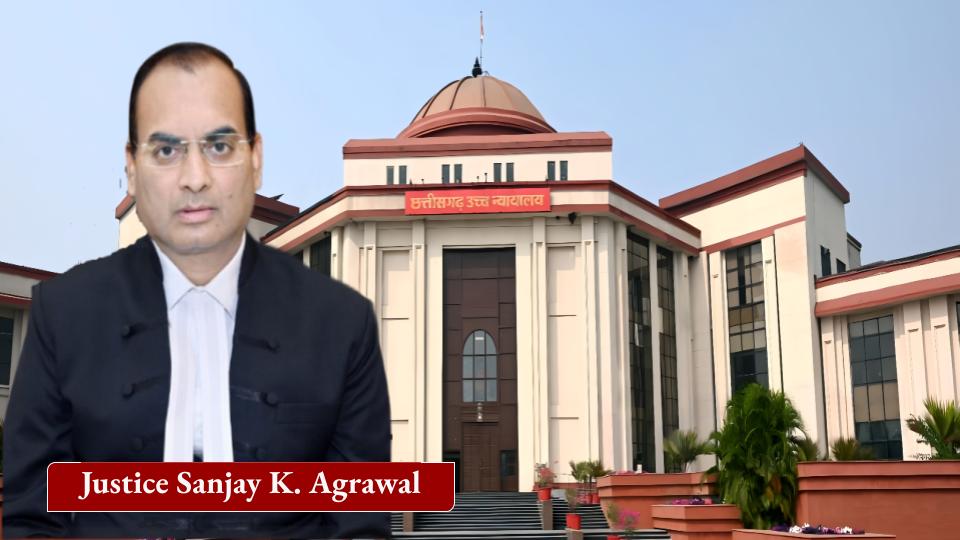
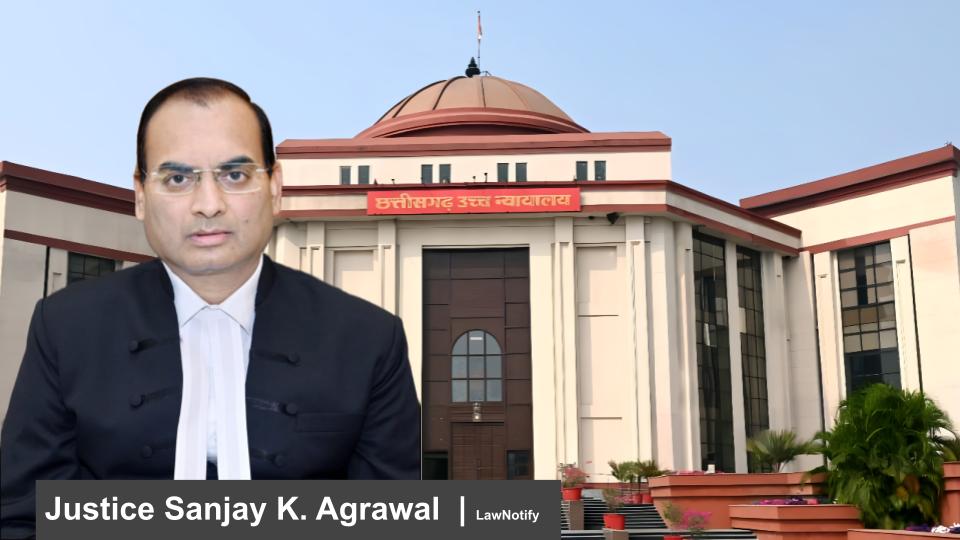
In a judgment delivered on May 15, 2026, Justice Sanjay K. Agrawal ruled that even though a gratuitous passenger is not covered under the insurance policy of a goods carriage vehicle, the insurer must first pay compensation to the claimants and thereafter recover the amount from the vehicle owner and driver. The ruling came in MAC No. 823 of 2020 arising out of a fatal motor accident claim involving the death of Ghanshyam Patel.
The appeal was filed by the insurance company against an award dated January 15, 2020, passed by the MACT, Janjgir-Champa in Motor Accident Claim Case No. 59/2019. The tribunal had fastened liability upon the insurer for payment of compensation to the deceased’s family members, including his wife, mother, and four children.
During the proceedings, counsel appearing for the insurance company argued that the deceased was travelling as a gratuitous passenger in a goods vehicle and therefore the insurer should have been completely exonerated from liability under the terms of the insurance policy. It was also contended that the compensation awarded by the tribunal was excessive because only one-fourth of the deceased’s income had been deducted towards personal expenses instead of one-third.
On the other hand, counsel appearing for the owner-cum-driver of the offending vehicle opposed the insurer’s plea and supported the tribunal’s award.
After examining the evidence, the High Court noted that the vehicle involved in the accident was admittedly a goods carriage vehicle. The Court referred to the testimony of the owner-cum-driver, who admitted during cross-examination that the deceased was travelling in the trolley along with his wife and sustained fatal injuries due to the driver’s rash and negligent driving.
The Court observed that the deceased was clearly travelling as a gratuitous passenger and therefore was not covered under the insurance policy. However, relying upon recent Supreme Court precedents including Sunita and Others v. United India Insurance Co. Ltd. and Anu Bhanvara v. IFFCO Tokio General Insurance Co. Ltd., the High Court reiterated that the “pay and recover” doctrine would still apply in such cases.
Justice Agrawal observed, “Even for person travelling as a gratuitous passenger, though it is not covered under the Insurance Policy, the principle of pay and recover would apply.”
The Court rejected the insurance company’s argument seeking complete exemption from liability and held that the tribunal had rightly directed the insurer to first satisfy the compensation award and subsequently recover the amount from the vehicle owner. The Court also dismissed the cross appeal filed by the owner-cum-driver.
On the issue of compensation quantum, the High Court upheld the tribunal’s calculation and refused to interfere with the deduction of one-fourth towards personal expenses. The Court reasoned that since the deceased left behind six dependents, namely his wife, mother, and four children, the deduction applied by the tribunal was justified in accordance with settled principles governing motor accident compensation claims.
The judgment carries significant implications for motor accident compensation jurisprudence under the Motor Vehicles Act, 1988. It reinforces the judicial approach aimed at protecting accident victims and their families from delays in receiving compensation, even in cases where there may be technical breaches of insurance policy conditions. The “pay and recover” principle has increasingly been used by courts to ensure that claimants are not left remediless because of disputes between insurers and vehicle owners.
The ruling also highlights the continued reliance of constitutional courts on Supreme Court precedents to balance contractual obligations under insurance policies with the welfare-oriented object of motor accident compensation laws. For insurers, the judgment confirms that liability may still be imposed initially despite policy violations, with recovery rights preserved against vehicle owners or drivers.
Accordingly, the High Court dismissed the appeal filed by the insurance company and affirmed the MACT award in favour of the deceased’s family.
Case Reference : MAC No. 823 of 2020, The New India Insurance Company Limited vs Meena Bai Patel and Others. Counsels: For Appellant: Mr. Sudhir Agrawal, Mr. Shashank Agrawal and Ms. Prerna Agrawal, Advocates; For Respondents No.1 to 6: Mr. Tapan Kumar Chandra, Advocate; For Respondent No.7: Mr. Sourabh Sahu, Advocate.