News Citation : 2026 LN (HC) 351 | 2026:CGHC:23177
May 15, 2026 : The High Court of Chhattisgarh has ruled that an insurance company cannot escape liability merely because the driver involved in a road accident was holding a learner’s licence, provided the statutory conditions attached to that licence were fulfilled. The court held that a learner’s licence is legally valid under the Motor Vehicles Act and directed the insurer to pay the entire compensation amount to the accident victims.
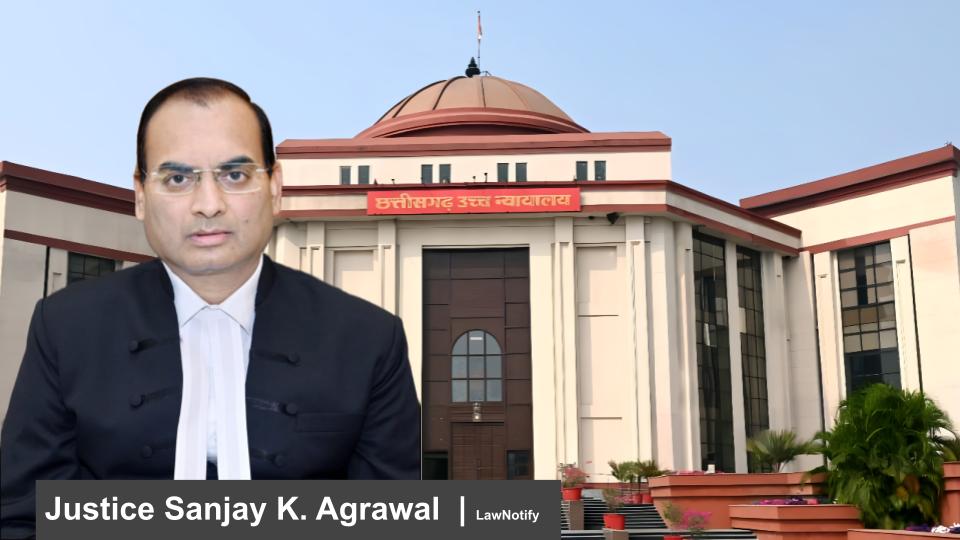
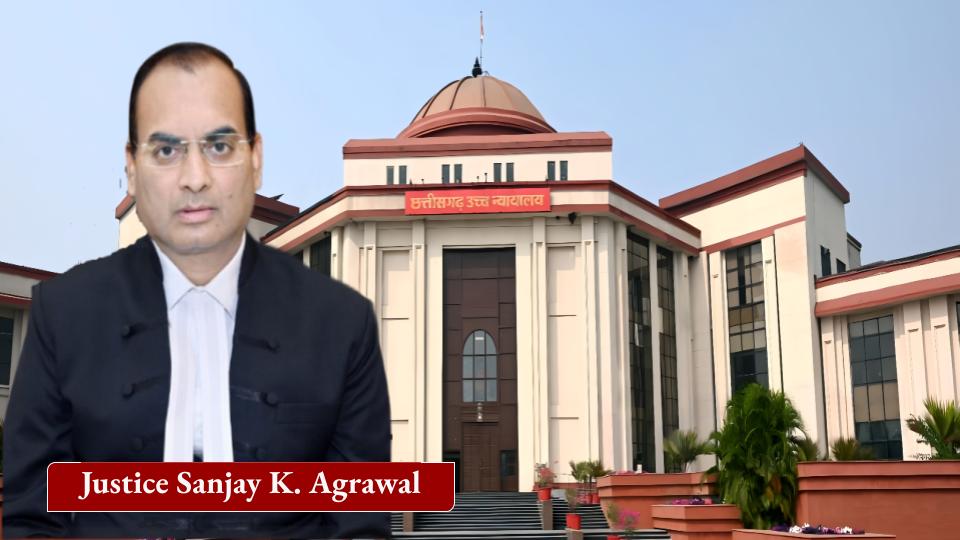
Justice Sanjay K. Agrawal delivered the judgment while deciding two connected appeals arising out of the same motor accident case. One appeal was filed by the driver and owner of the vehicle challenging the “pay and recover” direction issued by the Motor Accident Claims Tribunal (MACT), Bemetara, while the second appeal was filed by the injured claimants seeking enhancement of compensation.
The dispute originated from an award dated October 27, 2018, passed by the MACT in Claim Case No. 08/2018. The Tribunal had awarded compensation of Rs. 2 lakh to the injured claimants but directed the insurance company to first satisfy the award and then recover the amount from the driver and vehicle owner. The Tribunal had taken the view that the driver was only holding a learner’s licence at the time of the accident.
Before the High Court, counsel appearing for the driver and owner argued that there was no breach of insurance policy conditions because the driver possessed a valid learner’s licence and was accompanied by an instructor who held a valid and effective driving licence. The instructor, Bharat Mishra, had also testified before the Tribunal confirming that he was seated in the vehicle at the time of the accident.
On the other hand, the insurance company defended the Tribunal’s findings and contended that the compensation awarded was already fair and reasonable. The insurer urged the court to dismiss both appeals.
While examining the issue, the High Court relied heavily on the Supreme Court’s landmark judgment in National Insurance Co. Ltd. v. Swaran Singh, where the apex court clarified the legal status of a learner’s licence under the Motor Vehicles Act, 1988. The High Court reproduced the Supreme Court’s observation that “A learner’s licence is, thus, also a licence within the meaning of the provisions of the said Act.” The apex court had further held that a person driving with a learner’s licence subject to statutory conditions cannot be treated as a person “not duly licensed.”
Referring to Sections 4(3), 7(2), 10(3), 14 and 149(2) of the Motor Vehicles Act, the High Court noted that the law itself recognises a learner’s licence as a valid licence. The court observed that when the learner driver is accompanied by a qualified instructor, the insurer cannot avoid liability by claiming breach of policy conditions.
The court specifically held that the Claims Tribunal committed an error in fastening liability upon the driver and owner despite evidence showing compliance with learner’s licence conditions. Justice Agrawal observed that “it cannot be said that he was driving the vehicle in breach of terms and conditions of the insurance policy as he was duly accompanied by an instructor.”
The High Court consequently set aside the “pay and recover” direction and ruled that the insurance company itself would be liable to pay the entire compensation amount to the claimants.
On the issue of compensation, the court found that the Tribunal had awarded a lump sum of Rs. 2 lakh despite medical expenses alone amounting to over Rs. 1.52 lakh. The High Court observed that the amount granted under heads such as pain and suffering, transportation, special diet, attendant charges and loss of income during treatment was inadequate.
Accordingly, the court enhanced the compensation by an additional Rs. 50,000 with interest at 9 per cent per annum from the date of filing of the claim petition on January 6, 2018, until realization. The insurer was directed to deposit the enhanced amount within 30 days.
The ruling is significant for motor accident compensation claims across India because it reiterates that insurers cannot deny liability solely on the ground that the driver held a learner’s licence. The judgment reinforces the principle that statutory compliance is more important than technical objections raised by insurers. Legal experts say the decision will provide clarity in cases where learner drivers are involved in accidents while complying with legal requirements under the Motor Vehicles Act.
Case Reference : MAC No. 131 of 2019, Chhamendra Verma and Another vs Narendra Prasad Mishra and Others; For Appellants: Mr. Vipin Singh, Advocate; For Respondents No. 1 and 2: Mr. Sanjeev Kumar Sahu, Advocate; For Respondent No. 3: Ms. Kyati Adil on behalf of Mr. Shashank Thakur, Advocate; For Respondent No. 4: Mr. Sangeet Kumar Kushwaha, Advocate.