News Citation : 2026 LN (HC) 356 | 2026:PATHC:49400
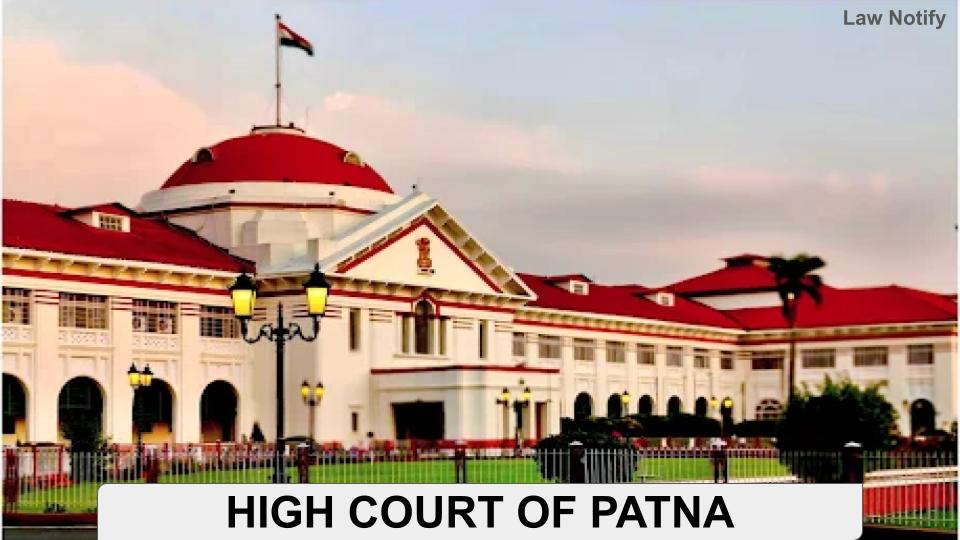
May 18, 2026 : The Patna High Court has reserved a significant ruling on the powers of the Enforcement Directorate (ED) under the Prevention of Money Laundering Act, 2002 (PMLA), while hearing a high-profile challenge filed by Bihar-based contractor and businessman Rishu Shree against multiple Enforcement Case Information Reports (ECIRs), summons, and statements recorded by the agency under Section 50 of the PMLA.
Justice Arun Kumar Jha examined complex constitutional and procedural questions involving alleged self-incrimination, validity of repeated ED investigations, and the legality of multiple FIRs and ECIRs arising from overlapping allegations of corruption, bribery, tender manipulation, and money laundering.
The case arose from Criminal Writ Jurisdiction Case No. 2942 of 2025 filed by petitioner Rishu Shree, who sought quashing of ECIR/PTZO/13/2025 registered by the ED. The petitioner argued that the fresh ECIR was illegal because another ECIR based on substantially similar allegations, ECIR/PTZO/4/2024, was already under investigation. He also challenged the legality of summons issued under Section 50 of the PMLA and sought quashing of multiple statements recorded by the ED during interrogation, claiming that they were obtained through coercion and violated the constitutional protection against self-incrimination under Article 20(3) of the Constitution.
According to the judgment, the controversy traces back to a 2023 FIR lodged at Rupaspur Police Station in Patna alleging rape, conspiracy, cheating, and related offences against certain accused persons including senior Bihar government officials. Based on allegations involving Sections 420 and 120B of the IPC, which are scheduled offences under the PMLA, the ED registered ECIR/PTZO/4/2024 and began investigation into suspected money laundering activities.
During searches conducted by the ED in July 2024 at the petitioner’s residence and office premises of a private infrastructure company in which he was allegedly a director, officials seized digital devices, mobile phones, and sale deeds. The ED subsequently recorded several statements of the petitioner under Sections 17 and 50 of the PMLA on different dates between July and October 2024.
The ED later shared information with Bihar’s Special Vigilance Unit under Section 66(2) of the PMLA, leading to registration of separate FIRs concerning alleged bribery, tender manipulation, corruption, and illicit transfers involving government contracts in Bihar. Investigators alleged that the petitioner acted as an intermediary in a large-scale tender-rigging network involving senior government officials and contractors, allegedly facilitating manipulation of public tenders in exchange for commissions ranging from 8 to 10 percent of contract values.
The ED further alleged that the petitioner admitted during questioning that commissions between 2 and 3.5 percent of bill amounts were routinely paid to government officials linked with departments awarding contracts. Investigators claimed the petitioner used insider access to influence tender specifications, secure confidential information in advance, and channel bribe payments through inflated subcontracting arrangements to disguise illegal proceeds as legitimate business transactions.
Challenging these allegations, senior advocate Nandita Rao, appearing for the petitioner, argued before the High Court that the entire prosecution rested on statements forcibly extracted by the ED in violation of constitutional guarantees. The petitioner claimed he was pressured into signing statements containing “factually incorrect assertions” and argued that the agency’s actions amounted to compelled self-incrimination prohibited under Article 20(3) and Article 21 of the Constitution.
The petitioner also contended that the second ECIR amounted to an impermissible “parallel investigation” on the same facts, contrary to settled Supreme Court jurisprudence prohibiting multiple FIRs and repetitive investigations arising from the same transaction. Relying on judgments including T.T. Antony v. State of Kerala, Vinay Tyagi v. Irshad Ali, and Prem Prakash v. Union of India, the petitioner argued that the ED could only conduct “further investigation” under Section 173(8) CrPC and not initiate a fresh ECIR on overlapping allegations.
A major constitutional question raised before the court concerned the applicability of procedural safeguards similar to Section 164 CrPC during recording of statements under Section 50 of the PMLA. The petitioner argued that statements recorded by ED officers are treated as judicial proceedings under Section 50(4) of the PMLA and therefore safeguards against involuntary confessions must apply. Counsel further invoked the principles underlying the famous American “Miranda warnings” doctrine, arguing that persons summoned by the ED should be informed about protection against self-incrimination before questioning.
The ED strongly opposed the petition and argued that the issues raised had already been settled by the Supreme Court in Vijay Madanlal Choudhary v. Union of India, which upheld the constitutional validity of key provisions of the PMLA, including Section 50. The agency contended that an ECIR is merely an internal administrative document and not equivalent to an FIR under criminal law, making petitions seeking quashing of ECIRs legally untenable at the investigation stage.
Appearing for the ED, Special Counsel Zoheb Hossain argued that the second ECIR related to a broader and distinct conspiracy involving corruption, illicit enrichment, official secrets violations, and concealment of assets on behalf of public servants. The ED maintained that separate predicate offences justified separate investigations and that the subsequent FIR disclosed an entirely different network of criminality extending beyond the earlier allegations.
The agency also rejected the petitioner’s arguments regarding “Miranda warnings,” citing Supreme Court decisions holding that the American doctrine does not apply in India because Indian constitutional and statutory safeguards already provide protection against coerced confessions. Referring to decisions including Selvi v. State of Karnataka and Ajmal Kasab v. State of Maharashtra, the ED argued that there is no automatic presumption that statements made before investigative agencies are involuntary.
The High Court’s ruling is being closely watched because it touches upon some of the most contested issues under the PMLA, including the scope of ED’s investigative powers, the legality of multiple ECIRs, admissibility of statements recorded during ED interrogation, and constitutional protections available to persons summoned by financial investigation agencies.
The case also has broader implications for corruption and money laundering investigations involving government contractors, bureaucrats, and public procurement systems in Bihar. Legal experts believe the outcome could influence future challenges involving derivative FIRs, repeated ECIRs, and allegations of coercive interrogation under special criminal statutes such as the PMLA.
The judgment further highlights the continuing judicial debate over the balance between aggressive anti-money laundering investigations and fundamental constitutional protections including due process, fair investigation, and the right against self-incrimination.
Case Reference : Criminal Writ Jurisdiction Case No. 2942 of 2025, Rishu Shree vs. The Union of India & Others — Appearance: For the Petitioner(s): Ms. Nandita Rao, Senior Advocate, along with Mr. Arshdeep Singh Khurana, Mr. Akhand Pratap Singh, Mr. Kumaresh Singh, Mr. Ujjwal Raj, Ms. Manavi Tyagi, Mr. Divyodit, Ms. Shruti, Ms. Tannavi Sharma, Mr. Sidak Singh Anand, Ms. Khushboo Jain, Mr. Sahil Kumar, Mr. Anirvan Choudhuri and Mr. Jyoti Prakash, Advocates; For the Enforcement Directorate: Mr. Zoheb Hossain, Special Counsel, ED, along with Mr. Prabhat Kumar Singh, Retainer Counsel, ED, Mr. Pranjal Tripathi, Mr. Raghav Kumar and Mr. Vishal Kumar Singh, Advocates; For the Vigilance: Mr. Arvind Kumar, Special Public Prosecutor.