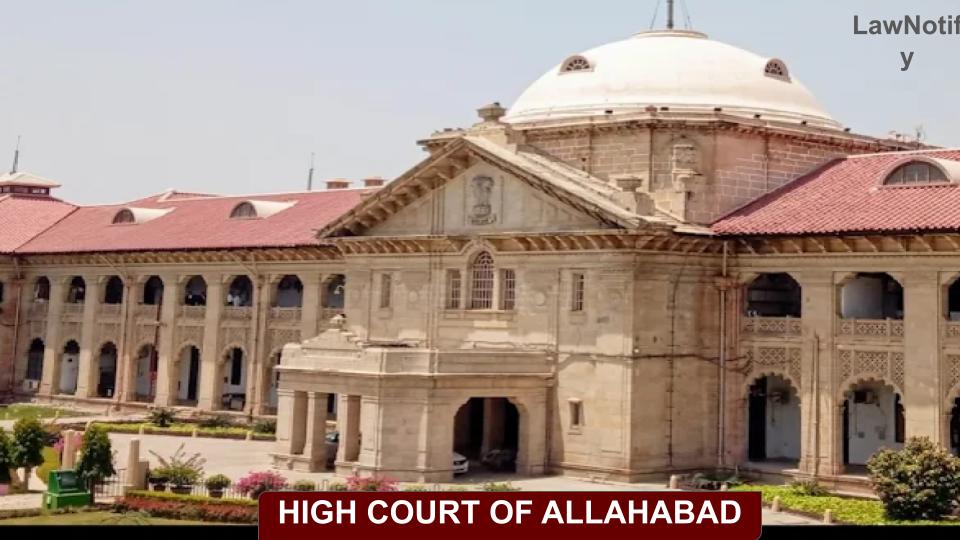
June 4, 2026 : The Allahabad High Court has raised serious concerns over the poor state of forensic science infrastructure in Uttar Pradesh, observing that deficiencies in forensic laboratories are undermining criminal investigations and enabling accused persons in rape and murder cases to secure bail due to the absence of conclusive scientific evidence.
The observations were made by Justice Arun Kumar Singh Deshwal while granting bail to an accused in a rape and murder case. The Court noted that it was compelled to extend the benefit of bail because critical forensic evidence could not be conclusively established owing to shortcomings in the State’s forensic facilities.
Expressing concern over the situation, the Court directed that a copy of its order be sent to the office of Uttar Pradesh Chief Minister Yogi Adityanath through the Chief Secretary. The Bench urged the State Government to take immediate measures to strengthen forensic laboratories by providing modern equipment and ensuring adequate staffing.
Justice Deshwal observed that in several rape-cum-murder cases heard by the Court, vaginal swabs and DNA samples were sent for forensic examination, yet FSL reports frequently revealed that the source of DNA could not be identified due to incomplete DNA profiling. According to the Court, such recurring failures have significantly weakened investigations and hampered the prosecution’s ability to establish guilt through scientific evidence.
The case before the Court involved allegations that the accused had raped and murdered a woman whose body was later recovered near a river after she was reported missing. The prosecution relied on witness testimony claiming that the accused had been seen heading towards the location where the victim’s body was subsequently found.
Seeking bail, the accused contended that the forensic report supported his defence because the DNA profile obtained from the victim’s vaginal smear did not match his DNA. He further argued that there was no other material linking him to the crime, that he had been falsely implicated, and that he had remained in custody since November 21, 2025.
While considering the plea, the Court clarified that the absence of a DNA match could not automatically establish innocence, particularly when the forensic report itself indicated that a complete DNA profile had not been generated. The Bench observed that outdated equipment and inadequate forensic facilities were major contributors to such inconclusive results.
Despite acknowledging the gravity of the allegations, the Court stated that it was constrained to grant bail because the investigation lacked reliable scientific evidence connecting the accused to the offence. The failure to generate a complete DNA profile, the Court remarked, reflected a serious deficiency in both the investigative process and the functioning of forensic laboratories.
The Bench also noted that it had recently been informed by the Director of the Uttar Pradesh Forensic Science Laboratory that several forensic laboratories across the State were grappling with severe shortages of personnel and infrastructure. These systemic shortcomings, according to the Court, were adversely affecting the administration of criminal justice and weakening the evidentiary basis of serious prosecutions.
Justice Deshwal observed that responsibility for such failures ultimately rested with the State Government, which had not provided adequate infrastructure or modern technological support to forensic laboratories. The continued reliance on outdated machinery and insufficient facilities, the Court said, was directly contributing to inconclusive forensic findings in grave criminal cases.
Highlighting the crucial role of scientific evidence in prosecuting offences such as rape and murder, the Court remarked that it was granting bail to the accused with a “heavy heart” due to the absence of dependable medical and forensic evidence. The Bench warned that unless substantial improvements are made to forensic infrastructure, courts may continue to face situations where bail becomes inevitable despite the seriousness of the allegations.
While granting bail in the case, the High Court underscored the urgent need for comprehensive reforms in Uttar Pradesh’s forensic science system to ensure effective investigations and strengthen the administration of criminal justice.