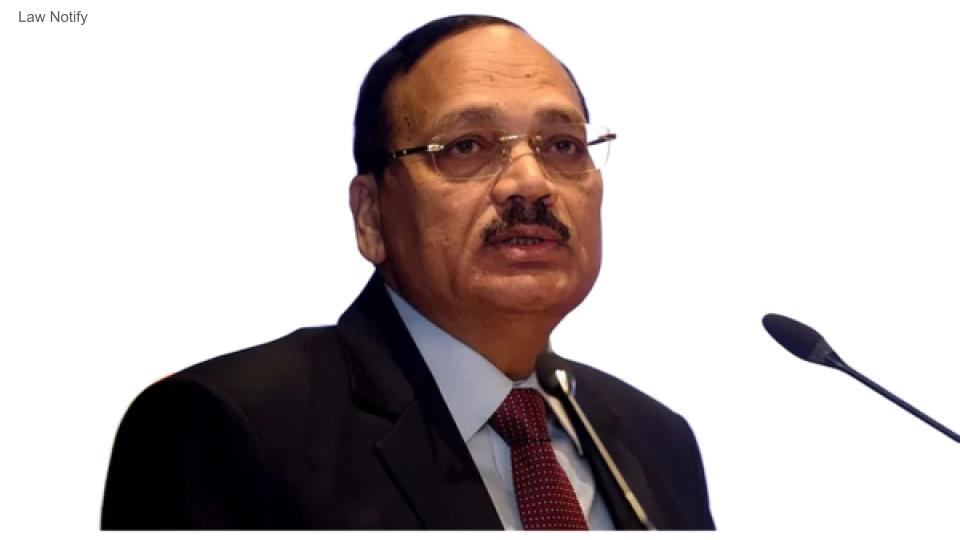
July 11, 2026 : India’s alternative dispute resolution (ADR) system must evolve into a trusted and effective mechanism capable of reducing the growing burden on courts, Chief Justice of India Surya Kant said while addressing the inaugural session of the ADR Summit 2026 in New Delhi. Speaking at the two-day event organised to mark the Silver Jubilee celebrations of the Indian Institute of Arbitration & Mediation (IIAM), the CJI stressed that India must build an “architecture of trust” that encourages individuals and businesses to resolve disputes beyond conventional courtrooms.
The summit, themed “Reimagining ADR: Innovation, Technology & the Future of Justice,” brought together judges, arbitrators, mediators, legal professionals, corporate leaders and policymakers to discuss the future of arbitration, mediation and online dispute resolution in the country.
Congratulating IIAM on completing 25 years, the CJI said the occasion should not merely celebrate the institution’s achievements but also serve as an opportunity to assess the progress made in India’s dispute resolution ecosystem over the past two and a half decades.
He noted that India’s ADR framework had undergone significant legislative and judicial reforms. Arbitration had moved from being largely ad hoc to becoming institutionally supported through Constitution Bench decisions of the Supreme Court, amendments to the Arbitration and Conciliation Act and the enactment of the Mediation Act, 2023. He also highlighted the emergence of online dispute resolution platforms that allow parties to settle disputes without appearing before courts.
However, Justice Surya Kant cautioned that legal reforms alone would not be sufficient unless litigants and commercial entities developed confidence in these mechanisms. According to him, the effectiveness of ADR ultimately depends on public trust in its institutions.
Highlighting the pressure on the judicial system, the CJI said Indian courts are currently dealing with more than five crore pending cases, with nearly half pending before district and trial courts. He observed that government departments are involved in almost half of all pending litigation, while around one-fifth of the cases relate to land disputes, many of which continue for years and often outlast the original litigants.
He remarked that no judicial system, irrespective of the resources available, could eliminate such a massive backlog on its own. A substantial number of disputes, he said, must therefore be resolved outside the traditional court process through efficient arbitration, mediation and other ADR mechanisms.
Speaking on arbitration reforms, the CJI referred to important Supreme Court rulings, including the Constitution Bench judgment in Cox and Kings Ltd. v. SAP India Pvt. Ltd. and recent decisions concerning the stamping of arbitration agreements. He said these judgments had corrected significant aspects of arbitration jurisprudence and strengthened legal certainty.
At the same time, he expressed concern over the continued delay in operationalising the Arbitration Council of India, which was created under the Arbitration and Conciliation (Amendment) Act, 2019 to accredit arbitrators and grade arbitral institutions. Despite the passage of six years, the Council has not yet been constituted.
The CJI also pointed out that the draft Arbitration and Conciliation (Amendment) Bill, prepared on the recommendations of the Expert Committee headed by former Law Secretary T.K. Viswanathan and circulated in October 2024, is still awaiting introduction in Parliament.
Expressing concern over India’s reliance on foreign arbitration centres, Justice Surya Kant observed that Indian parties remained the third-largest foreign users of the Singapore International Arbitration Centre (SIAC) during both 2024 and 2025. He said India continues to export a significant number of commercial disputes abroad and emphasised the need to strengthen confidence in domestic arbitration institutions located in cities such as Mumbai and Delhi.
On mediation, the CJI described the Mediation Act, 2023 as India’s first comprehensive statutory framework governing mediation and said it had laid the foundation for pre-litigation mediation to become the preferred method of dispute resolution. Drawing from judicial experience in family business disputes, he observed that mediation frequently succeeds in preserving both commercial relationships and family ties.
To further strengthen mediation, he called for professional training and accreditation of mediators, wider adoption of mediation clauses in commercial contracts and India’s ratification of the Singapore Convention on Mediation to facilitate international enforcement of mediated settlement agreements.
The CJI also highlighted the growing role of technology in dispute resolution. He said digital dispute resolution platforms and artificial intelligence have the potential to make justice delivery faster and more efficient, provided technology remains assistive rather than replacing judicial decision-making.
Referring to the Supreme Court’s artificial intelligence initiatives, including SUPACE and SUVAS, he said these tools demonstrate how AI can responsibly support the justice system by organising documents, classifying disputes, managing case data and assisting with translations. However, he firmly stated that decisions involving competing legal rights and equitable considerations must always remain the responsibility of human judges and adjudicators. He also stressed the need for an appropriate legislative framework and effective human oversight for the use of AI in dispute resolution.
Concluding his address, the Chief Justice said arbitration, mediation and digital dispute resolution all share the common objective of providing fair, timely and enforceable alternatives to conventional litigation. Building lasting public trust in these mechanisms, he said, requires sustained efforts from law schools, businesses, government departments, judges, arbitrators and mediators, who must consistently demonstrate competence, integrity and professionalism.
He also congratulated the Indian Institute of Arbitration & Mediation on completing 25 years of service, acknowledging its contribution to promoting arbitration and mediation while helping safeguard commercial interests, preserve relationships and advance access to justice beyond the traditional court system.