News Citation : 2026 LN (HC) 392
July 13, 2026 : In a significant ruling on the procedural safeguards governing corruption complaints against public servants, the Chhattisgarh High Court has held that the Chhattisgarh Lok Aayog cannot bypass the mandatory statutory requirements prescribed under the Chhattisgarh Lok Aayog Adhiniyam, 2002 by treating a written complaint as “specific information.” The Court ruled that when proceedings originate from a written complaint, compliance with the legal requirement of an affidavit and the prescribed ₹250 deposit is compulsory. Failure to meet these conditions renders the proceedings without legal authority.
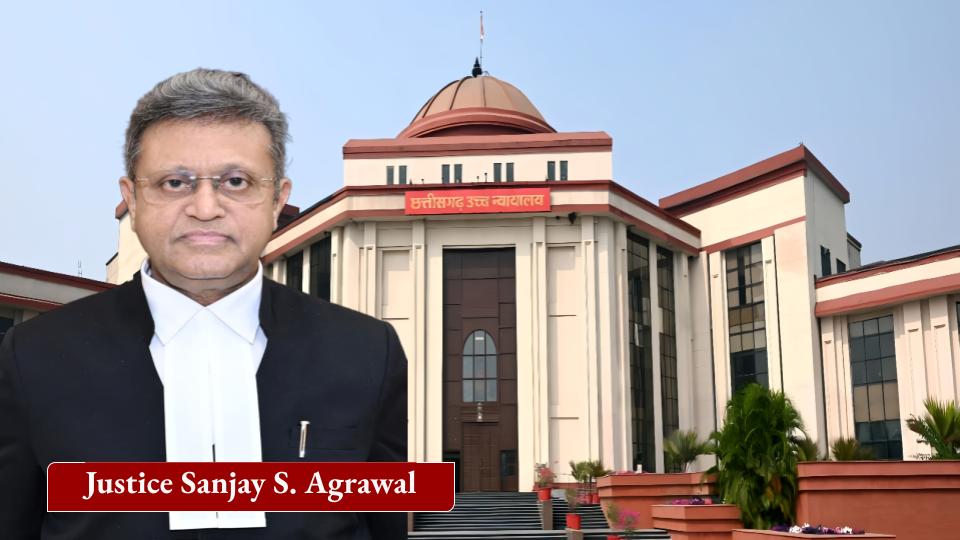
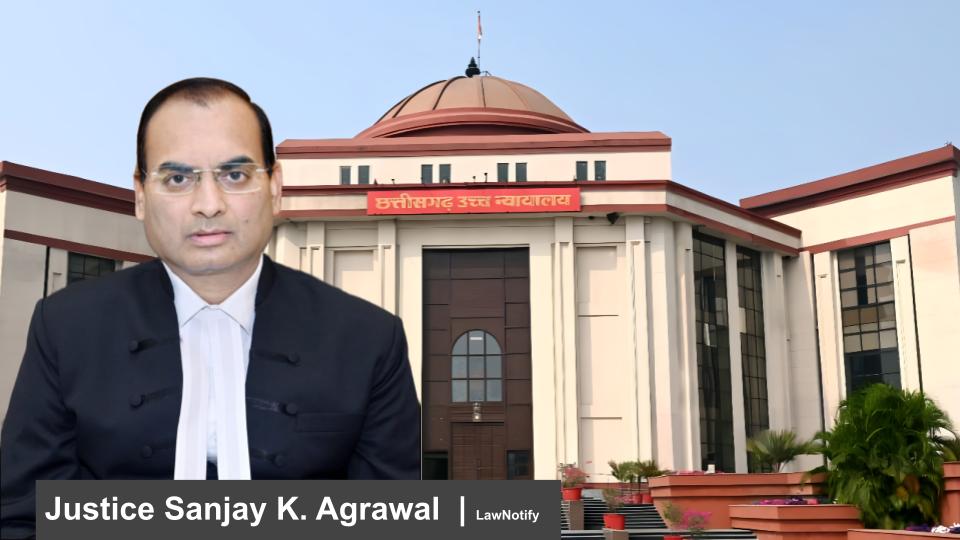
Delivering the judgment on July 13, 2026, Justice Sanjay K. Agrawal allowed a writ petition filed by Dr. Shiv Shankar Agrawal, a Medical Officer at Pt. Ravishankar University, Raipur, and quashed the Lok Aayog’s order dated November 17/18, 2020, along with the complaint registered against him.
The case arose from a complaint filed by one Virendra Agrawal alleging that Dr. Agrawal possessed assets disproportionate to his known sources of income, constituting “misconduct” under the Chhattisgarh Lok Aayog Adhiniyam, 2002. Acting on the complaint, the Lok Aayog registered Case No. 46/2017 and initiated proceedings by seeking information from the petitioner. During the inquiry, the petitioner sought copies of relevant documents and later obtained information under the Right to Information Act, 2005, indicating that the complaint had not been accompanied by the mandatory affidavit. The Lok Aayog subsequently changed its stand, asserting that the proceedings had been initiated on the basis of “specific information” under Section 6 of the Act rather than on a formal complaint.
Before the High Court, the petitioner argued that once the Lok Aayog had registered a written complaint, it could not subsequently convert it into “specific information” to avoid compliance with Section 8(1) of the Act. He contended that every complaint involving allegations of misconduct must be supported by a prescribed affidavit and accompanied by a deposit of ₹250, failing which the complaint itself is legally defective. The Lok Aayog defended its action by submitting that it had acted on specific information received under Section 6 of the Act and had afforded the petitioner sufficient opportunity to participate in the inquiry.
Examining the statutory framework, the High Court analysed Sections 6, 8, 10 and 17 of the Chhattisgarh Lok Aayog Adhiniyam, 2002 along with Rules 6, 7, 8 and 17 of the Chhattisgarh Lok Aayog (Investigation) Rules, 2002. The Court observed that Section 6 permits the Lok Aayog to initiate an inquiry either on “specific information” or on a complaint. However, where proceedings are based on a complaint, Section 8(1) makes it mandatory that the complaint be filed in the prescribed form, supported by an affidavit and accompanied by a deposit of ₹250. The Rules further prescribe that the complaint must be in Form I, verified by the complainant, supported by an affidavit in Form II and accompanied by court fee stamps representing the statutory deposit.
The Court found that the complaint against the petitioner had admittedly been registered as a written complaint and not as independent specific information. It also noted that the Lok Aayog itself had placed the complaint on record before the High Court. According to the Court, the subsequent attempt to describe the complaint as “specific information” was contrary to the record and legally impermissible. The Bench held that the mandatory requirements under Section 8 could not be circumvented by changing the nature of the proceedings after registration.
Explaining the legal position, Justice Agrawal observed that “Section 8(1) of the Act of 2002 is mandatory and complaint must be supported by affidavit and must be accompanied with a deposit of ₹250.” The Court further held that “once the manner has been prescribed of doing certain acts by the statute, it has to be followed and done in letter and spirit.” Since the complaint was neither supported by the prescribed affidavit nor accompanied by the mandatory deposit, the Lok Aayog lacked jurisdiction to proceed with the inquiry.
Holding the proceedings to be legally unsustainable, the High Court quashed the Lok Aayog’s order dated November 17/18, 2020 and dismissed the complaint itself. The writ petition was accordingly allowed without any order as to costs.
The ruling reinforces that statutory procedural safeguards under anti-corruption laws are not mere technical formalities but mandatory legal requirements. The judgment is likely to influence future Lok Aayog proceedings by ensuring that complaints against public servants strictly comply with the procedural requirements prescribed under the Chhattisgarh Lok Aayog Adhiniyam, 2002 before any inquiry can lawfully proceed.
Case Reference: Dr. Shiv Shankar Agrawal v. Chhattisgarh Lok Aayog, WPC No. 3279 of 2020.For Petitioner : Mr. Sunil Kumar Soni, Advocate and For Respondent : Mr. Akhil Kumar Samantray, Advocate through Video Conferencing assisted by Ms. Jyoti Kaushik, Advocate.