News Citation : 2026 LN (HC) 383
June 15, 2026 : The Chhattisgarh High Court has set aside the three-year blacklisting of pharmaceutical giant Cipla Limited and ordered the refund of its forfeited security deposit. The Court held that authorities failed to adequately consider the extraordinary circumstances prevailing during the second wave of the COVID-19 pandemic before imposing such a severe penalty.
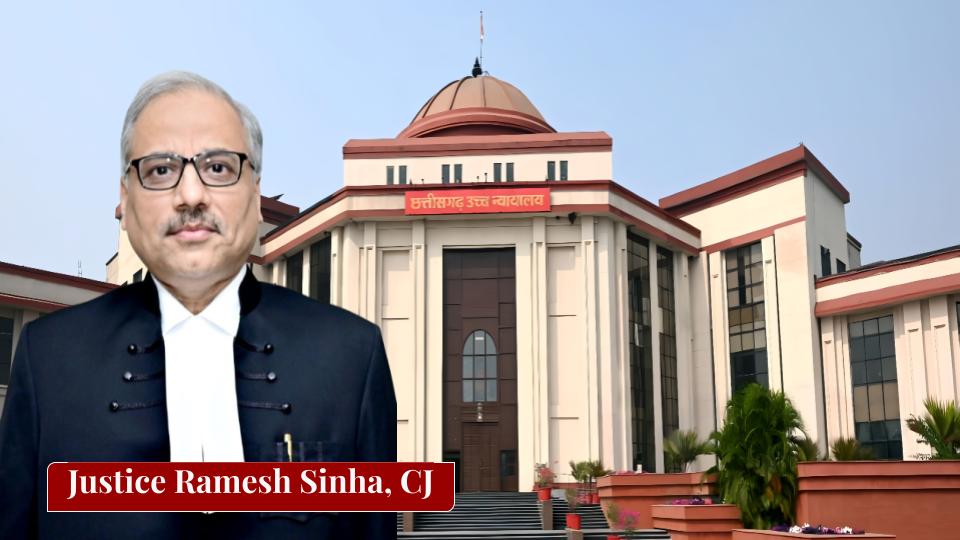
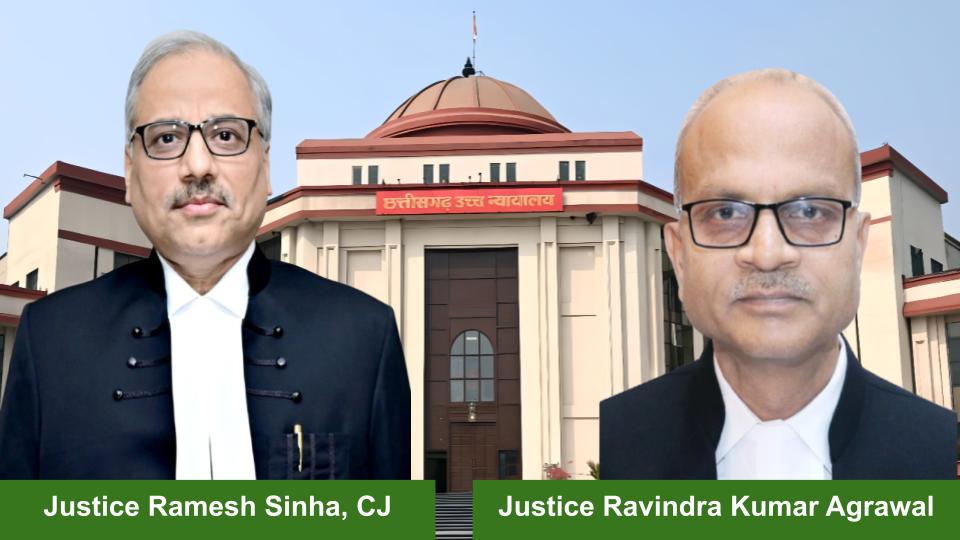
The Division Bench comprising Chief Justice Ramesh Sinha and Justice Ravindra Kumar Agrawal allowed Cipla’s writ petition challenging the order dated September 30, 2021, issued by Chhattisgarh Medical Services Corporation Limited (CGMSCL), as well as the subsequent rejection of its representation on November 27, 2021. The dispute arose from the supply of Remdesivir injections, a life-saving drug that witnessed unprecedented demand during the COVID-19 crisis.
According to the record, CGMSCL floated an e-tender in March 2021 for the procurement of Remdesivir injections. The tender mentioned an indicative quantity of 5,000 vials, and Cipla emerged as the successful bidder. While the company fully complied with the initial purchase order, the corporation subsequently issued additional orders that increased the demand to nearly 61,000 vials within a matter of days, including orders for 50,000 vials on a single day. Cipla contended that such a sudden escalation was impossible to meet given the severe shortages of raw materials, disruptions in manufacturing and logistics, and nationwide allocation directives issued by the Central Government during the pandemic.
Despite these explanations, CGMSCL issued a show-cause notice and later blacklisted Cipla’s Remdesivir product for three years while also forfeiting its security deposit. The corporation argued that the tender was a rate contract and clearly allowed variation in quantities depending on actual demand. It further submitted that the contract provided for blacklisting if a supplier failed to execute at least 70 percent of the ordered quantity in three purchase orders relating to the same product.
Before the High Court, Cipla argued that the action was arbitrary and violated Article 14 of the Constitution of India. The company maintained that no bidder could reasonably have anticipated a tenfold increase in demand within a few days. It also relied on the doctrines of fairness, proportionality, and frustration of contract under the Indian Contract Act, asserting that the unprecedented pandemic conditions fundamentally altered the circumstances under which the contract was to be performed.
After examining the matter, the Court observed that the central issue was not whether Cipla had failed to supply the entire quantity ordered, but whether the authorities were justified in imposing the extreme penalty of blacklisting and forfeiture of the security deposit in the peculiar circumstances of the pandemic. The Bench noted that although the tender permitted variation in quantity, such power had to be exercised reasonably and fairly.
The Court emphasized that an increase from an indicative quantity of 5,000 vials to more than 60,000 vials within a short period during a national health emergency required a pragmatic assessment rather than a mechanical application of penal clauses. It held that State authorities and public bodies remain bound by constitutional principles of fairness and non-arbitrariness even when acting under contractual arrangements.
Relying on the Supreme Court’s decisions in Erusian Equipment & Chemicals Ltd. v. State of West Bengal and Kulja Industries Ltd. v. BSNL, the High Court reiterated that blacklisting carries serious civil consequences and can significantly affect a company’s future business prospects. The Court quoted the principle that “blacklisting has the effect of preventing a person from the privilege and advantage of entering into lawful relationship with the Government for purposes of gains,” and therefore any such decision must satisfy the requirements of fairness and objective consideration.
The Bench found that Cipla had repeatedly informed the authorities about shortages of raw materials, disruptions in supply chains, reduced manufacturing capacity, and Central Government allocation orders governing the distribution of Remdesivir across the country. However, the impugned order did not demonstrate that these relevant factors were properly considered before imposing the penalty. According to the Court, the decision appeared to be based solely on contractual default without examining whether the failure was deliberate or caused by circumstances beyond the company’s control.
The Court further held that the doctrine of proportionality, now firmly established in Indian administrative law, required the authorities to consider whether a less severe measure could have achieved the intended objective. It noted that Cipla had supplied the entire quantity under the first purchase order and a part of the second order. Importantly, there were no allegations of fraud, misrepresentation, supply of substandard products, or any conduct involving moral turpitude. In such circumstances, a three-year blacklisting and forfeiture of security deposit were found to be excessive and disproportionate.
Concluding that the decision-making process suffered from arbitrariness and failed to account for the extraordinary realities of the COVID-19 pandemic, the High Court quashed both the blacklisting order and the subsequent rejection of Cipla’s representation. The Court also directed the respondents to immediately refund the security deposit deposited by the company.
The ruling is likely to have broader implications for public procurement disputes involving force majeure-like situations and emergency conditions. It reinforces the principle that government agencies cannot impose severe contractual penalties without evaluating the surrounding circumstances, particularly where public emergencies, supply chain disruptions, and factors beyond a contractor’s control play a significant role.
Case Reference: Cipla Limited v. Chhattisgarh Medical Services Corporation Limited & Another, WPC No. 181 of 2022