News Citation : 2026 LN (SC) 415
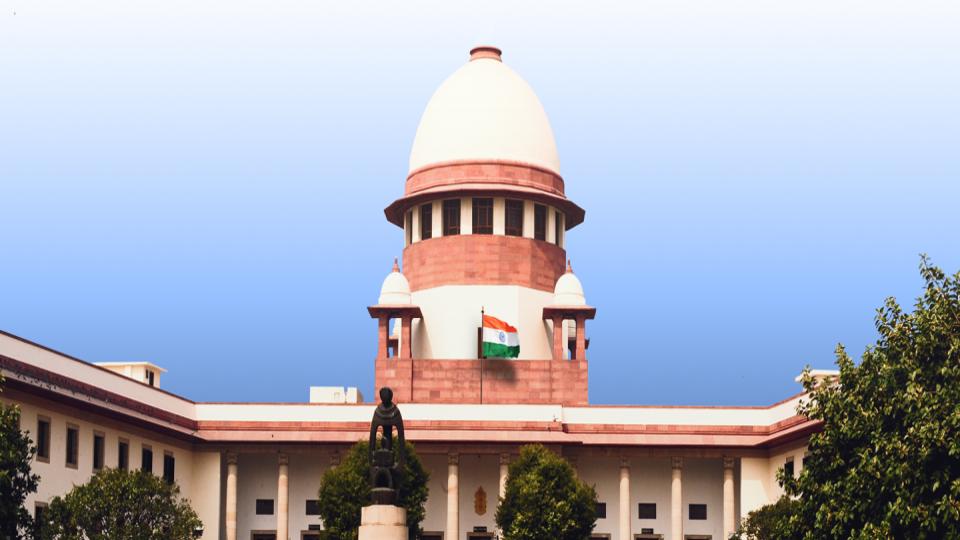
April 24, 2026 : In a significant ruling on arbitration law, the Supreme Court of India has clarified that the right to seek interim measures under Section 9 of the Arbitration and Conciliation Act, 1996 is available to any party to an arbitration agreement, including those who have been unsuccessful in arbitral proceedings. The decision came in a batch of appeals led by Home Care Retail Marts Pvt. Ltd. v. Haresh N. Sanghavi, where the Court addressed a long-standing conflict among High Courts on whether a losing party could seek post-award interim protection.
A Bench comprising Justice Manoj Misra and Justice Manmohan held that the expression “a party” under Section 9, read with Section 2(h) of the Act, refers to any party to the arbitration agreement and cannot be narrowed to mean only a successful party or award-holder. The Court emphasized that neither the definition clause nor Section 9 itself draws any distinction between winners and losers in arbitration, and any attempt to read such a limitation into the provision would amount to impermissible judicial modification of the statute.
The judgment resolves divergent views taken by various High Courts. While the Bombay, Delhi, Madras, and Karnataka High Courts had held that post-award interim relief is confined to protecting the “fruits of the award” and therefore unavailable to unsuccessful parties, other High Courts such as Telangana, Gujarat, and Punjab & Haryana had adopted a broader interpretation. The Supreme Court has now affirmed the latter view, declaring that the restrictive approach does not reflect the correct legal position.
In its reasoning, the Court relied on a literal interpretation of the statute, noting that Parliament consciously expanded the scope of Section 9 beyond the UNCITRAL Model Law by allowing applications even after an arbitral award is made but before its enforcement. Importantly, the legislature did not impose any restriction on which party could invoke this remedy at the post-award stage. The Court also clarified that Section 9 operates in a distinct sphere from Sections 34 and 36. While Sections 34 and 36 deal with challenging an award and staying its enforcement, Section 9 is concerned with protecting the subject matter of arbitration or the amount in dispute. Denying access to Section 9 for unsuccessful parties, the Court observed, would leave them without any mechanism to safeguard their rights during the pendency of challenge proceedings.
The Bench further noted that developments in arbitration jurisprudence, particularly the decision in Gayatri Balasamy v. ISG Novasoft Technologies Ltd., have recognized that courts may modify or sever arbitral awards. This means that a party initially considered unsuccessful may ultimately succeed, at least in part, making interim protection necessary to ensure that such eventual success is not rendered meaningless. The Court also pointed out that Section 9 permits protection not only of the “fruits of the award” but more broadly of the subject matter of arbitration and the disputed amount, thereby rejecting earlier narrow interpretations.
At the same time, the Court cautioned that while unsuccessful parties are entitled to invoke Section 9, the threshold for granting such relief would be significantly higher. Courts must exercise care, caution, and circumspection, and relief should be granted only in rare and compelling cases where denial would result in irreparable prejudice or undermine the efficacy of challenge proceedings.
Concluding the matter, the Supreme Court held that the judgments of the Bombay, Delhi, Madras, and Karnataka High Courts denying unsuccessful parties the right to seek interim measures under Section 9 do not lay down good law, and affirmed that any party to an arbitration agreement may invoke Section 9 at the post-award stage, subject to strict judicial scrutiny.
Case Reference : SLP (C) No. 29972/2015: Home Care Retail Marts Pvt. Ltd. v. Haresh N. Sanghavi