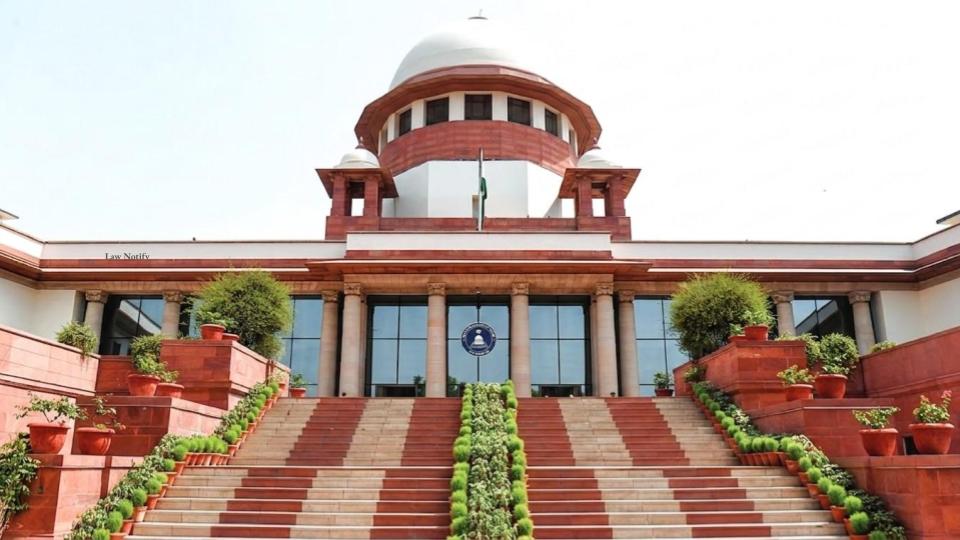
June 15, 2026 : The Supreme Court on Monday issued notice on a petition alleging that the State of Punjab has failed to effectively implement the provisions of the Right of Children to Free and Compulsory Education Act, 2009, particularly Section 12(1)(c), which mandates reservation of 25 percent seats at the entry level in private unaided schools for children belonging to Economically Weaker Sections (EWS) and disadvantaged groups.
A Bench comprising Chief Justice of India Surya Kant and Justice V Mohana sought responses in the matter and advised the petitioner, who appeared in person, to place concrete and verifiable data before the Court to substantiate the claim that the statutory scheme has not been implemented across the State.
During the hearing, the Chief Justice suggested that the petitioner obtain detailed information through applications under the Right to Information (RTI) Act regarding the number of recognized private schools, their affiliations, sanctioned seats, total admissions, and the number of students admitted under the EWS and disadvantaged category quota. The Court observed that such information would help assess the extent of compliance with the law.
The petitioner contended that the issue was not limited to isolated instances of non-compliance by individual schools but reflected a broader failure to implement the RTE Act in Punjab over the last 15 years. He argued that official figures indicate that nearly two lakh students secure admission at the entry level in private schools every year, meaning that approximately 50,000 children should be admitted annually under the 25 percent reservation mandated by the Act.
Referring to an affidavit filed by the State Government, the Chief Justice noted that Punjab had informed the Court that 476 children belonging to EWS and disadvantaged categories had been admitted to private schools under the statutory quota. The Bench, however, indicated that the petitioner would need to identify specific instances of non-compliance and assist the Court in determining whether the legislative framework was being properly implemented.
The Court also examined the reimbursement mechanism available to private schools for admissions granted under the EWS quota. The Chief Justice sought clarification on the State’s policy for compensating schools and whether reimbursements were being made in accordance with the statutory framework.
In response, the petitioner submitted that the RTE Act itself provides for reimbursement of fees determined by the Government. He further informed the Court that he had served as a Joint Secretary in the Government of India in 2009 and had been associated with the drafting of the legislation. He clarified that he had no personal or institutional interest in the private school sector.
The Bench suggested that the petitioner undertake a district-level study and place verifiable data on record regarding the implementation of the Act. It recommended selecting a comparatively backward district to assess the actual level of compliance with the statutory provisions.
The petitioner stated that he had already filed RTI applications across multiple districts and that the responses received indicated that no admissions had been granted under the EWS quota scheme during the past 15 years. On that basis, he sought directions for intervention by the Union Government.
However, the Chief Justice observed that the manner in which RTI queries are framed often influences the information supplied and emphasized the need for carefully drafted and precise queries to obtain meaningful data.
The petition seeks directions to the Union Government to exercise its constitutional powers under Articles 256 and 355 of the Constitution to ensure compliance by the State of Punjab with the provisions of the RTE Act, including Sections 12(1)(c), 12(2), and 18. It also relies on Article 21A, which guarantees the fundamental right to free and compulsory education.
Additionally, the petitioner has sought the establishment of a transparent, time-bound, and publicly accessible monitoring mechanism to ensure compliance with the 25 percent reservation mandate. The proposed framework includes public dashboards, publication of available seats and admission schedules, a simplified admission process, a structured reimbursement mechanism for schools, and effective enforcement measures against non-compliance.
The petition further seeks a direction requiring the Union Government to place on record an affidavit detailing the steps proposed to secure effective implementation of the RTE Act in Punjab and ensure that eligible children from economically weaker and disadvantaged backgrounds receive the educational benefits guaranteed under the law.