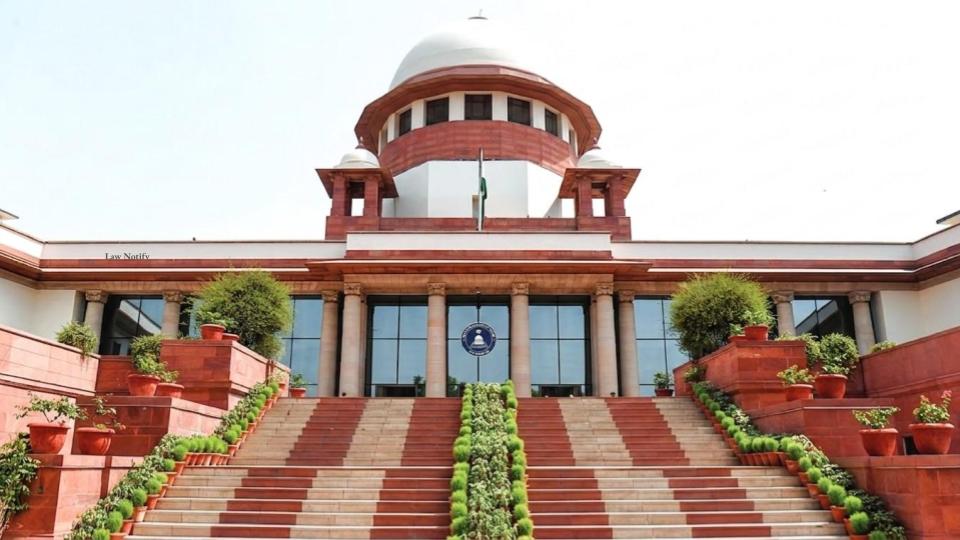
May 28, 2026 : The Supreme Court on Thursday upheld the legality of the Special Intensive Revision (SIR) of electoral rolls conducted by the Election Commission of India (ECI), observing that the exercise advances the constitutional mandate of ensuring free and fair elections. The Court held that the Election Commission possesses the authority to undertake such a revision under Article 324 of the Constitution, the Representation of the People Act, 1950, and the rules framed thereunder.
A Bench comprising Chief Justice of India Surya Kant and Justice Joymalya Bagchi delivered the judgment in a batch of writ petitions challenging the ECI notification issued in June last year for conducting the SIR in Bihar.
Pronouncing the verdict, the Bench held that the Special Intensive Revision had a clear nexus with the constitutional objective of maintaining free and fair elections. The Court observed that electoral integrity was not limited to the act of polling itself but depended fundamentally on the accuracy, credibility, and purity of electoral rolls, which form the foundation of the democratic process.
The judgment noted that the statute expressly empowers the Election Commission to carry out a special revision at any time for reasons to be recorded and in a manner deemed appropriate by the Commission. In view of this statutory framework, the Court held that the exercise could not be invalidated merely because it did not strictly conform to the ordinary procedures applicable to routine electoral roll revisions.
Rejecting the challenge to the Commission’s authority, the Court stated that it could not be said that the ECI had acted beyond its statutory powers. The Bench further observed that the reasons cited by the Commission for initiating the SIR were legitimate and directly connected to preserving the integrity of the electoral process.
The Court took note of the ECI’s reasoning that more than four decades had passed since the last intensive revision, while continuous additions and deletions in electoral rolls over the years, coupled with rapid urbanisation and migration, had created the possibility of duplication and inaccuracies in voter records.
The Bench also dismissed the contention that the procedure adopted by the Election Commission violated the provisions of the Representation of the People Act, 1950 and the Registration of Electors Rules, 1960. It further rejected the argument that the revision process undermined the presumption of citizenship of individuals already included in the electoral rolls.