News Citation : 2026 LN (HC) 345 | 2026:CGHC:23344
May 15, 2026 : The High Court of Chhattisgarh has dismissed a writ petition seeking disclosure of complaints and enquiry records related to a woman police officer under the Right to Information Act, holding that such details constitute “personal information” protected under the law unless a larger public interest is demonstrated. The Court ruled that the petitioner failed to explain any public interest behind the demand for the information and upheld the decisions of the State Information Commission and appellate authorities refusing disclosure.
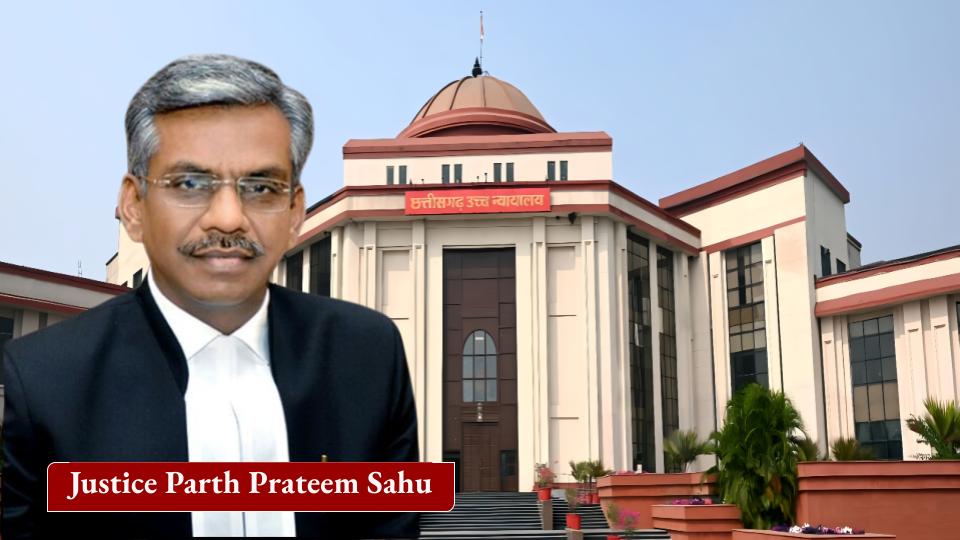
Justice Parth Prateem Sahu passed the order in Bhesh Kumar Sahu v. Chhattisgarh State Information Commission & Ors., dismissing the petition filed by Bhesh Kumar Sahu against the Chhattisgarh State Information Commission, Superintendent of Police, Balod, and the Public Information Officer. The petitioner had sought copies of complaints made against a Sub-Inspector, enquiry reports prepared on those complaints, and details regarding the enquiry officer who conducted the investigation.
According to the case record, the petitioner had submitted an RTI application under the Right to Information Act, 2005 seeking information concerning Sub-Inspector Shobha Yadav. The Public Information Officer invoked Section 11 of the RTI Act, which deals with third-party information, and sought the consent of the concerned officer before disclosure. Since the officer objected to disclosure of the information, the application was rejected. The petitioner’s first appeal before the Superintendent of Police and second appeal before the State Information Commission were also dismissed.
Before the High Court, counsel for the petitioner argued that the authorities were legally bound to provide the information sought under the RTI Act. It was contended that denial of information violated the transparency objectives of the legislation and that the petitioner was entitled to receive the records free of cost. The petitioner had also sought imposition of penalty under Section 20 of the RTI Act and compensation under Section 19(8)(b).
On the other hand, counsel appearing for the State Information Commission argued that the petition itself was not maintainable because the concerned police officer, whose information was sought, had not been impleaded as a party. The respondents further relied on the Supreme Court judgments in Central Public Information Officer, Supreme Court of India v. Subhash Chandra Agarwal and Girish Ramchandra Deshpande v. Central Information Commissioner, which recognised the privacy rights of individuals and restricted disclosure of personal information unless larger public interest is established.
The High Court examined the RTI application and noted that the petitioner had merely sought copies of complaints, enquiry reports, and the identity of the enquiry officer without disclosing any public purpose or larger public interest behind the request. The Court observed that Section 11 of the RTI Act specifically protects confidential third-party information and requires authorities to consider the objections of the concerned individual before disclosure.
While analysing the law, the Court reproduced key observations from the Supreme Court’s decision in Subhash Chandra Agarwal, where the apex court had held that professional records, disciplinary proceedings, evaluation reports, medical records, income tax details, and similar information are protected as personal information. The Supreme Court had clarified that such information can only be disclosed where “larger public interest” outweighs privacy concerns.
The High Court also relied heavily on the Supreme Court’s judgment in Girish Ramchandra Deshpande, which held that copies of memos, show-cause notices, disciplinary proceedings, and service-related details of employees are personal information under Section 8(1)(j) of the RTI Act. The apex court had observed that disclosure of such information ordinarily amounts to an “unwarranted invasion of privacy” unless justified by a bona fide public interest.
Referring to these precedents, Justice Sahu observed that the petitioner had not disclosed “for what purpose information is sought for” and had failed to establish any public interest warranting disclosure. The Court concluded that the authorities had correctly applied Section 11 of the RTI Act and there was “no infirmity or error” in the decision of the State Information Commission rejecting the appeal.
The judgment is significant in the evolving balance between the citizen’s right to information and the fundamental right to privacy recognised under Article 21 of the Constitution. Courts across India have increasingly emphasised that transparency laws cannot be used to intrude into personal or service-related matters of public servants unless disclosure serves a demonstrable public purpose. The ruling reinforces the principle that RTI applicants must clearly establish larger public interest when seeking disciplinary, confidential, or personal records concerning third parties.
The decision also highlights the procedural importance of Section 11 of the RTI Act, which mandates consultation with third parties before disclosure of confidential information. The Court’s reasoning may influence future disputes involving requests for service records, complaints, departmental enquiries, and disciplinary proceedings against government officials.
Accordingly, the High Court dismissed the writ petition, holding that it was “devoid of substance.”
Case Reference : WPC No. 5180 of 2021, Bhesh Kumar Sahu v. Chhattisgarh State Information Commission & Others; Counsel for the Petitioner: Mr. Shikhar Sharma, Advocate; Counsel for Respondent No.1: Mr. Shyam Sundar Lal Tekchandani, Advocate; Counsel for Respondent Nos.2 & 3: Mr. Rajkumar Sahu, Panel Lawyer.