News Citation : 2026 LN (HC) 384
In a significant ruling on the rights of land oustees affected by mining projects, the Chhattisgarh High Court has directed South Eastern Coalfields Limited (SECL) to reconsider the employment claims of 23 villagers whose lands were acquired for the Kusmunda Expansion Project in Korba district. The Court held that SECL could not deny employment merely because the acquired land was below a prescribed cut-off area and emphasized that rehabilitation benefits must be determined under the State Rehabilitation and Resettlement Policy applicable at the time of acquisition.
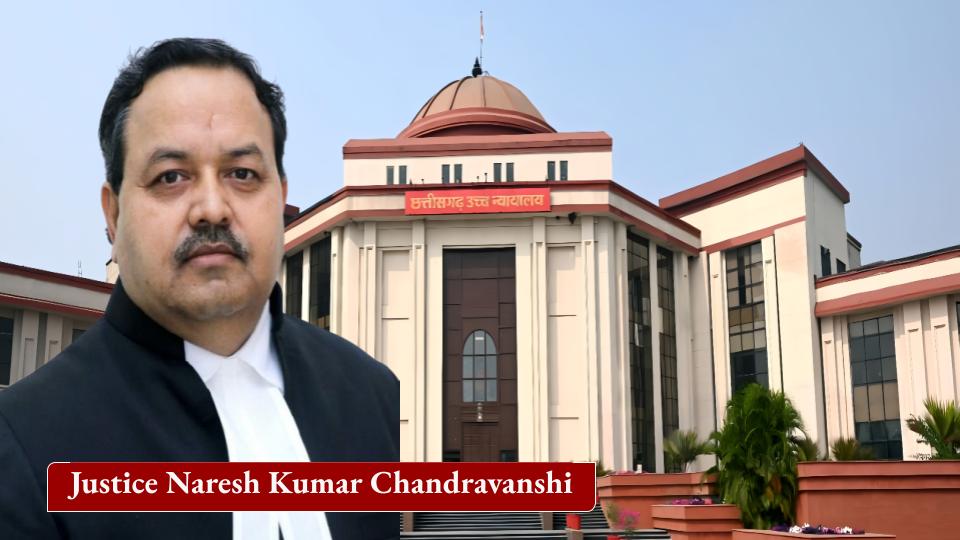
The judgment was delivered by Justice Naresh Kumar Chandravanshi on June 17, 2026, in a batch of writ petitions led by Jyoti v. South Eastern Coalfields Limited. The petitioners, all residents of Village Pali in Korba district, challenged SECL’s orders rejecting their claims for employment after their lands were acquired for coal mining operations.
According to the petitioners, their lands were acquired under the provisions of the Coal Bearing Areas (Acquisition and Development) Act, 1957. Notifications under Sections 4, 7, and 9 of the Act were issued between 2009 and 2010, resulting in the acquisition of their entire landholdings for mining activities. The petitioners argued that despite losing their agricultural lands, they were denied employment benefits available under the Chhattisgarh Rehabilitation and Resettlement Policy, 2007.
The dispute arose after SECL rejected their representations by applying the Coal India Limited Rehabilitation and Resettlement Policy, 2012. Under that policy, employment was being provided only to land losers whose acquired land met a cut-off benchmark of 0.54 acres. Since the petitioners’ holdings were below that threshold, their claims were rejected. SECL further argued that a District Rehabilitation and Resettlement Committee had resolved to implement the Coal India Policy, 2012 for the Kusmunda project and that employment had already been granted to hundreds of eligible land oustees based on the descending order of acquired land area.
The petitioners contended that this was the second round of litigation. In earlier proceedings, the High Court had directed SECL to reconsider their claims in light of the decision in Ku. Rattho Bai v. SECL, where the Court had held that the State Rehabilitation Policy would prevail over SECL’s internal policy. They argued that the State Policy did not prescribe any minimum landholding requirement where an affected family had lost its entire agricultural land.
After examining the competing policies and previous judicial precedents, the High Court agreed with the petitioners. The Court noted that the Chhattisgarh Rehabilitation and Resettlement Policy, 2007 grants priority in employment to families whose entire agricultural land has been acquired and does not impose any minimum acreage requirement. The Court observed that the policy classifies affected families according to the percentage of land acquired and provides priority to those who lose 100 percent of their agricultural land.
Rejecting SECL’s reliance on the 0.54-acre criterion, the Court held that “the objection raised by the respondents that the petitioners are not entitled to employment because their acquired land is less than 0.54 acre is not sustainable.” The Court reiterated earlier decisions holding that the State Rehabilitation Policy carries statutory force and prevails over SECL’s internal rehabilitation policy.
The Court also referred to the Supreme Court’s decisions in Narmada Bachao Andolan v. Union of India and N.D. Jayal v. Union of India, emphasizing that rehabilitation is not limited to compensation or shelter but includes restoring livelihood and ensuring a dignified life. The judgment highlighted that rehabilitation of displaced persons is closely linked to the right to life under Article 21 of the Constitution.
In a key observation, the High Court stated that “the right of land losers to get employment as per the rehabilitation policy is an extremely important right and has to be considered in accordance with the policy in force on the date of acquisition.” The Court further held that subsequent policy changes cannot deprive land oustees of accrued benefits arising from the acquisition of their lands.
The Court concluded that denial of employment in the present case was legally unsustainable and observed that rehabilitation and employment benefits for land oustees are a logical extension of the constitutional guarantee under Article 21. It further remarked that arbitrary denial of such benefits would offend the principles of equality and fairness embodied in Articles 14 and 21 of the Constitution.
Accordingly, the High Court quashed the impugned rejection orders and directed SECL to reconsider the petitioners’ cases for suitable employment. The Court ordered that employment be considered either for the petitioners themselves or for nominated family members, depending on educational qualifications and eligibility. SECL has been directed to complete the exercise within 45 days from the date of receipt of the order.
Case Reference: Jyoti v. South Eastern Coalfields Limited & Connected Matters, WPS No. 4381 of 2019 and connected cases.