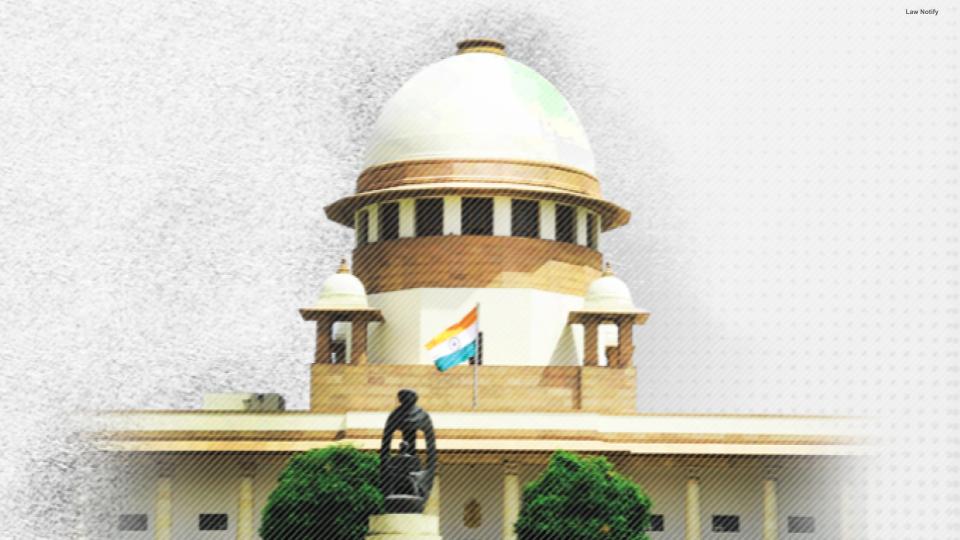
June 2, 2026 : The Supreme Court of India on Thursday declined to interfere with the High Court of Manipur order extending the deadline for conducting Panchayat elections in Manipur until October 16, 2026. The Court observed that the High Court had already passed binding directions requiring the State Election Commission to complete the electoral process within the stipulated timeframe, leaving no reason for further intervention.
A Bench comprising Justice N. Kotiswar Singh and Justice N. V. Anjaria dismissed a Special Leave Petition (SLP) filed by Pheiroijam Heramani and others challenging the High Court’s order dated May 19, 2026. The impugned order had permitted the Manipur Government and the State Election Commission to conduct the sixth general Panchayat elections on or before October 16, 2026.
The petitioners argued that the tenure of the elected Panchayat representatives had expired in 2022 and that local self-governance had remained without elected representatives for nearly four years. They contended that despite repeated assurances and affidavits submitted before the courts, the State had failed to conduct elections within the timelines earlier indicated.
The petitioners further submitted that the repeated appointment of Administrative Committees in place of elected Panchayats violated Article 243E of the Constitution of India, which guarantees a five-year tenure for Panchayats and mandates timely elections. According to them, democratically elected institutions could not be indefinitely replaced by administrative arrangements.
They also challenged the legality of the High Court’s decision permitting the constitution of Administrative Committees for Zilla Parishads by invoking Section 109 of the Manipur Panchayati Raj Act, 1994. The petitioners argued that Section 92 of the Act only authorizes the appointment of an Administrator under specific circumstances and does not empower the State to constitute Administrative Committees.
The petitioners additionally sought a fresh undertaking from the Manipur Government before the Supreme Court assuring completion of the Panchayat elections by October 16, 2026.
Appearing for the State, Tushar Mehta opposed the request, submitting that the High Court’s directions were already binding upon the State authorities. He argued that insisting on an additional undertaking would unnecessarily expose the Government to contempt proceedings if unforeseen law-and-order developments prevented adherence to the election schedule despite genuine efforts.
Accepting the State’s submissions, the Supreme Court observed that the petitioners’ primary grievance had already been addressed by the High Court’s order fixing a definite deadline for completion of the election process. The Bench held that since a judicial direction requiring elections within a specified period was already in force, there was no justification for interference under its jurisdiction.
The Court clarified that if the State failed to comply with the High Court’s directions or acted contrary to law, the petitioners would be free to pursue appropriate legal remedies before the competent forum. Accordingly, the Special Leave Petition was dismissed.
The High Court had earlier extended the election deadline while allowing review petitions filed by the Manipur Government against its August 2025 judgment directing the State to conduct Panchayat elections within six months. The Government had informed the High Court that the prevailing law-and-order situation and the imposition of President’s Rule in February 2025 made it impracticable to hold local body elections within the original timeline.
Taking note of these exceptional circumstances, a Division Bench comprising Chief Justice M. Sundar and Justice A. Guneshwar Sharma modified its earlier judgment and granted time until October 16, 2026, for completion of the Panchayat elections, while enabling implementation of the three-tier Panchayati Raj system in accordance with recent legislative amendments.