News Citation : 2026 LN (HC) 257
April 16, 2026 : The High Court of Chhattisgarh at Bilaspur has partly allowed a criminal appeal filed by two accused in a 2004 case, setting aside their conviction under the Scheduled Castes and Scheduled Tribes (Prevention of Atrocities) Act and for criminal intimidation, while upholding their conviction for using obscene language in public.
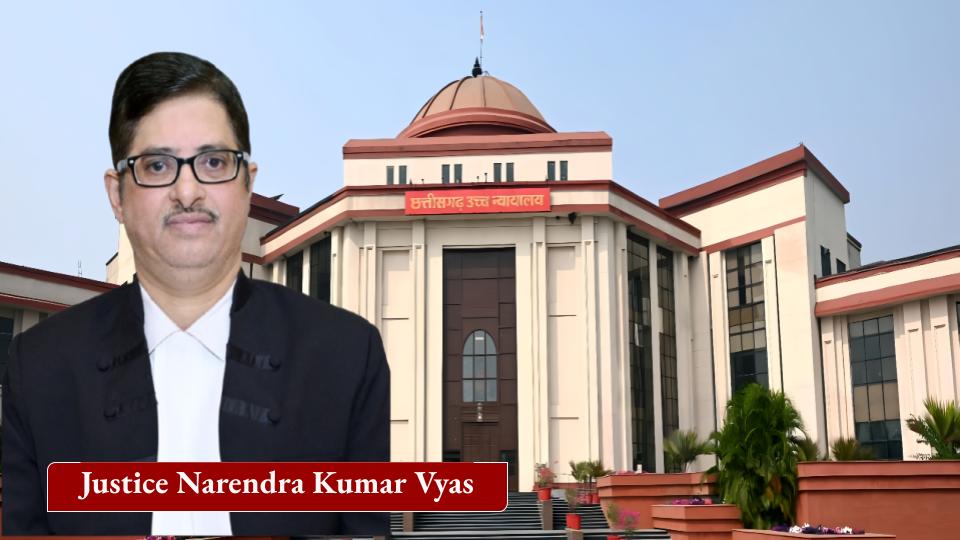
The judgment, delivered by Justice Narendra Kumar Vyas on April 16, 2026, came more than two decades after the alleged incident and modified the sentence to the period already undergone, along with an enhanced fine.
The case arose from a complaint filed in Rajnandgaon district, where the complainant alleged that the accused abused him by caste, assaulted him, and threatened his life during a dispute over construction on government land. Based on this complaint, an FIR was registered under provisions of the Indian Penal Code and the SC/ST Act.
A trial court had convicted the accused in 2005 under Section 294 of the IPC (obscene acts), Section 506(2) (criminal intimidation), and Section 3(1)(r) of the SC/ST Act, sentencing them to six months’ imprisonment along with fines.
However, the High Court found significant gaps in the prosecution’s case regarding the SC/ST charge. It held that the caste of the complainant had not been proved through legally admissible evidence. The only document produced was a temporary caste certificate issued by a Tahsildar, which the Court ruled had no evidentiary value as it was not issued by a competent authority and had limited validity.
The Court emphasized that proving the victim’s caste through a valid certificate is essential for establishing an offence under the SC/ST Act. Mere oral claims or temporary documents are insufficient to meet the legal threshold. Consequently, the conviction under Section 3(1)(r) of the Act was set aside.
On the charge of criminal intimidation, the Court observed that the prosecution failed to demonstrate that the alleged threats were made with the intent to cause alarm, a necessary ingredient under Section 506 of the IPC. In the absence of clear evidence showing such intent, the conviction under this provision was also quashed.
At the same time, the Court upheld the conviction under Section 294 of the IPC, noting that witness testimonies consistently established the use of abusive and obscene language in a public setting. The Court found no material contradictions on this point and held that the offence was proved beyond reasonable doubt.
Taking into account the long passage of time since the incident in 2004, the age of the accused, and the fact that they had already undergone a brief period of custody, the Court reduced the sentence to the period already served. However, it enhanced the fine from ₹500 to ₹2,000 each, directing that the additional amount be paid as compensation to the victim.
With these findings, the High Court partly allowed the appeal, acquitting the accused of the more serious charges while maintaining their liability for the lesser offence.
Case Reference : CRA No. 538 of 2005, Milauram and Another vs. State of Chhattisgarh; Counsels: For Appellants: Mr. Pranav Tiwari, Advocate; For State: Mr. Anant Bajpai, Panel Lawyer.