News Citation : 2026 LN (HC) 258
April 16, 2026 : The Chhattisgarh High Court has upheld the conviction of Umend Banjare in a 2003 fatal assault case, affirming a seven-year rigorous imprisonment sentence under Section 304 Part II of the Indian Penal Code for culpable homicide not amounting to murder.
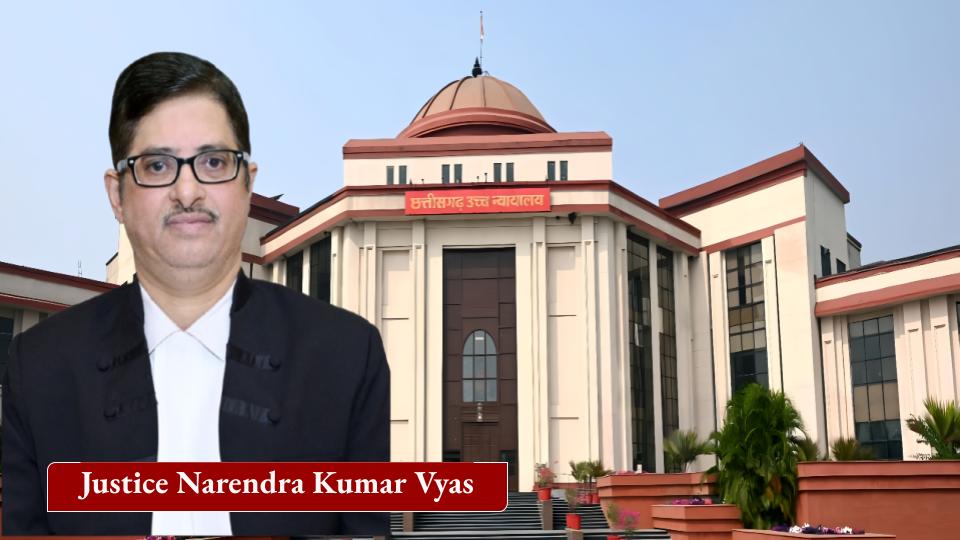
Delivering its judgment on April 16, 2026, Justice Narendra Kumar Vyas dismissed the criminal appeal filed against the 2005 trial court verdict, holding that the conviction was legally sound and supported by credible evidence.
The case stemmed from a family dispute between two brothers, Umend Banjare and the complainant Bisun. The conflict escalated on September 22, 2003, when a quarrel broke out at the appellant’s residence in Bilaspur district. During the altercation, Bisun’s wife, Ramesh Bai, sustained serious head injuries after being assaulted with sticks. She was taken to hospital but died two days later.
The trial court had originally acquitted three co-accused but convicted Umend Banjare under Section 304 Part II IPC, concluding that while there was no intention to kill, the accused had knowledge that his actions were likely to cause death.
Before the High Court, the defence raised multiple arguments, including delay in filing the FIR, lack of bloodstains on the seized weapon, contradictions in witness testimony, and the possibility that the injuries were caused by a fall. It was also argued that timely medical treatment could have saved the victim and that the accused acted in private defence.
The High Court rejected these submissions, noting that the delay in lodging the FIR was reasonably explained as the complainant was attending to his critically injured wife. The Court found the eyewitness testimony of the victim’s husband to be consistent and reliable, observing that it met the standard of a “sterling witness” whose account remained intact despite cross-examination.
Medical evidence played a decisive role. Doctors confirmed multiple skull fractures and severe head trauma, establishing that the injuries were sufficient to cause death. The Court also highlighted that the weapon used by the appellant—a lathi fitted with an iron grip—was capable of inflicting grievous injuries, distinguishing it from those allegedly used by the acquitted co-accused.
On the plea of private defence, the Court held that the accused failed to establish any imminent threat justifying such a claim. Instead, the evidence indicated that the accused party initiated the assault.
Addressing sentencing, the Court refused to reduce the punishment to the period already undergone, despite noting that over two decades had passed since the incident and the appellant was now elderly. It emphasized that the gravity of the offence and the nature of injuries warranted a proportionate sentence to maintain deterrence and public confidence in the justice system.
Accordingly, the High Court concluded that the conviction and sentence imposed by the trial court were justified and did not require interference.
Case Reference : CRA No. 486 of 2005, Umend Banjare vs State of Chhattisgarh; Counsels: For Appellant – Mr. Govind Ram Miri, Senior Advocate, with Mr. Abhishek Banjare and Mr. Animesh Miri, Advocates; For State – Mr. Krishna Gopal Yadaw, Deputy Government Advocate, with Mr. Shailesh Puriya, Panel Lawyer.