 1112
1112 3
3 4
4 5
5 6
6 7
7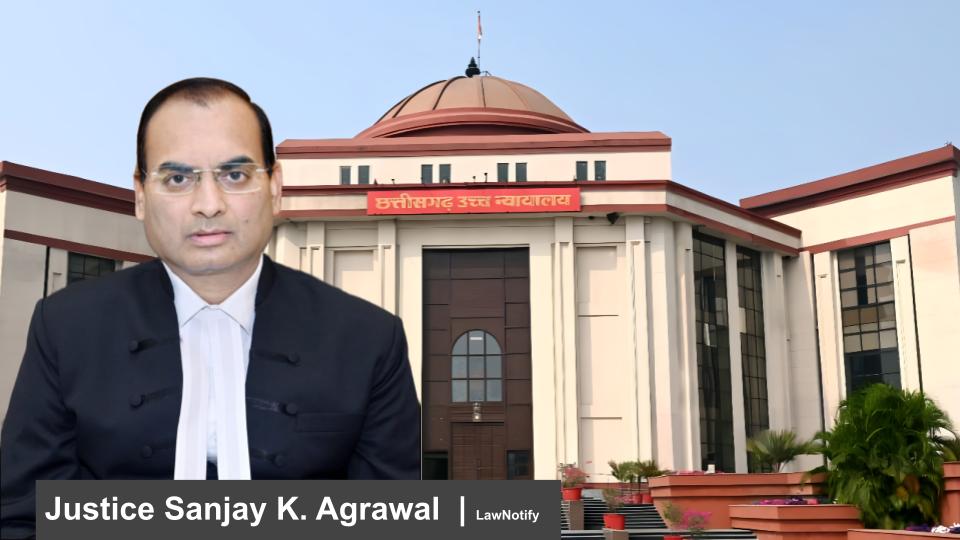 8
8 910
910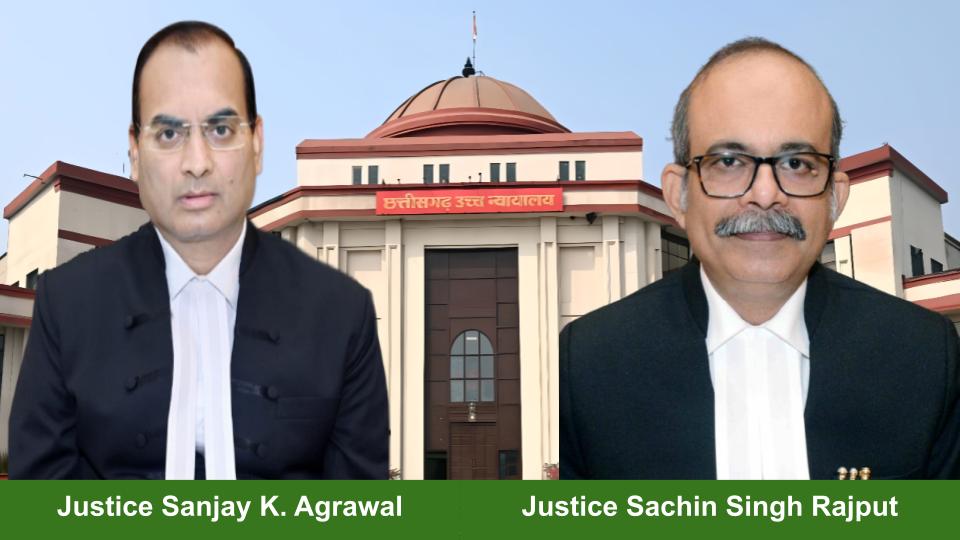
News Citation : 2026 LN (HC) 252 | 2026:CGHC:17054-DB
April 15, 2026 : The Chhattisgarh High Court has ruled that Family Courts do not have jurisdiction to decide matters relating to the appointment of guardians for persons with disabilities, holding that such authority lies exclusively with statutory committees constituted under the National Trust Act.
The Division Bench comprising Justice Sanjay K. Agrawal and Justice Sachin Singh Rajput delivered the judgment while dismissing an appeal filed against a Family Court order that had declined to entertain a guardianship application.
The case arose from a dispute involving a woman seeking to be appointed as guardian of her stepdaughter, a major suffering from mental disability. The application had been filed before the Family Court under the National Trust for Welfare of Persons with Autism, Cerebral Palsy, Mental Retardation and Multiple Disabilities Act, 1999. However, the Family Court rejected the plea on the ground that it lacked jurisdiction.
The High Court examined a narrow but significant legal issue: whether a Family Court can entertain an application for guardianship of a person with disability, or whether such applications must be made before the Local Level Committee constituted under the 1999 Act.
The Bench undertook a detailed review of the legislative framework governing guardianship in India, including the Guardians and Wards Act, 1890, the Code of Civil Procedure, 1908, the Hindu Minority and Guardianship Act, 1956, and the Family Courts Act, 1984.
It noted that while earlier laws and procedural provisions allowed civil courts to deal with guardianship issues, the 1999 Act introduced a specialized mechanism specifically for persons with disabilities. Under this law, Local Level Committees are empowered to process and decide guardianship applications.
The Court emphasized that the Family Courts Act limits jurisdiction to matters concerning minors, particularly custody and guardianship. It does not extend to adult persons with disabilities.
Applying established principles of statutory interpretation, the Court held that the 1999 Act, being a special legislation, overrides general provisions contained in procedural laws like the CPC.
The Bench relied on the doctrine that a special law prevails over a general law when both cover the same subject. It also invoked the principle that a later law overrides an earlier one where inconsistencies arise.
A key argument raised by the appellants was that the Local Level Committee was not functioning at the time of filing the application, leaving them with no option but to approach the Family Court.
The High Court rejected this contention, stating that the absence or non-functioning of the committee does not confer jurisdiction on the Family Court. Instead, parties should seek relief through constitutional remedies before the High Court.
The Court upheld the Family Court’s decision and dismissed the appeal, affirming that guardianship applications for persons with disabilities must be filed before the designated Local Level Committee.
It also noted that such a committee has since been constituted in the concerned district, granting liberty to the appellants to approach it for appropriate relief.
Case Reference : FA(MAT) No. 314 of 2023, Priti Shrivastava & Another vs Vinay Kumar Shrivastava; For Appellants: Mr. Tarendra Kumar Jha, Advocate; For Respondent: Mr. Chandresh Shrivastava, Advocate; Amicus Curiae: Mr. Manoj Paranjpe, Senior Advocate with Mr. Kabeer Kalwani, Advocate, and Mr. Rahul Tamaskar, Advocate.