News Citation : 2026 LN (HC) 253 | 2026:CGHC:17138-DB
April 15, 2026 : The High Court of Chhattisgarh has held that a civil suit cannot be used to challenge a conviction under cheque dishonour law, reaffirming that litigants must follow the specific remedies provided under criminal procedure.
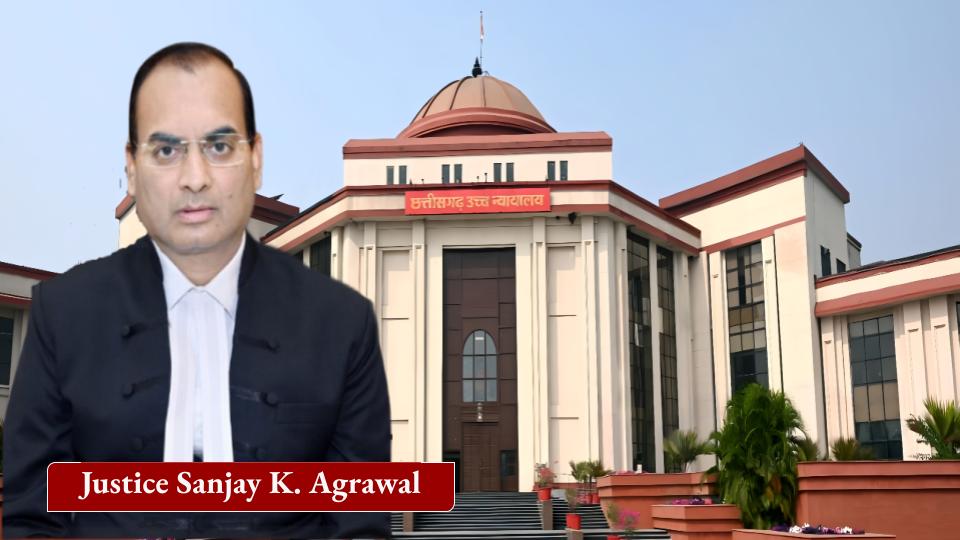
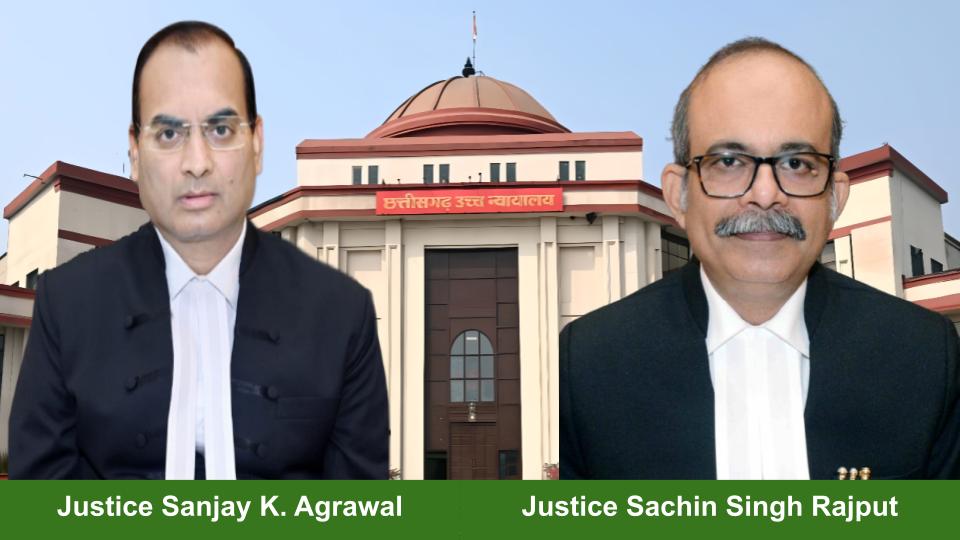
In a judgment delivered on April 15, 2026, a Division Bench comprising Justice Sanjay K. Agrawal and Justice Sachin Singh Rajput dismissed a first appeal filed by Ramkumar, who had sought to invalidate his conviction in a cheque bounce case by approaching a civil court.
Background of the Case
The dispute traces back to a complaint filed by Tekram under Section 138 of the Negotiable Instruments Act, 1881. He alleged that Ramkumar had borrowed ₹6 lakh in 2014 and issued a cheque that was later dishonoured due to insufficient funds.
A Judicial Magistrate First Class in Mahasamund convicted Ramkumar in February 2020, sentencing him to six months’ imprisonment and directing payment of ₹6.5 lakh as compensation. On appeal, the Sessions Court in August 2024 upheld the conviction, reduced the jail term to “till rising of the court,” and enhanced compensation to ₹12 lakh.
Instead of pursuing further remedies under criminal law, Ramkumar filed a civil suit seeking a declaration that he was not liable and that the criminal court’s orders were void.
Civil Court Jurisdiction Examined
The High Court examined the scope of civil court jurisdiction under Section 9 of the Code of Civil Procedure (CPC), which allows civil courts to try all civil matters unless jurisdiction is expressly or impliedly barred.
The Bench emphasized that when a statute creates a specific right and provides a complete mechanism for enforcement, parties must follow that statutory route. In this case, the Negotiable Instruments Act, read with the Code of Criminal Procedure, provides a full framework for appeal and revision against convictions.
The Court noted that after a Sessions Court decision in such matters, the appropriate remedy is to file a criminal revision before the High Court, not a civil suit.
NI Act as a Complete Code
The judgment underscores that the cheque dishonour law constitutes a “complete code,” laying down both the offence and the procedure for redress. Because of this comprehensive framework, the jurisdiction of civil courts is implicitly barred in matters where remedies already exist under the statute.
The Bench also observed that allowing civil suits in such cases would undermine the statutory scheme and create parallel proceedings, which the law does not permit.
Court’s Conclusion
Agreeing with the trial court’s earlier decision, the High Court held that the civil suit was not maintainable. It ruled that Ramkumar should have pursued a criminal revision instead of attempting to reopen the issue through a civil declaration.
The appeal was dismissed at the threshold without issuing notice to the opposing party.
Case Reference : First Appeal No. 6 of 2026, Ramkumar vs Tekram; for the appellant: Mr. Shubhank Tiwari, Advocate.