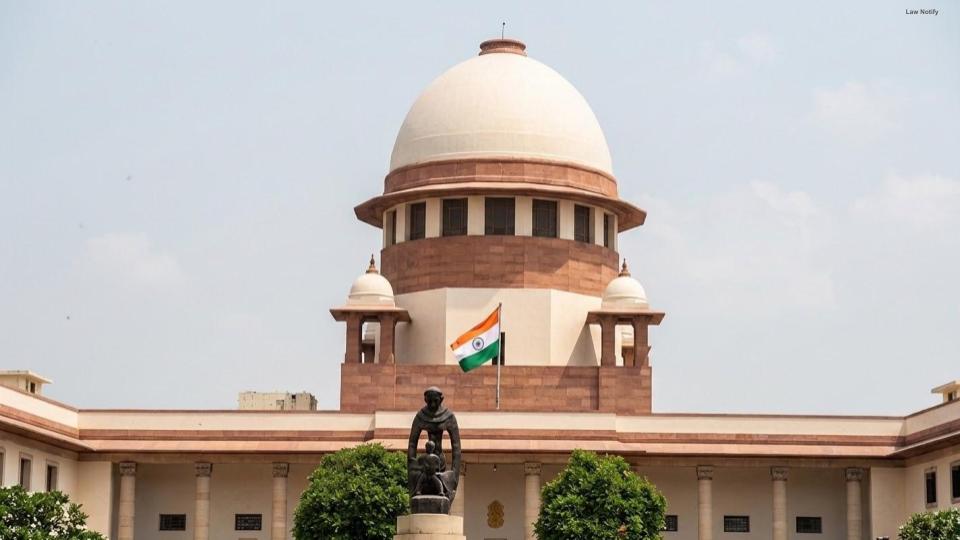
May 11, 2026 : The Supreme Court on Monday disposed of a batch of petitions filed by advocates challenging the postponement of the 2026 Advocate-on-Record (AOR) examination, while permitting the petitioners to submit a comprehensive representation to the Chief Justice of India seeking reconsideration of the decision.
A Bench of Justice Aravind Kumar and Justice PB Varale observed that the ends of justice would be met if the petitioners approached the Chief Justice administratively and expressed confidence that the grievances raised would be considered sympathetically.
The Court observed, “Having regard to the totality of the circumstances of the case, we are of the considered view that the ends of justice would be met by directing the petitioners to submit a comprehensive and exhaustive representation to the Hon’ble Chief Justice of India. In the event of such a representation being filed, we see no reason as to why the Hon’ble Chief Justice of India would not consider it sympathetically.”
The Bench further remarked during the hearing, “We have got the most sympathetic Chief Justice.”
The petitions were filed by ten advocates challenging a notification issued by the Supreme Court postponing the 2026 AOR examination cycle to 2027 on the ground that the existing strength of Advocates-on-Record was sufficient for the Court’s present requirements.
The petitioners contended that advocates who had qualified in the 2025 examination under Regulation 11 of the Supreme Court Rules had acquired a crystallized right to appear in the immediately succeeding examination. According to them, postponement of the exam would adversely affect their career progression and render a year of preparation and mandatory training futile.
Senior Advocate Gopal Sankaranarayanan, appearing for the petitioners, argued that the AOR system forms an integral part of the constitutional and procedural framework governing practice before the Supreme Court. Referring to Order IV Rule 5 of the Supreme Court Rules, he submitted that only Advocates-on-Record are entitled to act and plead before the apex court on behalf of litigants.
He further argued that the Supreme Court Registry and its committees were public authorities subject to judicial scrutiny and therefore the petitioners were justified in invoking the writ jurisdiction of the Court.
Justice Aravind Kumar, however, indicated the Bench’s reluctance to examine the matter on the judicial side, noting that the committee which took the decision included sitting judges. “We will not deal with this on the judicial side because the committee formed also included three judges,” the Court observed.
Senior Advocate Shadan Farasat also submitted that many aspirants had already undergone a year-long training process in anticipation of the examination and would suffer prejudice if the cycle was deferred.
The Bench observed that even from the judicial perspective, the Court would have to consider whether it could interfere at such a stage. It ultimately disposed of the petitions after granting liberty to the petitioners to submit a detailed representation before the Chief Justice of India.
The matter has now effectively been left for consideration on the administrative side of the Supreme Court.
Cause Title: Dania Nayyar and Ors. v. Registrar General and Ors. and Varisha Sharma and Ors. v. Advocates On Record Examination Cell and Ors.